Remember the times when you did not need to have a joystick to play multiplayer games? Not even electricity, for that matter.
L u d o
Remember the times when you did not need to have a joystick to play multiplayer games? Not even electricity, for that matter. Yes, I am talking about the era of monopoly, scrabble and ludo. Can I call it the Age of Board Games? I grew up playing ludo with my friends. Ludo was absolute fun; there was hardly anyone in my group who didn’t know how to play it and the rules were so simple that the age bracket was large enough to allow three generations to enjoy it at the same time. So now that we all are a bit nostalgic, let’s get down to business.
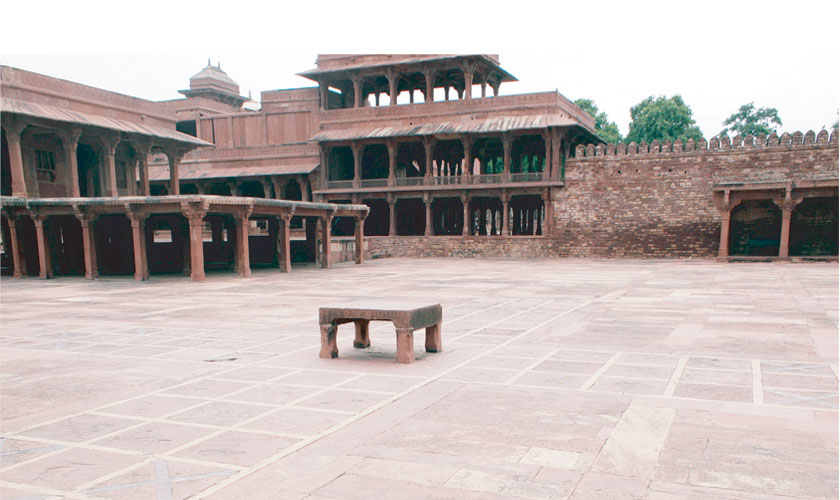
The game originated in Ancient India. The Mughal emperor, Akbar, in fact, was so fond of it that he had a special court built for it, painted in red and white squares for the board and 16 slaves used to act as the pawns. Looks like the human chess game in Harry Potter and the Philosopher’s Stone was not the first time people were used as pawns in a board game. Traces of Akbar’s love for the game can still be found in his Agra and Allahabad courts.
While the Indians used cowrie shells to play the game, the rules we have today are slightly different. The popular Indian version of the game used five shells and if you notice, after rolling a shell only two things could happen: flat side up, or round side up. Just like we used to pray for a six each time we rolled the dice, the Indians used to pray for all round sides up. That would get the player the maximum 25 points, and another turn. More the flat sides up, lower the score for that turn. Your score for the turn was actually the number of squares you could advance. Since the maximum one could get from a turn was twenty-five, the game was known as Pacheesi (25 in Hindi).
Ludo is just one of the westernised versions of the game which became popular in British colonies because the Brits called it Ludo (patented in 1896). The word Ludo is a Latin verb meaning ‘to play’. Oh, and who remembers Ludo Bagman from Harry Potter and the Goblet of Fire? Rowling seems to have named him Ludo since he was Head of Division for Magical Games and Sports, hence ‘to play’.
There are many variations of the game throughout the world, but the North Americans still call it Pacheesi, which is distortion of the original Hindi name. The German version is the most interesting though - Mensch ärgere dich nicht, which means ‘Man, don’t get irritated’!
So, the next time you’re playing Ludo, faring well, and suddenly get three straight sixes to lose your turn, and don’t know who to blame, take it out on the British. They were the ones who introduced this twisted version of the game in the first place.