In Pakistan, women’s inclusion in the economy remains alarmingly low. Only 22 per cent of women participate in the workforce, compared to 35 per cent in Bangladesh and 69 per cent in Vietnam.
EMPOWERING WOMEN
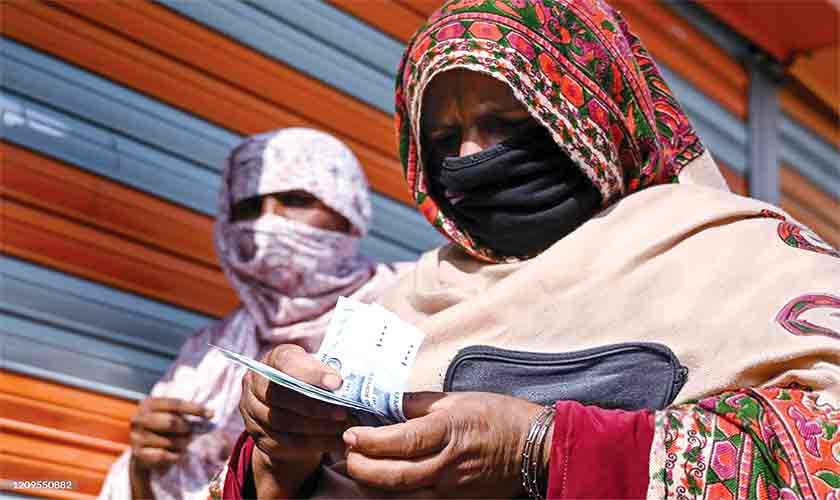
In Pakistan, women’s inclusion in the economy remains alarmingly low. Only 22 per cent of women participate in the workforce, compared to 35 per cent in Bangladesh and 69 per cent in Vietnam.
The World Economic Forum’s Global Gender Gap Report 2024 ranks Pakistan 145th out of 146 countries, highlighting persistent barriers to women’s access to opportunities. Among the most critical gaps are in financial inclusion and financial literacy -- areas that directly impact women’s ability to start businesses, access credit, and make informed financial decisions.
At the forefront of addressing these challenges is Dr Subeika Rizvi, a scholar with a PhD in Financial Literacy, Financial Inclusion and Women’s Entrepreneurship in Pakistan. Her research highlights why financial literacy must be prioritised alongside financial access.
Her fieldwork shows that while many women entrepreneurs in Pakistan demonstrate resilience and creativity, their enterprises are often limited to micro or small-scale operations. A lack of financial knowledge remains a central barrier to growth. Without the ability to navigate formal systems or leverage financial tools, women struggle to scale their businesses, even when opportunities exist.
To address this, Dr Rizvi has designed and delivered specialised training programs with Shell Tameer, the US-Pakistan Women Council, Code Girls and chambers of commerce. These initiatives equip women with practical business finance skills -- managing budgets, assessing risks, planning for growth and engaging confidently with banks.
Her work also extends to systemic change. By embedding financial literacy into school and university curricula, she ensures that future generations of women enter the economy with stronger capabilities and confidence.
Through research and policy expertise, Dr Rizvi advocates for gender-sensitive financial products, bank-academia collaboration and tailored services. She shows that financial literacy is not an add-on to inclusion; it is its foundation.
While research and grassroots programs play a vital role, national-level policies are equally critical. The State Bank of Pakistan (SBP) has taken important steps to address the gender gap in financial inclusion through two flagship programmes. The first is the National Financial Inclusion Strategy (NFIS), launched in 2015 and updated in 2021. The NFIS aims to expand access to financial services across Pakistan, with women identified as a priority segment. The strategy focuses on expanding branchless banking, simplifying account opening processes, promoting digital wallets and encouraging microfinance institutions to reach underserved communities.
The second is the Banking on Equality (BoE) Policy (2021–2025). This is Pakistan’s first gender-intentional banking policy, designed specifically to reduce the financial gender gap. The BoE policy sets out five key pillars: one, institutional commitment to gender diversity within banks and financial institutions; two, gender-disaggregated data collection to track progress; three, tailored products and services for women, including credit, savings and insurance solutions; four, improved customer experience, ensuring women feel safe and welcome in financial spaces; and four robust financial literacy programmes targeting women and girls at multiple levels.
The SBP has also directed banks to establish dedicated women champions at branches, design special loan products for women entrepreneurs and set internal inclusion targets. While still in its early stages, this framework has the potential to mainstream women’s access to finance and position financial literacy as a policy priority.
Policy and research alone cannot drive change; the corporate sector has a critical role in implementation and scaling. Encouragingly, several leading organisations are investing in entrepreneurship, employability, and vocational skill development for women.
Through its global programme, Futuremakers, Standard Chartered addresses barriers to economic inclusion with a strong focus on women and youth.
One of its flagship initiatives is Women in Tech, which provides technical business training, mentoring and seed funding to female entrepreneurs. The programme identifies and grows female technology-led businesses by bringing their unique ideas to the market while celebrating women in Pakistan. Over the past six years, it has provided critical funding and mentorship to women-led startups. Out of more than 1,900 applicants, 143 women founders have graduated and 43 have received seed funding. This effort reflects Standard Chartered’s commitment to expanding women’s access to entrepreneurial finance under the Futuremakers strategy.
Only 13 per cent of women in Pakistan own a bank account, compared to 34 per cent of men. Among women entrepreneurs, just 1.5 per cent borrow from formal institutions and 97 per cent of SME loans go to men. Yet, the economic opportunity is undeniable
The Bank also launched Goal Accelerator in Pakistan, an evolution of its successful Goal Programme. This sport-powered, gender-responsive initiative is designed to build economic resilience among disadvantaged girls and young women. It will support 450 participants aged 17–35 from urban slums in Lahore, Karachi and Islamabad, helping them access pathways to employment, income generation and long-term economic independence.
In partnership with Sightsavers, Futuremakers promotes inclusion for young people with disabilities. Through this programme, 960 young participants will be placed on jobseeker or job creator pathways, supported by vocational training and resources such as Accenture’s Skills to Succeed Learning Exchange.
Standard Chartered has also collaborated with the British Asian Trust to deliver the Agripreneurs project and its successor, Thriving Futures. This three-year enterprise development programme supports high-potential youth microenterprises with advanced training, equipping them to scale and grow. It will benefit 900 participants, 90 per cent of whom are women-led enterprises.
On the financial literacy front, Standard Chartered continues to deliver training to girls, women and individuals with disabilities through workshops in schools, colleges and communities. These programmes cover budgeting, saving, credit, and investment, with a strong emphasis on tracking outcomes.
In line with the State Bank of Pakistan’s Women Champions Initiative, Standard Chartered has also deployed women champions at its branches to better serve female clients, ensuring their convenience and comfort.
As part of the women’s empowerment agenda, many large banks have launched financial literacy and entrepreneurship programs that prepare women for careers in services, retail and microenterprise. By tailoring financial products for women entrepreneurs and supporting microloans, the Pakistani Banks ensure that access is paired with practical tools for growth.
Other large corporations, including Gul Ahmed, Lucky Cement, PepsiCo, Engro Foundation and others, are taking steps to empower women and the underserved segment of society as part of their impact programmes. Programmes for women who return to work after a break are also introduced as part of the effort to further the inclusivity and empowerment agenda. These initiatives demonstrate that when corporations align their core business models with women’s inclusion by integrating financial literacy, tailored financing and mentoring, they not only advance gender equity but also unlock long-term economic growth.
Despite these promising efforts, the scale of the challenge remains immense. Only 13 per cent of women in Pakistan own a bank account, compared to 34 per cent of men. Among women entrepreneurs, just 1.5 per cent borrow from formal institutions and 97 per cent of SME loans go to men.
Yet, the economic opportunity is undeniable. Expanding women’s access to financial services could unlock a market worth over $650 million annually (Rs101 billion). Research further suggests that financially literate entrepreneurs generate 25 per cent higher income and 10–20 per cent more savings compared to peers without such knowledge.
Financial literacy is therefore the missing link -- the catalyst that transforms access into empowerment and participation into sustainable growth.
To accelerate women’s economic inclusion, three pathways must be prioritised. First, financial literacy should be mainstreamed in education by incorporating budgeting, saving, investing and entrepreneurship skills from early schooling through higher education, equipping future generations. Second, partnerships between academia, corporates, financial institutions and development organisations must be strengthened to deliver large-scale financial literacy programs, supporting both new entrants and women already in the workforce through skills and mentoring. Finally, gender-sensitive financial products such as microloans, digital credit and savings schemes should address women’s unique needs.
For Pakistan, investing in women’s financial literacy and inclusion is not just a social obligation but an economic imperative. The combination of research-driven interventions led by scholars like Dr Subeika Rizvi, policy frameworks like the SBP’s Banking on Equality, and corporate programmes such as SC Futuremakers and many others provides a clear pathway forward.
The writer is the executive director and country head of Corporate Affairs, Brand & Marketing, Pakistan at Standard Chartered Bank.