Russia and Ukraine: China's trade partners in numbers
Russia's economy has been hit by severe sanctions as the country's invasion of Ukraine escalates, and analysts point to neighbouring China as an increasingly important trade partner
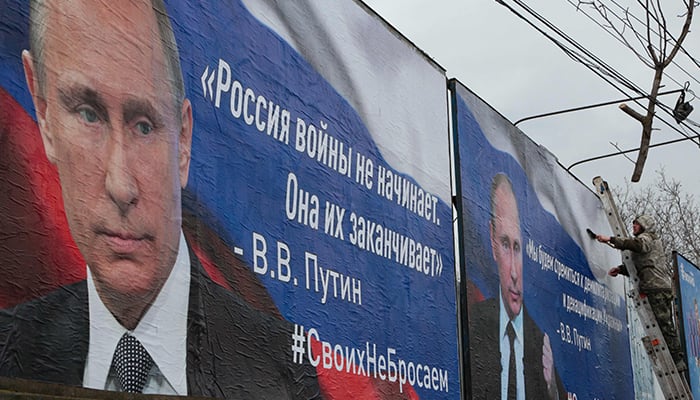
BEIJING: Russia's economy has been hit by severe sanctions as the country's invasion of Ukraine escalates, and analysts point to neighbouring China — which has yet to condemn the attack — as an increasingly important trade partner.
Beseiged Ukraine, meanwhile, supplies China with key commodities such as corn, though trade levels remain small.
What do the numbers say?
Largest trade partner
China has been Russia's largest trading partner for over a decade, according to commerce ministry data, with energy and mineral products making up the bulk of Chinese imports.
But bilateral trade and investment remain small relative to China's total shipments.
China bought $79 billion in Russian products last year while selling it $68 billion of its own, according to customs figures, representing just three percent of imports and two percent of exports.
Trade with Ukraine makes up an even smaller amount.
But Ukraine primarily exports useful commodities, such as iron ore and corn, to China and is a key node in Beijing's Belt and Road Initiative — a trillion-dollar push to boost Beijing's trade links globally.
Energy-intensive
China's trade with Russia is "energy-intensive and strategic", according to ANZ economists, and the ongoing supply could be at risk given financial sanctions.
On average, China bought more than 1.5 million barrels of crude oil every day from Russia last year — making up 16% of China's total oil imports.
Meanwhile, Russian natural gas supplied five percent of China's overall demand.
With oil prices surging as war rages, it does not bode well for China as the world's biggest crude oil importer.
Food security
China's direct trade with both Russia and Ukraine is linked to concerns over food security.
About a third of China's corn imports are from Ukraine, research firm Plenum noted, and this could "pose a problem if that trade is disrupted".
Much of the corn is used for feeding pigs meant to sate Chinese consumers' huge demand for pork, a staple meat in the country.
Beijing has also recently lifted restrictions that barred shipments of wheat and barley from some areas of Russia over concerns related to a crop fungus.
However, Chen Long, partner at Beijing-based consultancy Plenum, has noted that most of China's rice and wheat is grown domestically, meaning the impact is limited.
Financial links
Russia is a "large investor in China's bond market", ANZ said, with state-held RMB asset holdings totalling some $140 billion, nearly a quarter of total foreign holdings.
"Only 17% of bilateral trade is settled in renminbi at the moment, but that could change rapidly in order to keep goods flowing," said Julian Evans-Pritchard, senior China economist at Capital Economics.


-
 SpaceX sets Q3 2026 earnings release date: What to know
 -
 Hyundai to recall nearly 100,000 US vehicles over fire risk from overheating
 -
 Will Tesla and SpaceX merge? Barclays expects announcement ahead of December meeting
 -
 GSK eyes over 1,200 Belgian job cuts in cost-saving drive
 -
 Netflix slashes 1,000 jobs: What’s behind the cuts?
 -
 Anthropic to reveal new revenue figures as AI financial race heats up
 -
 HSBC to phase out fixed-pay allowances by 2028 in major compensation overhaul
 -
 TotalEnergies expands US renewable venture with KKR in $1.2B solar portfolio deal
-
 Australian telecom shares tumble as SpaceX moves closer to direct-to-cell market
 -
World Bank in crisis aid talks with dozens of nations amid global shocks
-
Deutsche Bank chief explains why German election results alarm foreign investors
-
China orders development of national blockchain network in economic blueprint: Here’s why