Artificial Intelligence model to detect COVID-19 from X-rays within seconds
According to reports, the new technology will help health authorities in implementing contact tracing with a high degree of accuracy and to limit the spread of the virus
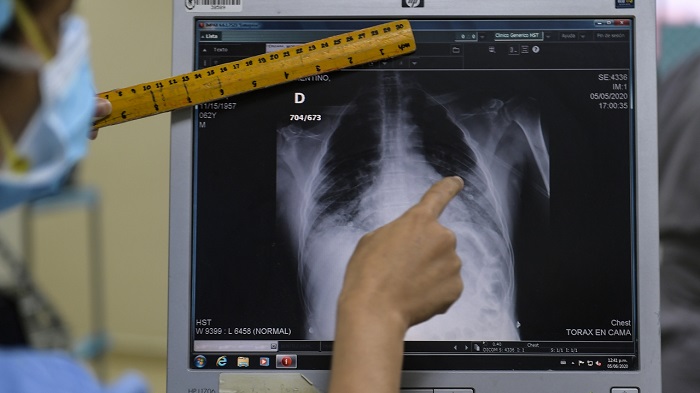
A new Artificial Intelligence model has been introduced to detect coronavirus infection by examining CT scan reports of patients’ lungs within seconds without any testing, US-based magazine The Scientist reported.
Amid the pandemic outbreak, where coronavirus testing has been identified as critical by governments and health authorities across the world, new technologies are enabling health professionals to detect the disease in minimum time.
According to a report, an AI was fed 532,000 CT scans from 3,777 patients to look for coronavirus traits in lungs in China. Using this AI model, hospitals in China were able to correctly diagnose patients with coronavirus 85% of the time.
The AI will also allow health authorities to implement contact tracing with a high degree of accuracy, limiting the spread of the virus; it will also helps governments to know when it is the right time to ease lockdown measures.
With this new development, accurately diagnosing coronavirus pneumonia will allow health professionals to tailor treatment to the virus.


-
 Scientists found 'super-puff' planets 1,110 light-years away
 -
 Scientists find ancient microbial life in places it shouldn't exist
 -
 Why Marijuana is suddenly sending thousands of dogs to hospitals in US?
 -
 36 years on, Hubble shows how stars actually change over time
 -
 Hidden magma beneath Mars? Scientists' 'unexpected' discovery raises new questions about alien life
 -
 Rare 3,200-year-old coral blue hole discovered in South China Sea
 -
 What happens at black hole’s event horizon? Scientists find the first-ever clue
 -
 Scientists discover evidence of fires used by humans 1.8 million years ago
-
 Did NASA just uncover evidence of ancient life on Mars? Key discoveries explained
 -
Four powerful earthquakes strike three continents within hours: Scientific link or coincidence?
-
Mysterious interstellar comet passing our solar system may be 12 billion years old, scientists say
-
When do we really become adults? Science has an answer