Plan to build five star hotels in Gilgit Baltistan
Gilgit Baltistan government had contacted the management of Serena and Hashoo groups and invited them to construct five-star hotels for foreign particularly the Chinese tourists.
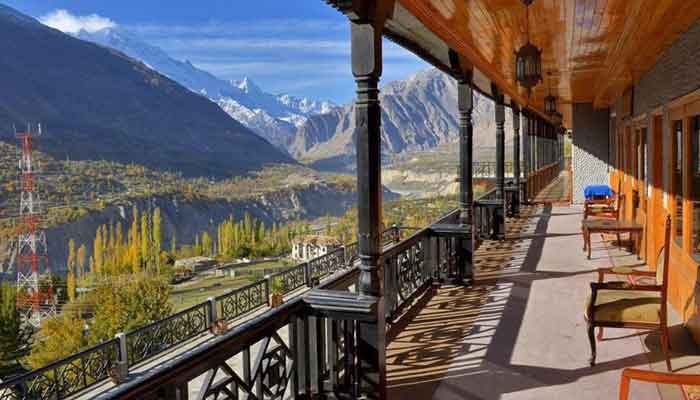
BEIJING: Vice Chairman, Board of Investment, Gilgit-Baltistan Raja Nazeem-ul-Ameen has said that the construction of five-star hotels would soon be started to attract more foreign and domestic tourists particularly the Chinese visitors in the scenic areas of Gilgit-Baltistan.
The commercial and political attachés from the Chinese Embassy, Islamabad recently visited Hunza to examine the current facilities for the Chinese tourists.
They expressed a need to further upgrade infrastructure and construct world-class hotels, he said while talking to APP here.
He said the local government had contacted the management of Serena and Hashoo groups and invited them to construct five-star hotels for foreign particularly the Chinese tourists.
Raja Nazeem hoped that the construction of first such hotel would start in early next year and expressed the confidence it would help attract more visitors.
Terming tourism as the largest industry in GB, he informed that the menace of terrorism had spoiled this important industry leaving a number of people jobless.
He, however, remarked that owing to improvement in the security situation, around 1.5 million domestic and international tourists visited Gilgit-Baltistan during the last three years.
The Vice-Chairman informed that more than 22,000 foreign tourists visited different areas of Gilgit-Baltistan this year which was significant for the development of the area.
Raja Nazeem who attended the 8th Joint Coordination Committee (JCC) of China-Pakistan Economic Corridor (CPEC) held here last week, said the GB had presented a proposal for the construction of two power projects with a capacity of 100 MW and 80 MW each to be built under the private partnership.
“We have also proposed construction of a road linking Gilgit-Ghyzer-Chitral, Shandur and Chakdra,”, adding, the mode of payment would be discussed in the forthcoming Joint Working Group meeting scheduled to be held in Islamabad in January.
He informed that according to a feasibility report, the GB has a capacity to generate around 53,000 MW hydel electricity at a low cost and added, “We are trying to convince the private sector to come forward and participate in the construction of these projects.”
He said this huge potential could help the provincial government to export electricity in future, provide employment to local and save foreign exchange.
Raja Nazeem informed that the Chinese companies were being convinced to set up hydel power stations to produce up to 5,000 MW in the next three years.
About potential of minerals, he said, the provincial government was focusing to tap the potential of mining to generate employment and earn precious foreign exchange.
He said the forest protection was one of biggest issue.
However, the local government had imposed a ban to stop cutting of tree and illegal sale of wood.
“We have devised a plan to train local people to locally make furniture enabling them to earn a respectable livelihood,” he added.


-
 Hyundai to recall nearly 100,000 US vehicles over fire risk from overheating
 -
 Will Tesla and SpaceX merge? Barclays expects announcement ahead of December meeting
 -
 GSK eyes over 1,200 Belgian job cuts in cost-saving drive
 -
 Netflix slashes 1,000 jobs: What’s behind the cuts?
 -
 Anthropic to reveal new revenue figures as AI financial race heats up
 -
 HSBC to phase out fixed-pay allowances by 2028 in major compensation overhaul
 -
 TotalEnergies expands US renewable venture with KKR in $1.2B solar portfolio deal
 -
 Australian telecom shares tumble as SpaceX moves closer to direct-to-cell market
-
 World Bank in crisis aid talks with dozens of nations amid global shocks
 -
Deutsche Bank chief explains why German election results alarm foreign investors
-
China orders development of national blockchain network in economic blueprint: Here’s why
-
Tesla renames 'full self-driving' to 'assisted driving' in Europe: What to know