Pakistan's first digital city to be established near Islamabad
The first ever digital city in Pakistan is being initiated by the Khyber Pakhtunkhwa government in the nearby areas of Islamabad.
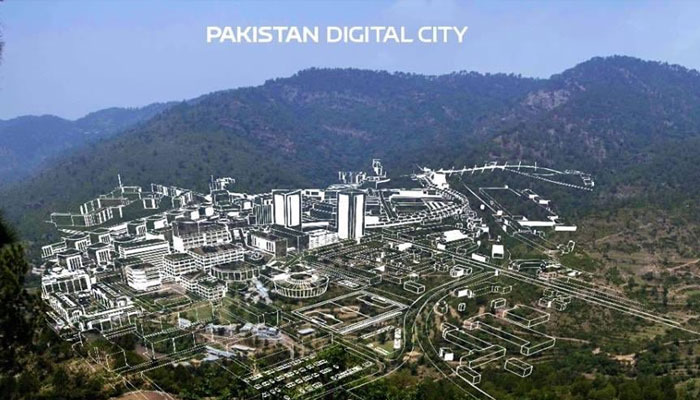
The first ever digital city in Pakistan is being initiated by the Khyber Pakhtunkhwa government in the nearby areas of Islamabad.
Kamran Khan Bangash, Special Assistant to Chief Minister Khyber Pakhtunkhwa, announced the provincial government’s plan of launching Pakistan Digital City Haripur, the first ever in the country, located behind the capital’s Margalla Hills.
“Industrial revitalisation in IT Sector is the cry of the day. We’re soliciting preliminary survey from National & International investors/industries for “Pakistan Digital City Haripur”, only 30 minutes’ drive from Islamabad,” read his tweet.
It was revealed further by the Khyber Pakhtunkhwa Information Technology Board that the site will be transformed into a platform for a wide variety of businesses and technology corporations as per the requirements of the industry with firms being able to obtain the land on lease, while urging investors to partake in the initiative.


-
 Scientists find hidden third ancestral group in Japanese genomes
 -
 SpaceX ‘Space Junk’ is on a collision course with the Moon, scientists say
 -
 Do you know what happened on May 10, 1967? NASA's M2-F2 disaster explained
 -
 Why the Southern Ocean is melting: Antarctica’s sea ice resilience reaches a breaking point
 -
 Giant black holes are cosmic ‘Frankensteins’ built by mergers, new study reveals
 -
 NASA’s Artemis 2 moon launch becomes the largest event in Space Coast history
 -
 Is success written in your DNA? New study reignites nature vs nurture debate
 -
 Researchers found 240-million-year-old giant mysterious 'sand creeper'
-
 New solar-powered process turns plastic waste into clean hydrogen
 -
Giant squid detected off Western Australia coast as deep-sea study reveals hidden species
-
Astronomers discover unexpected atmosphere beyond Pluto on tiny solar system object
-
‘Evolution is not always random’: Study finds same gene reused for 120 million years