Scientists test human anesthetics on plants, put them to sleep
this team of scientists from Italy’s University of Florence and Germany’s University of Bonn, wanted to know how plants like Venus flytrap and Shy plant grow, flourish and come to life after they die.
BERN, Switzerland: A team of scientists in Switzerland has revealed that they have been able to discover a strange way through which plants can be made unconscious for a fixed period of time.
According to media reports, this team of scientists from Italy’s University of Florence and Germany’s University of Bonn, wanted to know how plants like Venus flytrap and Shy plant grow, flourish and come to life after they die. This research has affected scientists’ study of humans and the effects certain anesthetics have on them.
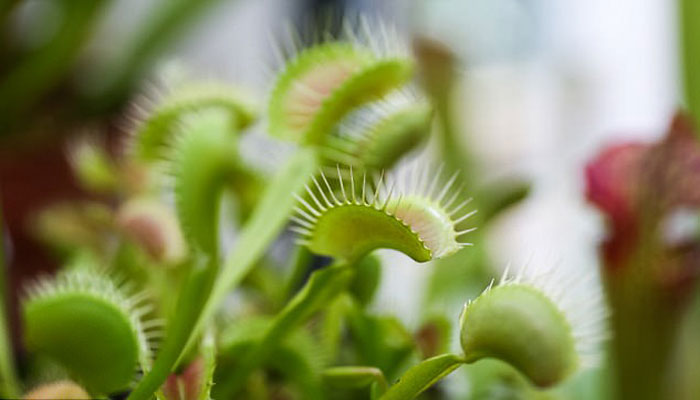
During the experiment, scientists used an anesthesia named lidocaine, the same drug that is used on humans, on various plants like Mimosa leaves and Venus flytrap.
The plants reacted to the drugs in a similar fashion; they became immobile and unresponsive.

'The fact that plant cells responded to these compounds in a similar manner to animals and humans is intriguing,' the scientists wrote in the study.


-
 Greenland and Antarctica face major ice loss: Key details explained
 -
 Scientists transplant lab-grown human brain tissue into mice: What they found
 -
 New discovery forces scientists to rethink how Earth formed
 -
 US finally confirms weapons in orbit: What it means for space warfare
 -
 How China's FAST telescope is mapping the cosmic gas behind star birth
 -
 Did Sun eat super-Earth? New study says maybe
 -
 Did Sun swallow a super-Earth? Scientists search for its ‘fingerprints’
 -
 Blue Origin sets sights on Mars with new NASA network