Study reveals why some babies are born with heart defects
Genetic study uncovers cellular root causes of congenital heart defects to explain prenatal development errors
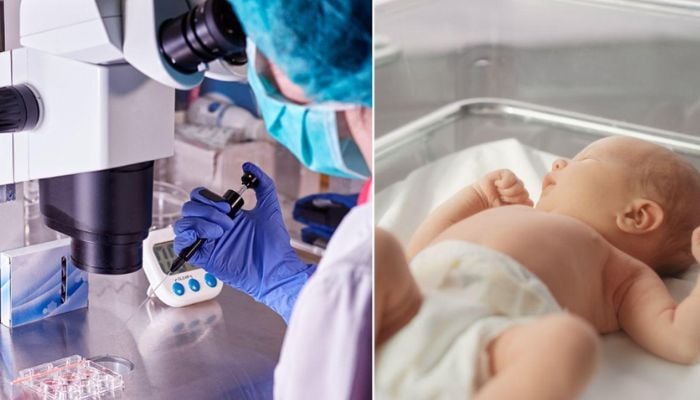
A groundbreaking genetic study has uncovered the underlying cellular missteps responsible for congenital heart defects, offering long-awaited answers into why certain babies are born with structural heart abnormalities.
Researchers identify critical embryonic cell development errors, shedding light on the genetic roots of congenital heart defects and paving the way for targeted prenatal interventions.
Published in a leading medical journal, the research focuses on the complex embryonic development phase during which the heart forms.
A newly discovered communication system in the microscopic “antennae” of cells may help explain how some congenital heart defects develop.
When genetic mutations disrupt this system, the effects may extend beyond the heart to organs including the brain, kidneys, and skeleton.
Congenital heart disease affects roughly two out of every 100 newborns worldwide, making it one of the most common types of birth defects. Yet scientists are still working to understand exactly why these heart abnormalities develop.
Approximately 2.3 to 2.5 million newborns worldwide are affected by congenital heart disease each year. An estimated 16 million people are living with congenital heart disease (data from 2023). Together, these figures make congenital heart defects among the most common birth defects worldwide.
Some congenital heart defects occur as part of a wider genetic syndrome that can also produce abnormalities elsewhere in the body. These cases are known as syndromic congenital heart disease.
When a child has a congenital heart defect without other complications, the condition is classified as non-syndromic congenital heart disease.
Scientists tracked how specific cellular pathways misfire during the first trimester, causing tissue to misalign or fail to form entirely.
By isolating these genetic and molecular triggers, the research team successfully mapped out the exact points where development goes off course, providing a clearer picture of conditions that affect nearly one percent of newborns worldwide.
While the findings do not immediately translate to clinical cures, medical experts and pediatric cardiologists have praised the study as a monumental leap forward.
Understanding the precise root causes opens the door for future advancements in early prenatal screening, targeted gene therapies, and more effective surgical planning for infants born with complex cardiac conditions.


-
 France steps up Ebola support in Congo as fears of resurgence grow
 -
 Vance’s fraud crackdown may raise health insurance costs for Americans
 -
 One common mistake elevates blood pressure readings by 7 points, study warns
 -
 Moderna loses US government license defense in patent case
 -
 Novo says new Ozempic shows lower cardiovascular risk compared with Lilly’s Mounjaro
 -
 University of Nottingham researchers say new gel could regrow tooth enamel in weeks
 -
 New Chinese drug extends stroke treatment window from hours to 2 days: study finds
 -
 Trump’s FDA nominee Heidi Overton defends vaccines, contradicting his claims