Chinese researchers develop memory that can store data 10 billion times
Xidian University researchers hit 10 billion write cycles, clearing a key barrier for AlScN chips
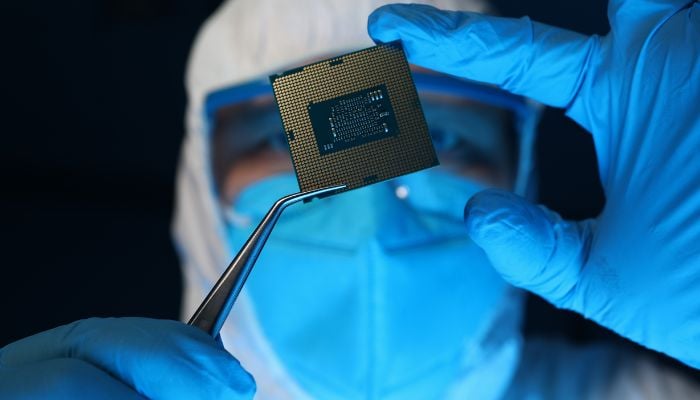
Ten billion write cycles. That's the number a team of Chinese researchers just hit with a memory material that, until now, typically failed after roughly 100 million a jump that clears one of the biggest obstacles standing between a promising chip material and actual commercial use.
The work, led by scientists at Xidian University alongside City University of Hong Kong and Fudan University, was published Thursday in the journal Science and centres on wurtzite ferroelectrics, specifically aluminium scandium nitride, or AlScN.
Two electric states enable this material to store information; thus, it can quickly change states and consume less power.
In addition, this material works well within the established semiconductor production chain; this is important since a material that needs a new production process usually fails at the research stage regardless of how good it is.
In commercial applications, it is necessary for a material to endure billions of switching cycles. Previously developed devices on the basis of aluminium scandium nitride (AlScN) managed to reach about 100 million switching cycles, mostly due to the high coercive field of this material, which caused damage during each switching cycle.
Rather than trying to perform a full reversal of the polarisation every cycle, which imposes the maximum strain on the material, the researchers resorted to very fine-tuned partial switching in ultrathin capacitors, which ensured there was sufficient polarisation remaining to retain the memory effect, even as the wear per cycle was severely reduced.
What that meant was an endurance of more than 10 billion cycles for devices just 45 nanometres thick, along with breakdown voltages close to 10 megavolts per centimetre in the tiniest devices, figures that mark a record for any material of this kind.


-
 FBI data theft probe: What to know about ShinyHunters hacker detained in Jordan
 -
 U.S. proposes AI emergency alert system with China: What to know
 -
 Is AI deskilling you? 2 habits that weaken your skills
 -
 Can Trump's voluntary AI safety agreement be enforced?
 -
 China's new battery charges to 80% in nearly 3 minutes
 -
 Could a department of AI prevent an ai market crash?
 -
 OpenAI reveals new detail on Australia Medicare hack probe
 -
 Data centre backlash hits $42bn of Europe projects