Data centre backlash hits $42bn of Europe projects
Residents in Europe and Asia are fighting AI data centers over power, water and land, raising investor risk
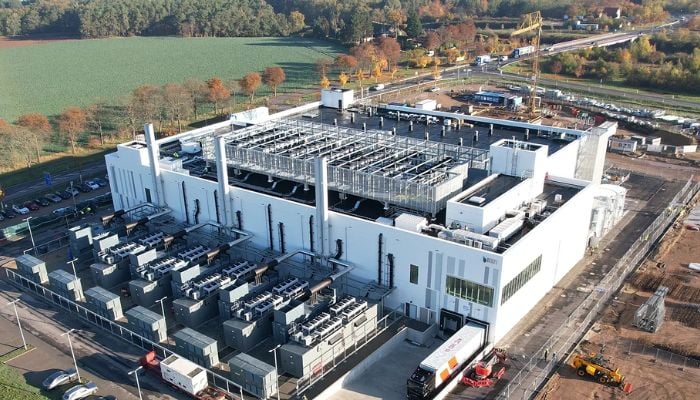
Public opposition has disrupted about $42 billion of data centre investment in Europe through delays and cancellations, according to research from STL Partners. The US figure is roughly $77 billion. The data centre backlash that began in American communities is now spreading to Europe and Asia, even as governments push ahead with AI plans.
Between January and April, the European Data Center Monitor found over 70 projects which were blocked or curtailed, compared to an entire year's worth in 2025. Resistance is shifting from local councils to courts, regulators, and parliament.
Planning permission in Scotland has been frozen for new hyperscale facilities, citing examples from Ireland where increased demand for electricity resulted in a ban. Denmark approved legislation that could see data centres go at the end of the queue for electricity supply. Spain have suggested that 80% of their energy should be renewable.
In June, Seoul named AI data centres one of three major investment priorities, alongside semiconductors and physical AI. Locals have other ideas. Residents of Seoul's Geumcheon district have protested for months, reaching 172 days by mid-August, demanding the building permit be revoked.
Officials announced in July that proposed sites would need consent from a majority of residents within 200 metres. In nearby Gwacheon, a council member has proposed an ordinance addressing round-the-clock risks, including backup battery fires.
The objections mainly revolve around water, power usage, electricity cost, and land. The number of permanent job opportunities that these facilities generate is highly debatable.
According to Olivier Darmouni, associate professor at HEC Paris, the benefit of the AI industry is very low, while the cost is high locally. The high density of population in Europe and the prevalence of the American operators might cause a strong reaction in Europe.
Asya Walters, of Alvarez & Marsal, says that the ability of the community to stop a $10 billion project is high because the operators incur huge costs before obtaining permission.
Equinix's Eulalia Flo does not see a structural limit on growth, though she concedes policy is tightening in some markets. Verne CEO Dominic Ward says the industry has "no hiding" any more.


-
 Apple's foldable iPhone hits stores
 -
 Apple reclaims title as world’s most valuable company overtaking Nvidia
 -
 French parents underestimate children’s AI use, survey finds
 -
 China clears DeepSeek and MiniMax for global AI deployment
 -
 Greece's social media ban for children under 15 will take effect on January 1, 2027
 -
 What Is PHP, why is everyone talking about it?
 -
 OpenAI partners with Poland’s NASK to strengthen AI safety
 -
 YouTube custom feeds could finally fix your homepage