Microsoft launches $2.5 billion 'Frontier Company' to accelerate enterprise AI adoption
Microsoft Frontier Company (MFC) will offer customers to select and integrate AI tools from both Microsoft and outside providers to help boost their revenue
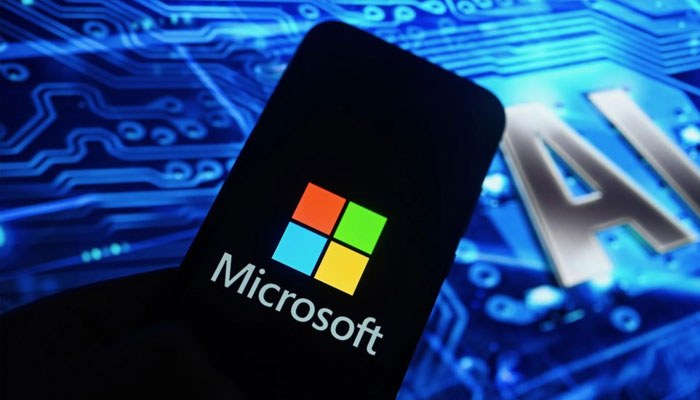
Microsoft is launching a new firm "Microsoft Frontier Company" (MFC) to help customers boost their businesses through Artificial Intelligence.
World's leading tech company announced on Thursday it is creating a new company that will help customers select AI technologies that work for their businesses and generate returns on their investment.
As reported by Reuters, the MFC will kick off with $2.5 billion in funding from the tech giant to work with clients such as Unilever and Novo Nordisk.
It comes as large corporations are relying less on renting out AI from a single provider, such as Anthropic or OpenAI, and are instead using a mix of technologies, including open-source models, tailoring them to their needs.
This is a costly affair and stretches the time it takes to generate a return on their investment.
Microsoft Frontier Company will offer customers help to select and integrate AI tools from Microsoft and outside, with that customer's unique internal data.
Critically, the customers will get to keep the results of that work rather than send it back to Microsoft.
The Windows operating system maker joins the likes of Palantir Technologies, which is already using Nvidia's open-source models for such work with large customers, and cloud rival Amazon Web Services, which kicked off a $1 billion embedded-engineer unit of its own.
CEO of Microsoft Commercial Business, Judson Althoff said the new firm was born partly out of Microsoft's own experience when models such as China's DeepSeek and Google's Gemini began to catch up to OpenAI.
He further added that the combination of data and the models mattered more to the customer than any particular model, and they needed the flexibility to switch among AI models quickly.


-
 China establishes state-owned national data group to fuel AI and digital economy
 -
 Ex-OpenAI executive Bob McGrew launches Arda to accelerate US manufacturing
 -
 Sam Altman outlines 3 AI endgames, including one company dominating all rivals
 -
 Australia to sue 5 tech giants over under-16 social media ban
 -
 Elon Musk praises EU USB-C mandate as a massive win for consumers
 -
 US orders immediate removal of DeepSeek AI from federal systems over national security risks
 -
 Microsoft employee reveals 'truth' about AI at Xbox amid gaming industry backlash
 -
 Your phone may have malware: Here’s how you can check