Scientists identify Antarctica's first dinosaur bone after 40 years hidden in storage
More than 100 species of Titanosaur have now been identified globally
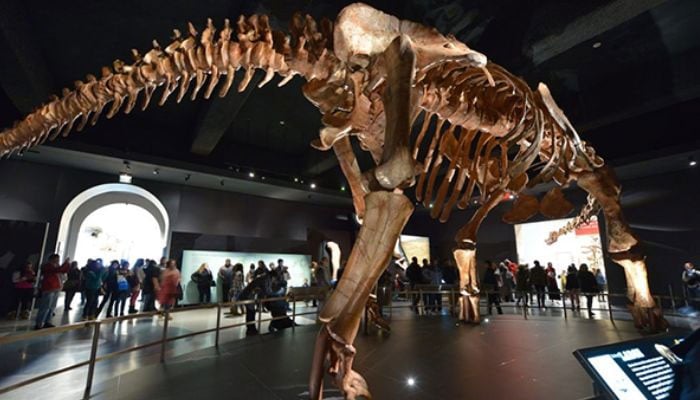
The scientists have identified a fossil, which had been stored in a drawer at the British Antarctic Survey for 40 years, as the first dinosaur bone ever found in Antarctica.
The bone was originally collected in 1985 on James Ross Island. At that moment, the researchers labeled it as a “large reptile.” After spending four decades forgotten in a drawer, the paleontologist identified it as a tail vertebra from a Titanosaur.
This is a group known for having some of the largest dinosaurs to ever live.
Dr Mark Evans, the collection manager at BAS, found the specimen while reviewing the collection and its identity was confirmed by Professor Paul Barrett of the Natural History Museum based on the bone’s unique ball-and-socket joint structure.
"As soon as I saw it, I knew what we were dealing with… it was a dead cert we were dealing with a Titanosaur. This is a combination of features that's completely unique to these types of dinosaurs,” Barrett said.
Estimating the size of the fossil, the researchers found that this specific Titanosaur was 7 meters long, suggesting that the species would have been juvenile or smaller than average.
Titanosaurs lived around 82 million years ago during the late Cretaceous period when Antarctica was not icy, in fact it was covered with greenery and forests, supporting prehistoric species.
This unexpected discovery is significant given the icy and underexplored nature of Antarctica, providing valuable insight into the ecosystems that existed at the "bottom of the world" millions of years ago.
"It shows that an area that we now think is really uninhabitable was once actually very habitable and had this huge cast of characters living in it," explained Barrett.
"It's helping us to work out how they fitted into these broader ecosystems at the very bottom of the world about 80 million years ago."


-
 ‘Super Intelligence Force’: Trump’s new plan to strengthen US AI dominance
 -
 Elon Musk wants to replace ‘AI’ with ‘SI’: What to know
 -
 ‘American idol’ star Caleb Flynn gets sentencing date after murder conviction
 -
 Rihanna fires back at EJ Johnson over Dior show delay
 -
 Ed Sheeran's troubled US tour gets a 'special guest' in Atlanta
 -
 Kim Kardashian on being single before Lewis Hamilton
 -
 Paul McCartney reveals the wedding advice he gave Taylor Swift
 -
 Ken Urker's family blasts Gypsy Rose Blanchard over 'lies' about his death