AI decoded 400-year-old Vatican cipher in 29 minutes flat
Roughly 1% of all material in libraries and archives worldwide is fully or partially encrypted
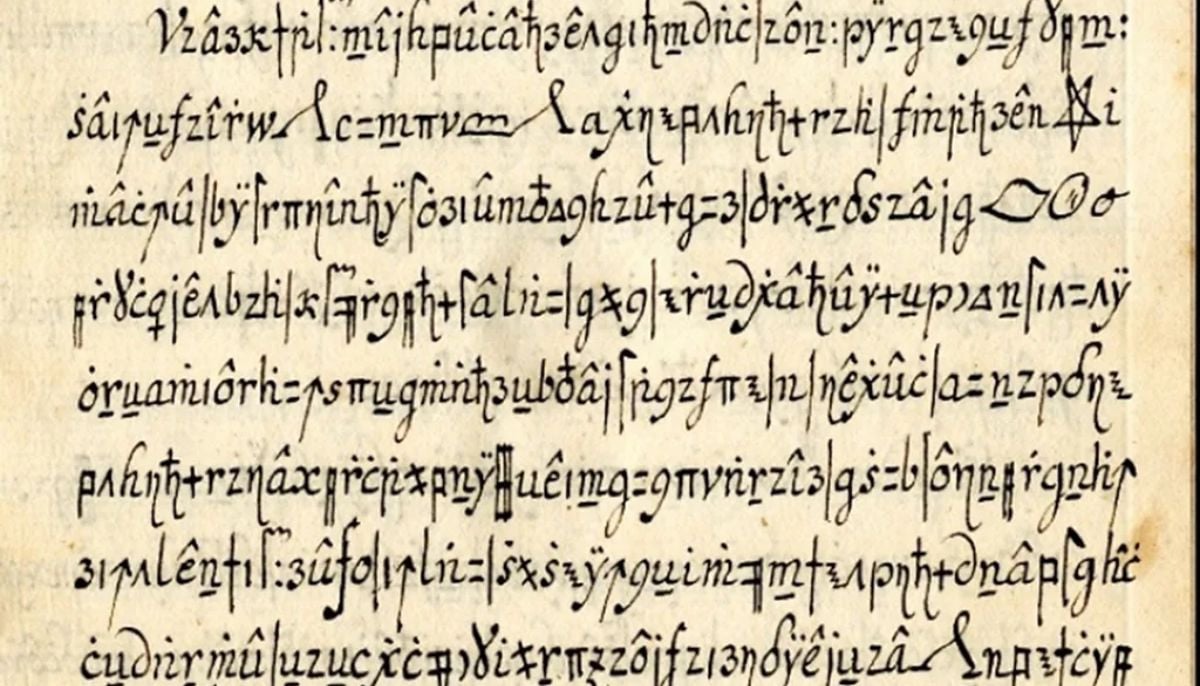
For over 400 years, a 408-page handwritten book sat unread in the Vatican library, its pages covered in 34 cryptic symbols that no one could decipher. In just 29 minutes, an AI tool cracked it.
The Borg cypher named for the Vatican's Borg collection turned out to be a compendium of strange medical treatments, including prescriptions to drink several glasses of red wine or ferment nutmeg in dough to combat dysentery.
Beáta Megyesi, professor of computational linguistics at Stockholm University, was part of the team that decoded the Borg cypher. She describes the work as "detective work where every symbol, pattern, and partial solution may bring us closer to someone's secrets and to a lost historical world".
Roughly 1% of all material in libraries and archives worldwide is fully or partially encrypted, a figure representing thousands of documents that have never been read in the modern era.
Cecile Pierrot, a cryptologist at INRIA in France, spent six months decoding a three-page letter written by Holy Roman Emperor Charles V using 120 different cypher symbols.
_updates.jpg)
Her team's reward discovering that one of the most powerful rulers in history had been living in terror that a French-allied Italian mercenary was about to assassinate him. Even a simple two-page transcription of unfamiliar symbols takes Pierrot an entire day.
How did an AI system decode a 400-year-old Vatican cypher?
According to Megyesi et al., who are working on the multinational Descrypt project, the AI technology is being developed for attacking the problem in two ways simultaneously.
Firstly, AI platforms such as Transkribus can analyse handwritten documents by detecting text blocks and lines, as well as transforming symbols into machine-readable letters.
The decyphering process involves applying several algorithms in order to calculate frequencies and distributions of certain symbols and understand the type of cypher used.
The best system developed by researchers involved in the research includes AI chatbot technology which incorporates all the aspects mentioned earlier – decryption algorithms using cypher and plaintext examples; large language models using texts written in history; and image recognition algorithms using handwritten annotations. Moreover, the technology can self-improve by using expert corrections after analysis.
_updates.jpg)
When tested for the Borg cypher, the system successfully analysed, translated, and explained the 500-symbol extract within 30 minutes.
Their methods were previously employed to decrypt a 17th-century letter from the Battle of the 30 Years' War and an 18th-century document on the rites of a German secret society.
Moreover, the team was able to accumulate 400 coded postcards, dating from the late 19th century, a few of which turned out to be deciphered as German love letters.
The Phaistos Disc, which dates back 4,000 years and hails from Crete, continues to elude decipherment. The ancient Greek language, Linear B, has yet to be unlocked. Code letters written by Mary, Queen of Scots, decoded only recently, proved that she took part in conspiracies for regaining the throne and her tattered relationship with her son, James I of England.


-
 US politician slams Sam Altman over 'accept some bad things happening' remark
 -
 Italy antitrust regulator opens investigation into AI music startup Suno
 -
 Smart glasses face bans over privacy concerns: Full list of countries
 -
 Mistral AI new model beats Chinese competitors in cybersecurity, claims CEO
 -
 UK regulator probes Meta over child safety risks in Instagram's 'Instants' feature
 -
 OpenAI admits ‘not good enough’ response to Australia government hacks
 -
 Meta, TikTok and X challenge UK watchdog over safety data: What to know
 -
 Norway proposes temporary ban on AI glasses in public spaces over privacy fears