China’s 5-year tech strategy: What to expect at annual parliament meeting amid rivalry with West
The roadmap will highlight China’s strategic pivot as it enters its 15th five-year plan (2026-2030)
China is set to lay out its five-year tech blueprint during the annual parliament meeting in a push to compete with the US and the West in the technological race.
The roadmap will highlight China’s strategic pivot as it enters its 15th five-year plan (2026-2030). Beijing is moving beyond individual breakthroughs to focus on “industrial level” upscaling, aiming to integrate AI, robotics and aerospace into the broader economy to gain competitive edge over the West.
AI integration and ‘DeepSeek’ effect
Following the global impact of Chinese start-up DeepSeek, China is shifting from tech shock to systematic deployment.
Alfredo Montufar-Helu, a managing director at Ankura Consulting in Beijing, said “The shock is over. Now there is an expectation of what China can come up with next.”
Beijing is likely to use large state-owned enterprises (SOEs) as anchor adopters to pursue “AI-plus manufacturing” with integration into logistics, energy and manufacturing. This strategy will reshape the country’s industrial structure.
Shin Nakamura, president of Japanese manufacturer Daiwa Steel Tube Industries, predicts market consolidation due to widening gap between large and small enterprises, as only capital-intensive producers will be able to afford large scale AI deployment.
Robotics and embodied intelligence
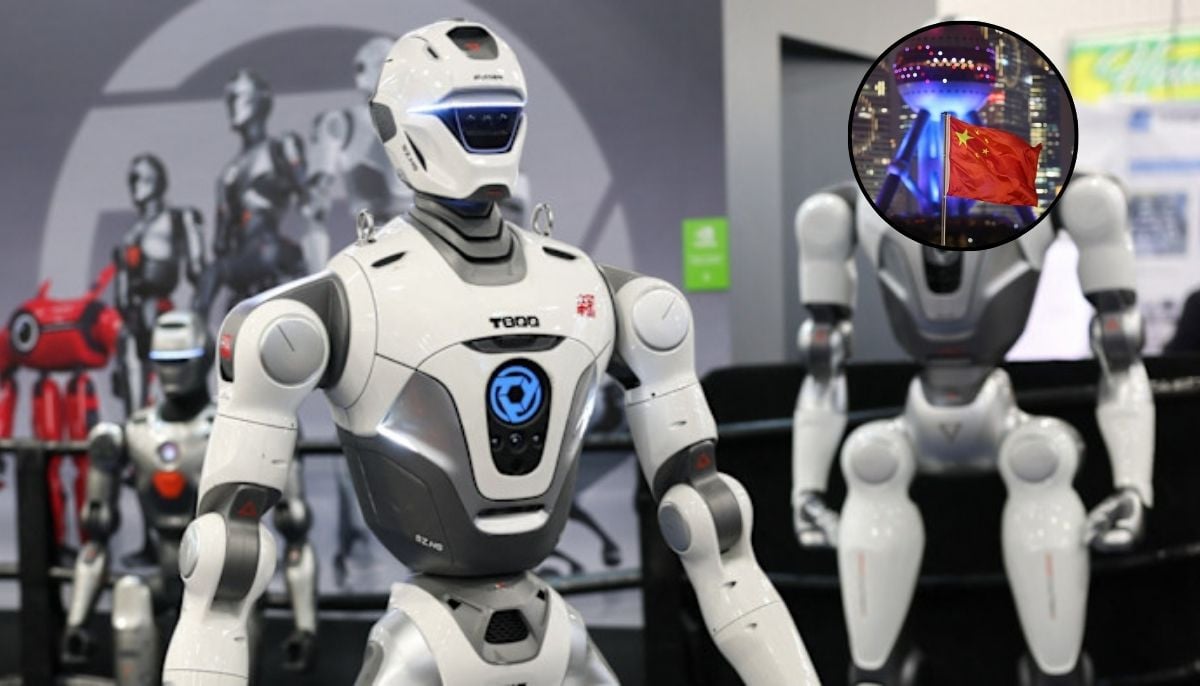
China in its five-year plan is expected to put more focus on humanoid robots as the core industrial pillar.
Recently, the country has excelled tremendously at the field of robotics, showcasing the humanoid robots performing dance and martial arts during the annual Spring Festival Gala.
According to Mike Nielsen, an executive at computer vision firm RealSense, "Mechatronics — especially balance, motor control and dynamic locomotion — has improved dramatically over the past 12 months.”
Aerospace and commercial space flight
Space remains a challenging test case for China as it will assess Beijing’s ability to translate research into industrial strength. Private firms like LandSpace and pushing for orbital-class reusable launchers, such as the Zhuque-3 to compete with the West.
Geopolitical leverage and supply chains
The five-year plan will also focus on how China will be able to protect industrial foundations beneath its technological push. For years, China has leveraged its dominance over rare earths, putting the export controls to gain an edge.
According to Doug Friedman, CEO of U.S. biomanufacturing institute BioMADE, “What we see happening with rare earths is also happening in the industrial chemicals industry.”
"Right now, we're neck and neck. Whoever doubles down over the next three to five years is going to gain a real lead,” he said, referring to the US and China.


-
 Amazon may know more about you than you think: Here’s how
 -
 Can you get banned for insulting Claude? Here’s what policy says
 -
 SpaceX vs. Telecom: Elon Musk's Starlink enters mobile market—What to know
 -
 OpenAI explains why it fired 3 researchers amid ‘suspicious’ exit claims
 -
 Is Gemini a downgrade from Google assistant? Users split
 -
 US launches cybersecurity operation to disrupt China-linked hacking network
 -
 Meta blocks ByteDance, TikTok Ads on Facebook and Instagram: Here's why
 -
 Fired OpenAI researchers warn of ‘suspicious’ dismissals after AI safety warnings