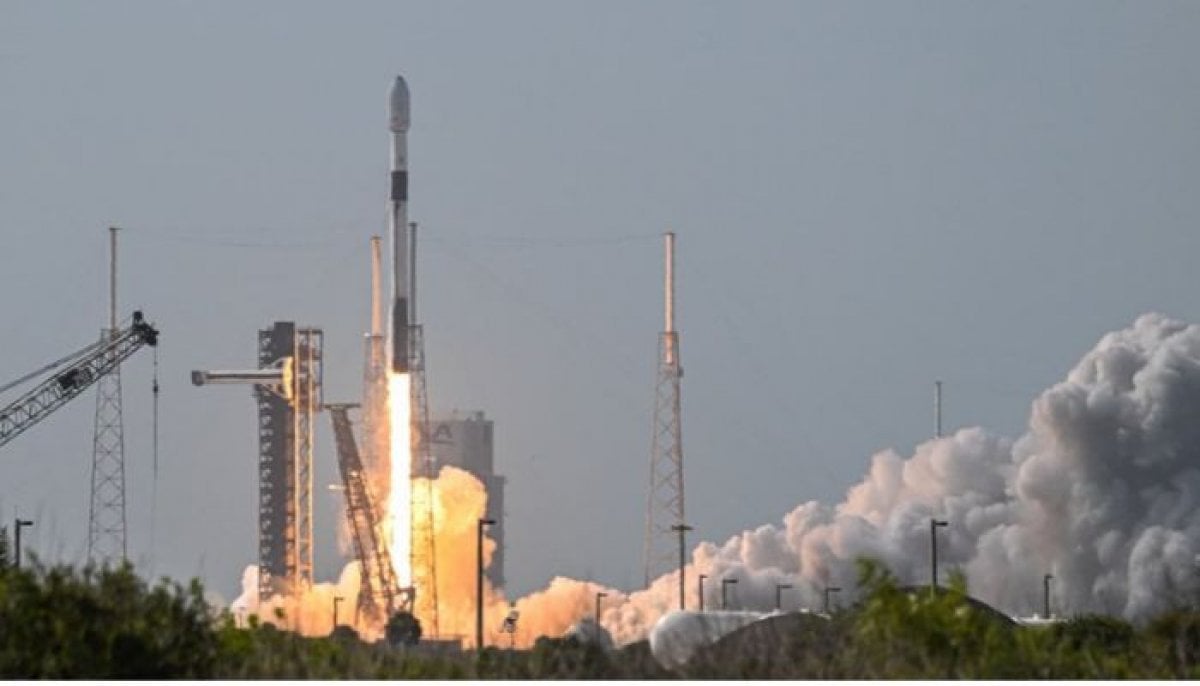
China eyes 2028 launch for first private crewed suborbital space tourism
New plans have been announced to send tourists to the edge of space by 2028

A Chinese private company, InterstellOr has announced plans to send tourists to the edge of space by 2028. Tickets are priced mainly at 3 million yuan, which is approximately $430,000.
In line with the recent revelation, 20 people-including an actor, engineer, and a poet have already signed up. The company's CYZI suborbital spacecraft will carry seven passengers to the Karman line, providing a remarkable experience with three to six months of weightlessness.
The announcement has been a hot topic on Chinese social media, topping the trending search list on Baidu. While many netizens welcomed China’s entry into commercial space tourism, expressed skepticism regarding the safety standards and the company’s ambitious timeline.
In this regard, Yang Yuguang, chairman of the Space Transportation Committee of the International Astronautical Federation told CGTN that suborbital space is technically less challenging than orbital human spaceflight.
He noted that suborbital missions only require a velocity of about $1$km/s, whereas orbital human spaceflight demands 7.8 kilometers per second to maintain a stable orbit.
The core challenge lies in establishing a rigorous verification process to ensure absolute safety while final approval will only be granted once these tests are successfully completed. While the current ticket price is high, experts predict that technological advancements and economies of scale could reduce the cost to a tenth of its current level within twenty years. Regardless of future costs, the unveiling of the CYZI spacecraft has already made a significant impact on the industry.


-
 First possible evidence of Planet Nine found in infrared data
 -
 Elon Musk announces SpaceXAI rebrand to SpaceXSI following presidential order on 'Super Intelligence'
 -
 ISS Command changes hands in emotional ceremony
 -
 Moon water acts nothing like it does on Earth, study finds
 -
 Hawaii’s Hōlei sea arch collapses after centuries on Big Island: What happened
 -
 Solar system may have a much shorter lifespan than we thought
 -
 Singapore builds world’s ultra-precise clock outperforming US, China
 -
 NASA expands Moon base research with three new investigations