South Korea announces first set of new space technologies
Government backs five homegrown space innovations to speed up commercial growth
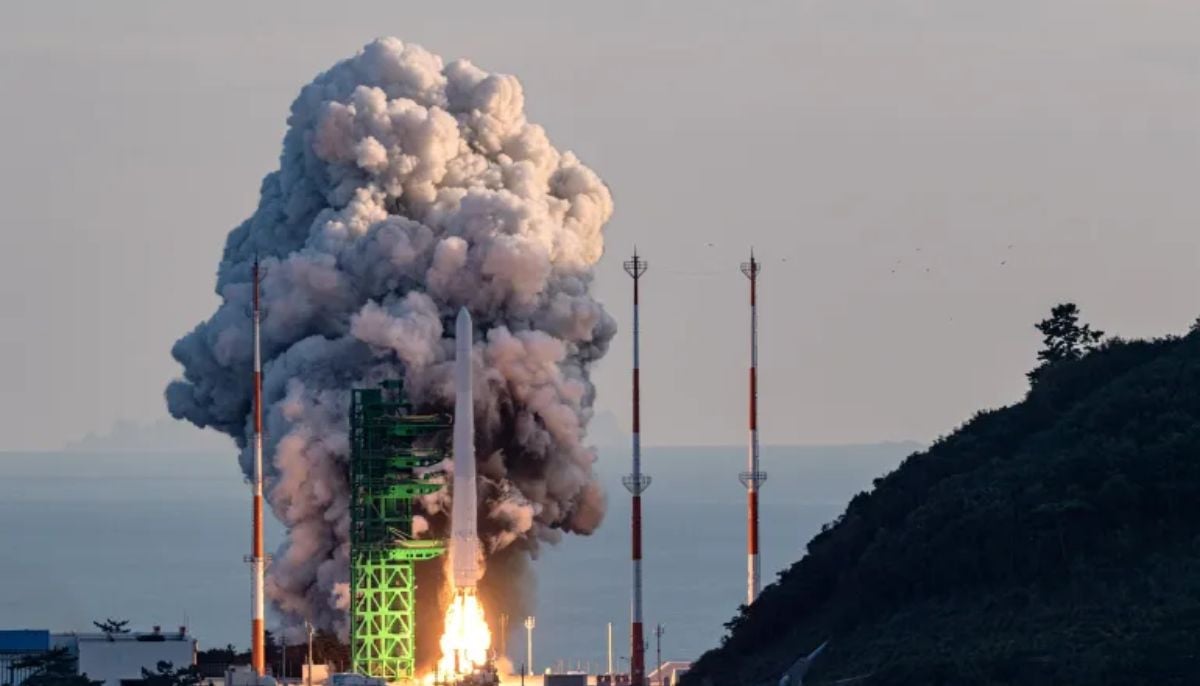
South Korea has officially designated its first group of new space technologies, marking a major step in strengthening the country’s position in the global space market.
According to the Korea Aerospace Space Administration, the government listing the names on Tuesday stated that five of their own-developed technologies have been chosen as new space technologies.
The technologies that have been chosen encompass satellites, launch vehicles, and space observation and exploration.
South Korea’s five new technologies
In total, 52 proposals have been submitted this year. Among those, 22 were for satellite tech, 11 for launch vehicle tech, and 19 for observation and exploration of space. However, after careful review by experts, only five were chosen for technical excellence and market potential.
The chosen technology comprises a CCD-CMOS fusion multi-band Time Delay Integration (TDI) image sensor developed by SensoHub. The image sensor has a function of fast Earth observation with a combination of resolution and low power consumption. The other technology comprises a two-dimensional multi-channel mid-infrared detector developed by i3system. The detector allows satellite image formation through tiny temperature differences.
Also included was friction stir welding technology by Non-Destructive Testing (NDT) Engineering & Aerospace. This technology helps enhance the strength and weight ratios of launch vehicle propellant tanks.
Two other technologies were selected from Intellian Technologies. They include medium/low earth orbit satellite communication and low earth orbit flat array antenna solutions for satellites. According to officials, such technologies are very important for ensuring internet connectivity in space in the future.
According to Korea Aerospace Administration Acting Director of Space and Aeronautics Industry Bureau Lee Hyo-hee, the technologies were chosen for their originality and readiness for commercialisation. According to Lee, the program is expected to stabilse the supply chain while preparing the country for the New Space era.


-
 AI agent hacks are 'early warning shots': Google DeepMind co-founder
 -
 Russia cracks down on AI bears as real attacks spread fear: What to know
 -
 UK media watchdog warns X over illegal hate content despite moderation speed improvements
 -
 OpenAI vs. Apple: Former employee accused of taking unreleased device files
 -
 Google DeepMind, Google Cloud grant European researchers access to frontier AI models and $3M in compute
 -
 Apple and OpenAI head to court in trade secrets dispute: Key details to know
 -
 Will AI beat cancer? Palantir CTO shares researchers’ surprising bet
 -
 Google DeepMind chief warns AI hacks are just the beginning