Here's how Samsung plans to use wearables to monitor brain health
Samsung’s Brain Health feature uses everyday Galaxy devices to flag early cognitive decline before symptoms become obvious
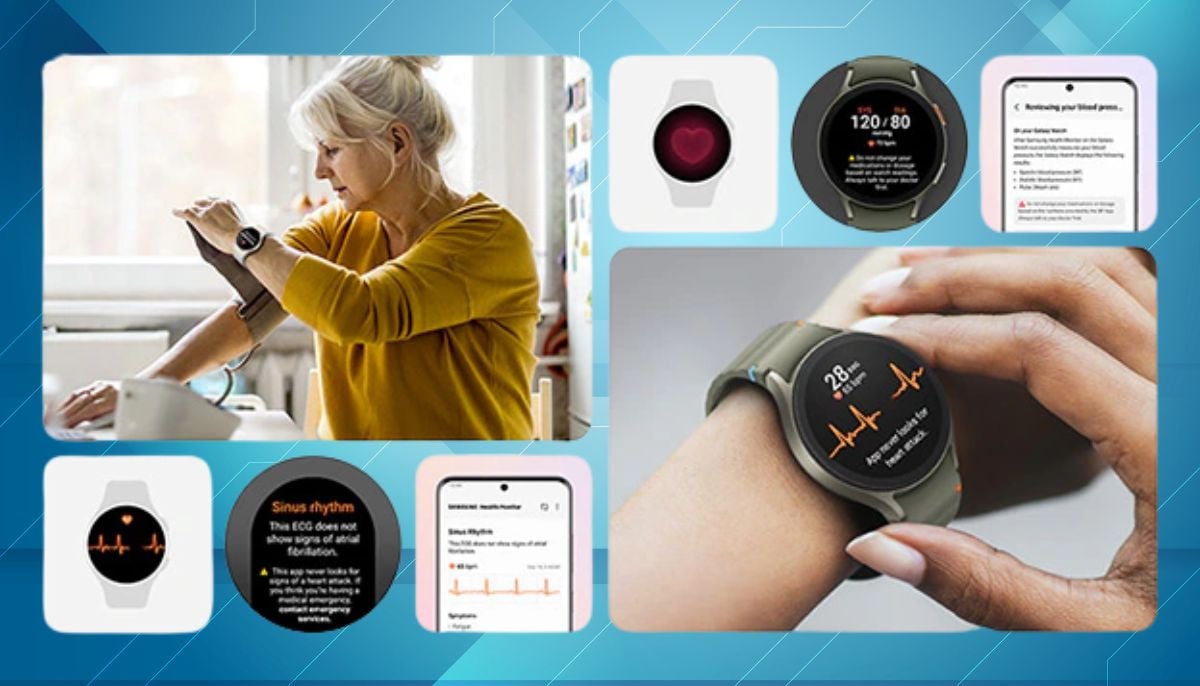
Samsung has revealed its latest health-focused innovation at CES 2026, introducing a new feature called Brain Health that aims to identify early signs of cognitive decline, including dementia, using Galaxy devices.
The brain health feature is part of the Samsung Health app, which deploys AI to analyse what the company refers to as "digital biomarkers". These are slight changes in daily behaviour, in how a person walks, speaks, and sleeps, in ways that studies indicate symptoms can show up years before for serious condition like Alzheimer are clinically diagnosed.
How does Samsung Brain Health work?
Samsung’s Brain Health is based on research that suggests human brain changes occurring due to dementia start a decade or more before diagnosis. The system passively tracks users through their Galaxy phone, Galaxy Watch, and Galaxy Ring instead of making them rely on scans or tests conducted in hospitals.
The feature focuses on three main areas:
- Gait patterns: It monitors walking speed, balance, and step rhythm. Early cognitive decline can manifest as slower movement or altered coordination.
- Vocal changes: AI analyses speech fluency, word recall time, tone, and sentence accuracy to detect subtle neurological shifts.
- Sleep metrics: Besides duration, the system considers the stability and quality of sleep, which tend to deteriorate alongside declining cognitive abilities.
Earlier Samsung research also examined typing speed and messaging behaviour, though its inclusion in the first public version is not clear.
Samsung stresses that Brain Health is not designed to replace doctors. If the system detects a concerning trend, it may suggest preventive actions such as personalised brain training programmes. In more serious situations, it can alert a designated carer or guardian.
Given the sensitivity of cognitive data, Samsung Security Platform, Knox, plays a central role. The company claims all Brain Health processing happens locally on the device, with no data uploaded to the cloud.






-
 Nvidia plans $150 billion annual investment push in Taiwan, as AI boom accelerates
 -
 Google warns AI helped hackers create ‘most dangerous’ type of cyber security flaw
 -
 Anthropic co-founder warns of ‘unsettling’ AI model emotions: ‘I don’t know what it means’
 -
 OpenAI Sam Altman dismisses fears of AI job apocalypse: ‘I don’t think it’s coming’
 -
 China accelerates 5G expansion to power next-generation digital economy
 -
 Samsung's Galaxy Z Fold 8 Ultra isn't what leaks suggested: Here's why
 -
 Wi-Fi routers can track people with 99.5% accuracy: Here’s how
 -
 Anthropic co-founder backs Pope Leo XIV’s warning: ‘AI must be guided beyond big tech’