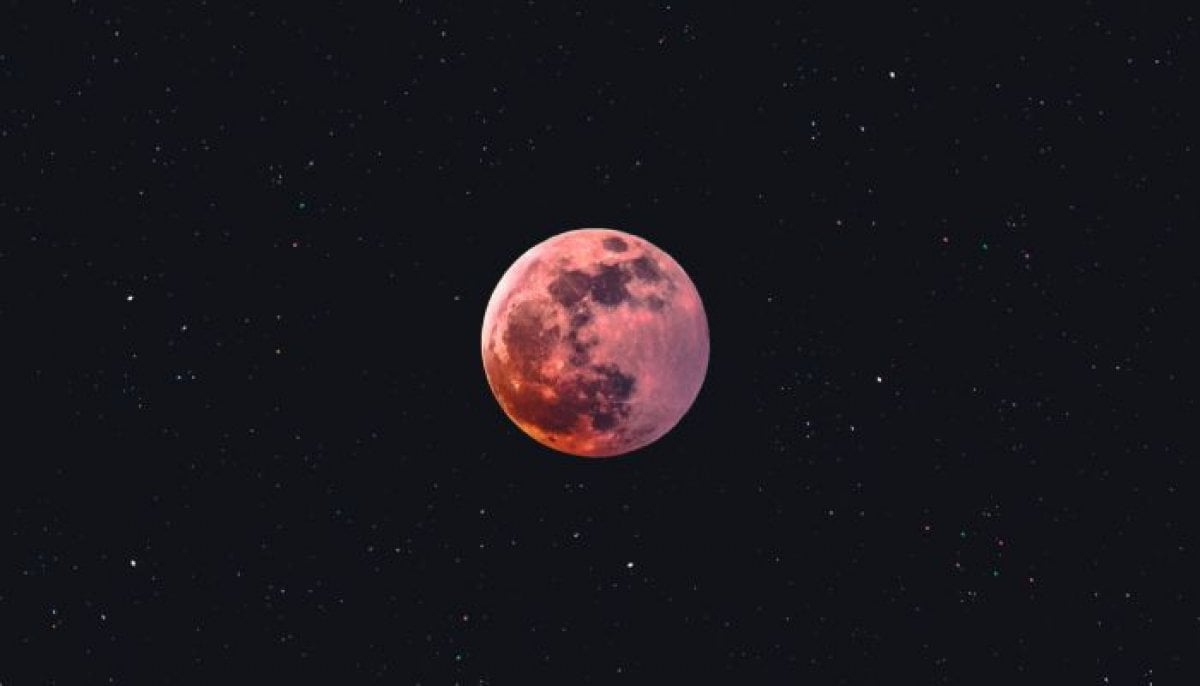
Asteroid Apophis 2029 flyby: Is Earth in danger?
Apophis is a modern scientific thriller that began with mass delirium and evolved into one of the most anticipated events in the history of space exploration

A surprising discovery has been made by the Planetary Defense Team that detected the 40,000th Near-Earth Asteroid (NEA) whose path is dangerously close to our planet’s trajectory in the solar system.
Primarily, there is a lot more to discover and keep track of how it will pass closer to Earth. It can be visible with the naked eye from parts of Europe, Africa and Asia. This event is a great opportunity to study the 340-meter space rock, which will shine like a moving star in the night sky.
This marks one of the NEAs, 99942 Apophis, which was discovered in 2004, and is set to arrive Friday, April 13th, 2029.
The European Space Agency (ESA) in collaboration with the Japanese Aerospace Exploration Agency (JAXA) is actually monitoring the asteroid.
The upcoming approach of Apophis is an intriguing event. The asteroid, which is approximately 375m in diameter, will pass within 32,000 km of the Earth- only about 10 percent of the distance to the Moon.
NASA has confirmed it will safely skim pass us at a distance 10 times closer than the Moon.
A cosmic giant will pass over our head, and scientists are closely watching how Earth’s gravity will yank Apophis off its current path.
If it passes through a “gravitational keyhole" it could have returned in 2068 on a direct collision course with Earth. While the chances were once thought to be possible, scientists have now largely ruled out this Doomsday scenario.
2029 is not just a close encounter; it will be a cosmic opportunity to study that it might eventually save the planet.
According to the USA Herald, the next four years are crucial. They should not be treated as a waiting period, but as a testing phase which requires internal structure analysis and contingency planning.
Nonetheless, the December 2028 through April 2029 observation window will be crucial not just for studying Apophis but as a period for validating planetary defense assumptions that hold up in the real universe.


-
 Scientists find ancient microbial life in places it shouldn't exist
 -
 Why Marijuana is suddenly sending thousands of dogs to hospitals in US?
 -
 36 years on, Hubble shows how stars actually change over time
 -
 Hidden magma beneath Mars? Scientists' 'unexpected' discovery raises new questions about alien life
 -
 Rare 3,200-year-old coral blue hole discovered in South China Sea
 -
 What happens at black hole’s event horizon? Scientists find the first-ever clue
 -
 Scientists discover evidence of fires used by humans 1.8 million years ago
 -
 Did NASA just uncover evidence of ancient life on Mars? Key discoveries explained
-
 Four powerful earthquakes strike three continents within hours: Scientific link or coincidence?
 -
Mysterious interstellar comet passing our solar system may be 12 billion years old, scientists say
-
When do we really become adults? Science has an answer
-
Strawberry Moon peaks June 29: When and where to watch