A beginner’s guide to identifying fake news online
Smart ways to avoid falling for fake news while scrolling on social media apps
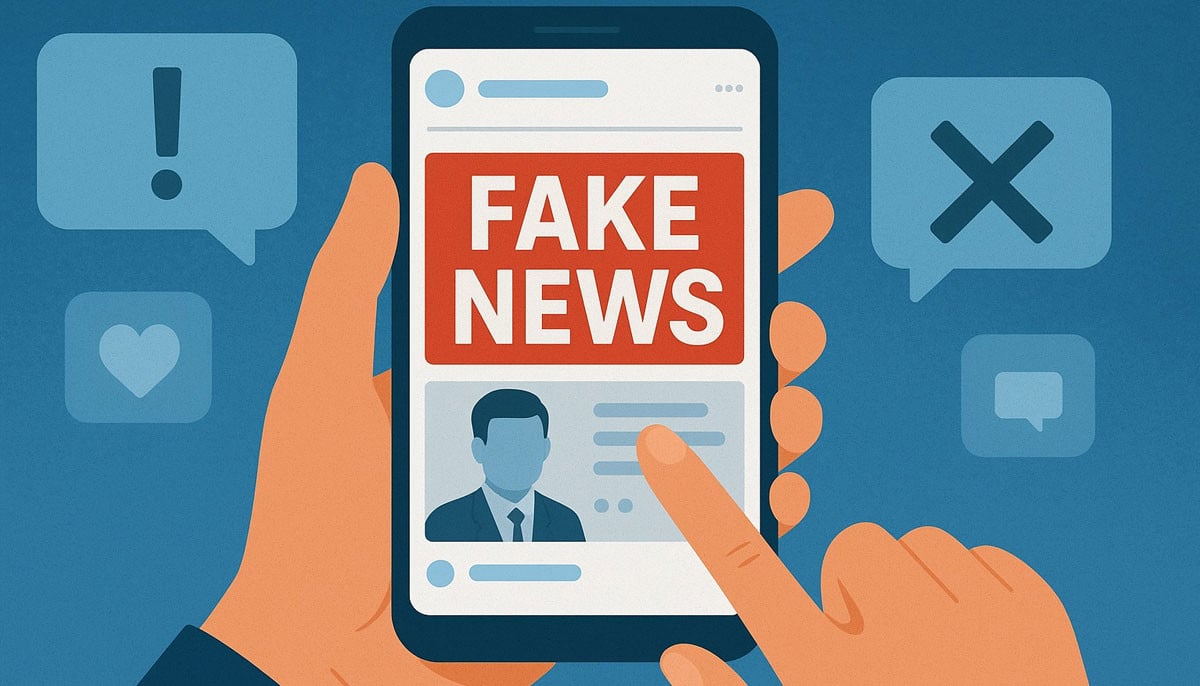
As time goes on, social media is becoming more and more important in every part of our lives. From children to adults, and from people with limited means to those with comfortable lifestyles, it has become an integral part of everyone’s routine. But with this rise comes a major concern: the growing exposure to fake news and how it affects users around the world.
In this article, we’ll look at what fake news is, the common types found on social media, and simple ways to identify fake news in your feed instantly.
What counts as fake news:
Stories, images or videos with false or misleading information presented as real for the sake of views and propaganda.
It can also be deliberately made up article to cause chaos or poorly checked reports that end up spreading incorrect facts.
Common types of fake news:
Here are the types of fake news you often see on social media platforms like X (formerly Twitter), YouTube, Facebook and Instagram, so you can avoid believing them and save yourself from being misled or embarrassed later.
Attention-grabbing headlines or Clickbait titles:
Social media posts with exaggerated or dramatic titles which are deliberately made for the sake of engagement or clicks. In such cases, the stories are accurate but are manipulated with juicy headlines for views.
Headlines that don’t match the story:
Headlines that have little or nothing in common with the rest of the story. Usually, these titles are bold and make big claims, leaving readers disappointed when they click to read the full article.
Agenda-driven stories:
Stories written with the intention of twisting reality in order to make people enraged about something, it could be a political or religious belief, or simply a cultural issue.
Fake media created using AI:
It has become very common with the advent of AI to generate fake images, videos, or voices that look real even though they’re not. They can be made for fun or to damage someone's reputation, or simply to gather views.
Sloppy or unchecked reporting:
Sometimes, news reports are posted without verifying the information presented in them. They could be entirely wrong or may contain some factual information.
Fake reports pretending to be real outlets:
Some people create fake accounts or pages using names of big media publications. These are easily identifiable if you look for verification badges that are available on some social media platforms, such as X, Instagram, Facebook, TikTok, YouTube and Snapchat (for celebrities/brands).
Why fake news is dangerous:

Fake news is dangerous because it creates confusion and spread misunderstandings about important issues, such as social, political, health, etc. People use fake news to stir up fear, anger or division which can lead to intensified social or political conflicts online.
Over time, too many false stories can make people stop trusting real news sources and institutions.
How to easily check if the news is fake:
Here are some easy ways to identify fake news on social media without putting in too much effort.
Check the Source:
Always make sure to check the source of the story posted. If the story has been posted by reliable sources or well-known publications or outlets then it can be easily trusted. Major publications usually have a clear “About Us” page, real contact information and a history of accurate reporting.
Look for Verifiable Facts:
Know that a real news article includes details like names, dates, quotes and data. To verify the article, you can recheck the information presented by searching it online.
Watch Out for Sensational Headlines:
Most often if the headline is too dramatic or feels exaggerated, it is deliberately made to make users angry or scared, so always be cautious. Fake news often uses emotional language to get quick clicks.
Examine Images and Videos Carefully
If you look closely on pictures or videos that are created using AI or are altered with help of AI tools, you would be able to see strange shadows, unnatural facial features or lip or body movements that don’t match the audio. These are signs the media may be fake.
Use Fact-Checking Tools
If you’re still unsure, check trusted fact-checking websites or established news outlets. They can quickly confirm whether a story is real or false.
Some tools or websites found free on internet to check if the story, image of video is fake, are as follows:
Google Fact Check Explorer: You can type in a keyword, phrase, link or even upload an image to see if fact-checkers have already checked it.
Wayback Machine: It can be used to view old versions of websites to see what was changed or deleted.
Reverse Image Search: You can upload an image to find where it originally came from and whether it has been reused or edited.
InVID-WeVerify Extension: This is a free tool for checking videos. It breaks videos into key frames, shows metadata and helps you verify if a clip is real or taken out of context.


-
 King Charles ‘still the top dog’ despite Prince William succession talk
 -
 Royal family anxious as Prince Harry plans UK return amid feud with William
 -
 Princess Eugenie prioritises ‘new life on the way’ amid Andrew, Fergie controversy
 -
 Kate Middleton could push Prince Harry, Meghan toward losing Sussex titles
-
 Meta AI rival chatbots gets free WhatsApp access
 -
 Google I/O 2026: Watch Major announcements and updates live
 -
 OpenAI co-founder Andrej Karpathy joins Anthropic as AI race intensifies
 -
 AI still falls short on programming language design, Bjarne Stroustrup says
 -
 Mistral AI acquires Emmi AI startup in industrial push with a major move
 -
 Elon Musk responds to jury verdict in OpenAI lawsuit: ‘Dangerous precedent to set’
 -
 Anthropic’s Mythos data sharing plan sparks new cybersecurity risk
 -
 Nvidia CEO Jensen Huang hints China market may open to US chipmakers