SPHERE unveils spectacular cosmic scenes where new planets are forming
The SPHERE instrument on ESO’s very large telescope has produced a breathtaking set of 51 high-resolution images
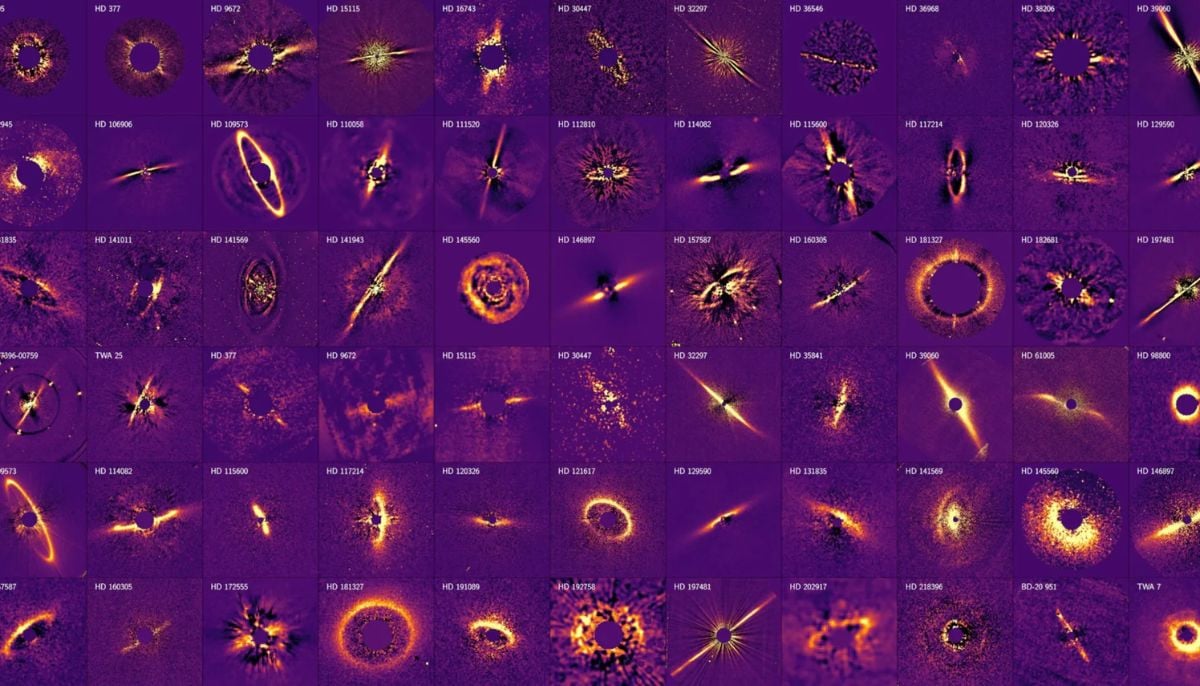
Astronomers have created a groundbreaking discovery of images showing debris disks in an extensive range of exoplanetary systems.
These images primarily reveal where new planets are actively forming within their stellar systems.
As reported by Science Daily, data provides exceptional insights into the properties of debris disks and allows for the study of smaller bodies like asteroids and comets in these systems, which are otherwise impossible to observe directly.
If we take a glimpse at our own solar system-the Sun, the planets, and dwarf planets such as Pluto- a gigantic variety of bodies comes into view.
In this connection, scientists pay meticulous attention to objects ranging from about a kilometer to several hundred kilometers in size.
These small bodies conserve clues to the solar system’s initial days. It has been observed that during the long process in which tiny grains grew into planets, intermediate objects known as planetesimals specifically formed.
Asteroids and comets are the lingering elements of that conventional phase, planetesimals that never developed into full-size planets.
Exploration for small bodies in stellar system continues
Astronomers have recognized more than 6000 exoplanets and give us a clearer picture of how planetary systems vary throughout the galaxy. It was very difficult to imagine these worlds directly.
Meanwhile, less than 100 exoplanets have been photographed so far, and even the largest ones appear only as indistinct specks.
This challenge has become even greater when searching for small bodies.
In this connection, Dr. Julien Milli, astronomer at the University Grenoble Alpes and co-author of the study said, “Finding any direct clues about the small bodies in a distant planetary system seems impossible.”
Dust provides the key to discover hidden planetesimals
The recent discovery comes not from the small bodies themselves, but from the dust created when they collide.
Planetesimals frequently collide with each other, rarely merging into larger bodies and sometimes fragmenting into smaller ones.
Astronomers can infer details about the unseen small bodies observing the dust that these bodies create.
The intriguing phenomenon of SPHERE is that it blocks starlight to uncover faint features
The essential element behind SPHERE is based on a concept familiar from everyday experience. If the Sun is shining directly into your eyes, you must raise a hand to cover the glare so you can see what lies around it.
In order to insert a small disk into the path of the star’s light, the instrument blocks maximum glare before the image is captured.
SPHERE continually monitors distortions and corrects them in real time using an adaptive mirror.
A major survey unveils 51 debris disks in sharp detail
The new study presents a unique set of debris disk images generated by analyzing scattered dust particles.
It is difficult to work with a large sample, the analysis revealed that more massive young stars tend to host more massive debris disks.
It has been observed that systems where dust is concentrated farther from the star show a tendency towards more massive disks.
Nonetheless, it was thought that the gaps were formed by planets, especially larger ones that clear out paths, since the existence of planets is responsible for the patterns being observed.
In addition, sharp edges in the disks could further suggest the presence of planets that have not yet been directly observed.


-
 Starship flight 14: Why SpaceX’s first-ever orbital test matters to NASA’s Artemis
 -
 New study explains 364-day Qumran calendar puzzle
 -
 Why does time feel faster as you age? Science explains
 -
 Scientists name newly discovered snake after Guns N' Roses' Slash
 -
 SpaceX secures three new NASA crew flights: What to know
 -
 Sovereign AI fund in talks to back Political Sciences: What to know
 -
 What recent discovered Moon Crater Means for Future Astronauts
 -
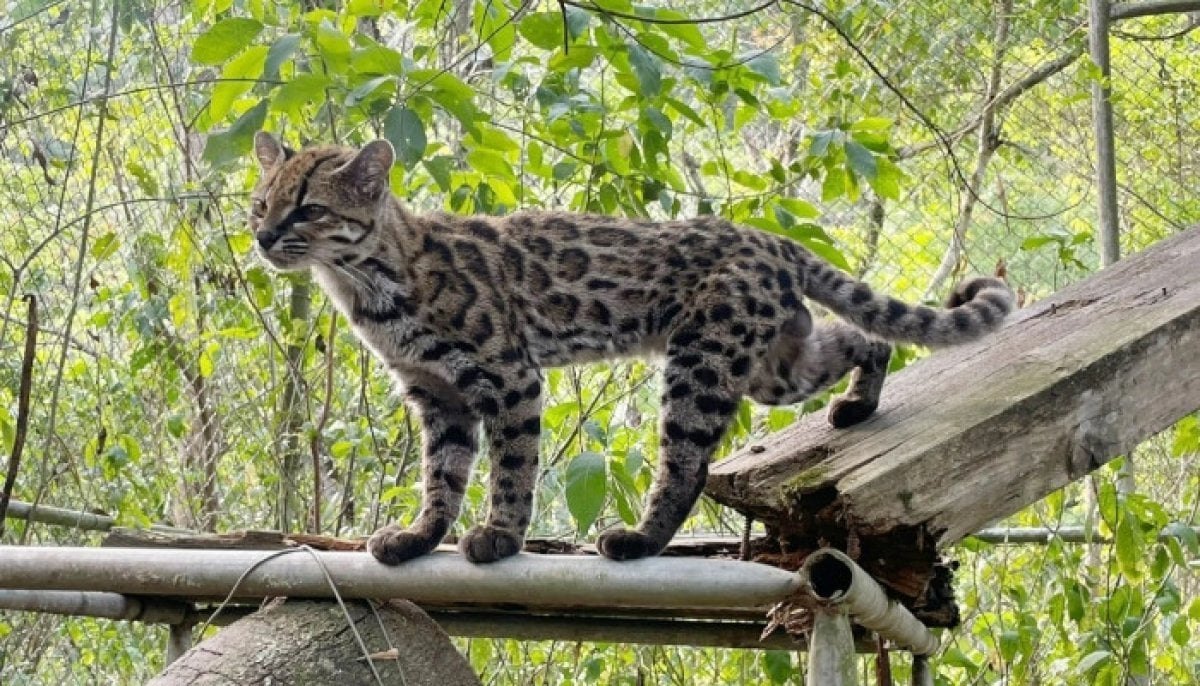 Scientists discover new wild cat species in Bolivia for the first time in a century