Trump announces 25% auto tariffs, plans further details by April 2
Trump says sectoral tariffs on pharmaceuticals and semiconductor chips will likely start at 25% in April
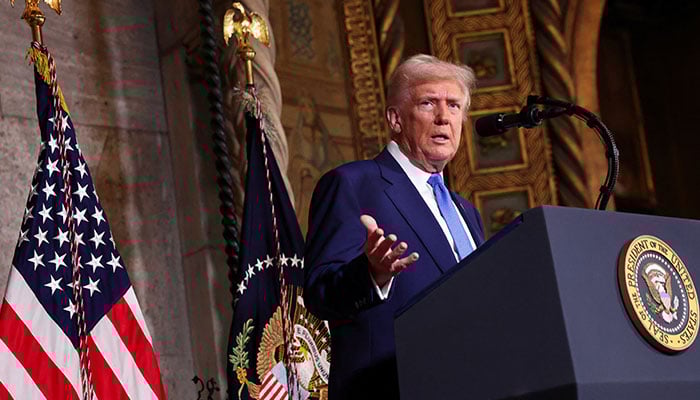
PALM BEACH: US President Donald Trump on Tuesday said that tariffs on automobiles would remain at around 25%, adding that further details on the issue would be shared in an upcoming announcement scheduled for 2 April.
On Friday, Trump said levies on automobiles would come as soon as 2 April, the day after members of his cabinet are due to deliver reports to him outlining options for a range of import duties as he seeks to reshape global trade.
Trump has long pointed to what he calls unfair treatment of US automotive exports in foreign markets.
The European Union, for instance, collects a 10% tariff on vehicle imports, four times the US passenger car tariff rate of 2.5%. The US, though, collects a 25% tariff on highly profitable imported pickup trucks.
Trump on Tuesday also said sectoral tariffs on pharmaceuticals and semiconductor chips would also likely start at 25% in April, with at least some rising afterwards over the course of a year.
Since his inauguration, Trump has imposed a 10% tariff on all imports from China, on top of existing levies. He also announced, and then delayed for a month, 25% tariffs on goods from Mexico and non-energy imports from Canada.
He has also set a 12 March start date for 25% tariffs on all imported steel and aluminium. Last week, he directed his economic team to devise plans for reciprocal tariffs on every country that taxes US imports.


-
 HSBC to phase out fixed-pay allowances by 2028 in major compensation overhaul
 -
 TotalEnergies expands US renewable venture with KKR in $1.2B solar portfolio deal
 -
 Australian telecom shares tumble as SpaceX moves closer to direct-to-cell market
 -
 World Bank in crisis aid talks with dozens of nations amid global shocks
 -
 Deutsche Bank chief explains why German election results alarm foreign investors
 -
 China orders development of national blockchain network in economic blueprint: Here’s why
 -
 Tesla renames 'full self-driving' to 'assisted driving' in Europe: What to know
 -
 US sanctions ICC hours after former judge wins Nobel Prize: What to know