New technique reveals hidden patterns in tattoos of 1,200-year-old Peru mummies
Three highly detailed tattoos on mummified remains turn out to be "predominantly geometric patterns"
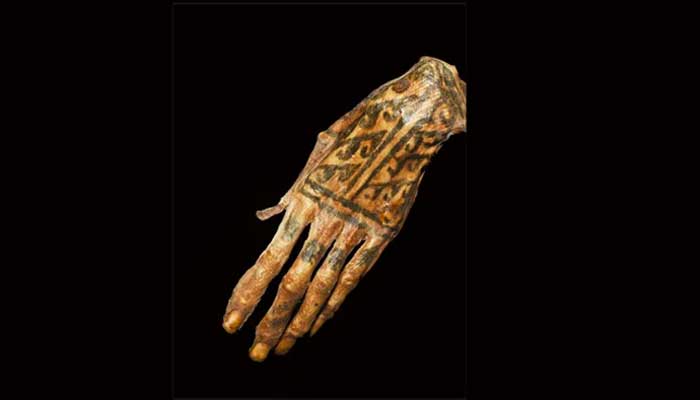
Archaeologists have said in a new study that the intricate details of tattoos on centuries-old mummies in Peru have been revealed by a new laser-based technique.
According to Live Science, however, not everyone thinks that the new technique is better than existing methods for analysing historical tattoos.
Researchers looked at more than 100 mummified human remains from the Chancay culture, which inhabited Peru from about AD 900 to 1533 in the study, which was published on Monday (January 13) in the journal PNAS.
"Only 3 of these individuals were found to have high-detailed tattoos made up of fine lines only 0.1 - 0.2mm [0.004 to 0.008 inch] thick, which could only be seen with our new technique," study co-author Michael Pittman, a paleobiologist at The Chinese University of Hong Kong, told Live Science.
The technique involves laser-stimulated fluorescence (LSF). The LSF produces images based on the fluorescence of a sample, thus revealing details that can be missed by simple ultraviolet (UV) light examination.
It works by making the tattooed skin fluoresce bright white, which causes the carbon-based black tattoo ink to stand out clearly.
Moreover, this almost completely eliminates the issue of tattoos bleeding and fading over time, which can obscure the design, according to the study.
The three highly detailed tattoos revealed by the team on the mummified remains were "predominantly geometric patterns featuring triangles, which are also found on other Chancay artistic media like pottery and textiles," Pittman said, whereas, other Chancay tattoos included vine-like and animal designs.


-
 NASA Artemis II crew to break Apollo 13 distance record
 -
 New study investigates phenomenon surpassing the speed of light
 -
 Polar Vortex enters final ‘seasonal’ phase: Rare shift signals winter weather risks into April
 -
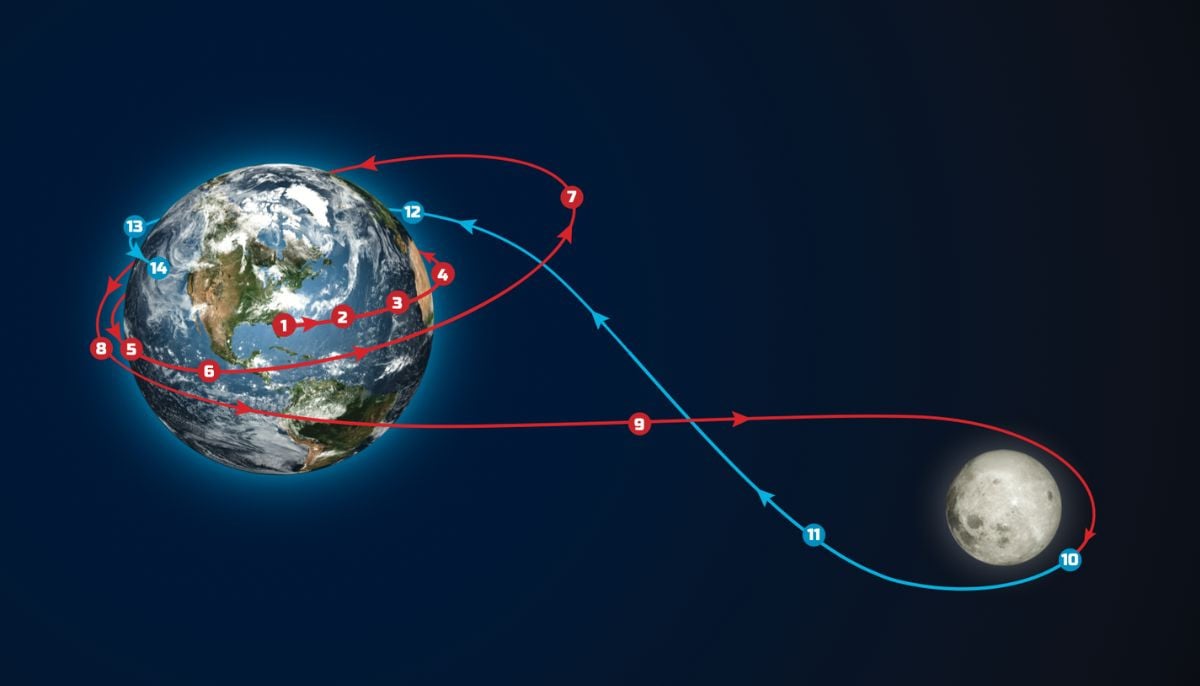 Why NASA Artemis II won’t take straight path to Moon: ‘Figure-8’ route explained
 -
 Even in space: NASA Artemis II astronauts hit Outlook glitch mid-mission
 -
 Artemis II hurtles ever closer to the lunar far side
 -
 Where is Artemis II today? Here is everything to know about NASA’s journey to the moon
 -
 European Space Agency to negotiate with NASA on future lunar missions