Space One's second Kairos rocket launch fails 10 minutes after liftoff
Japan adds yet another failure to series of recent setbacks for country's efforts in rocket development

Japan's Space One on Wednesday faced another setback in its quest to become the country's first space company to launch a satellite into space, as the company terminated the flight of its Kairos small rocket only 10 minutes after liftoff.
This marks the second aborted attempt within nine months, underscoring the challenges Japanese rocket development is currently experiencing.
The 18-metre (59 feet) solid propellant rocket lifted off from Spaceport Kii in western Japan at 11:00am but quickly lost stability in its trajectory, prompting authorities to cancel the mission in just 10 minutes.
In an email to reporters, Space One said that the flight was terminated because "the achievement of its mission would be difficult".
Five small satellites, including one from the Taiwan Space Agency, were on board the rocket headed into sun-synchronous orbit roughly 500 kilometres above the Earth's surface.
Space One is investigating the incident and will host a press conference at 2:30pm local time, the company said.
These failures come at time when the Japanese government is aiming to bolster the domestic space industry, targeting 30 rocket launched annually by the early 2030s and positioning the country as Asia's space transportation hub in a potential $52 billion market.
Tokyo-based Space One was founded in 2018 by Canon Electronics, IHI's aerospace unit, construction firm Shimizu and a bank, with the goal of launching 20 small rockets a year by 2029 to capture growing satellite launch demand.
At its debut flight in March, Kairos, carrying a Japanese government satellite, exploded five seconds after launch.
Inappropriate flight settings triggered the rocket's autonomous self-destruct system even though no issues were found in its hardware, Space One later said.
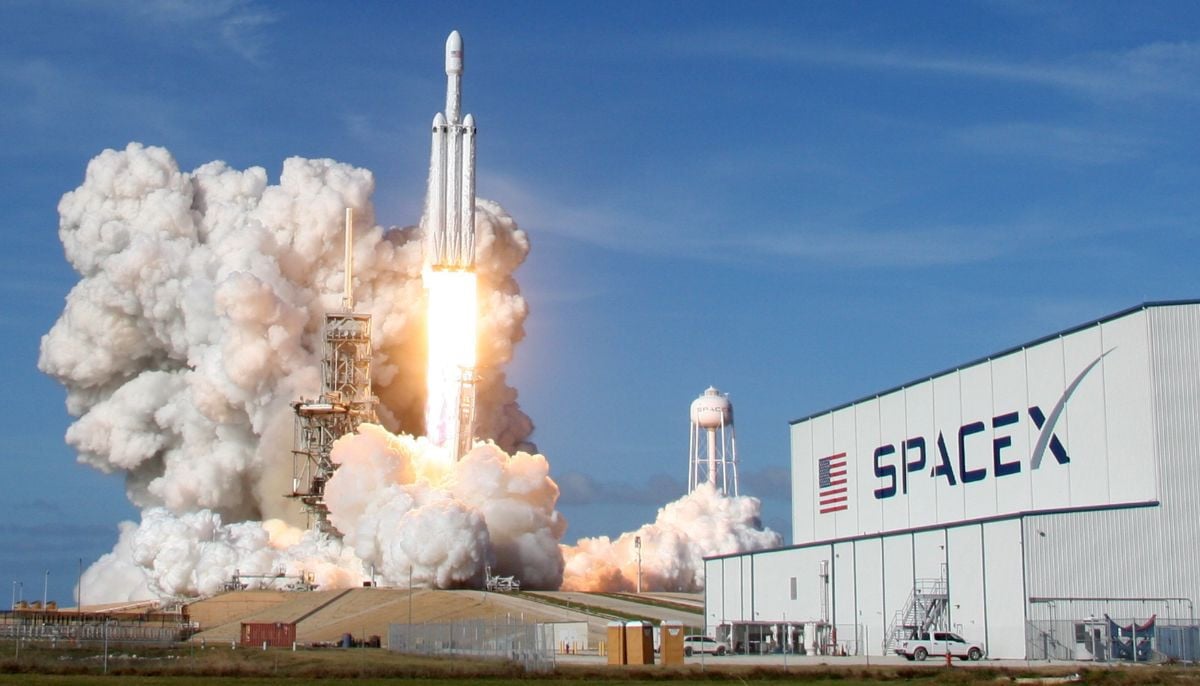
A lack of domestic launch options has seen emerging Japanese space startups such as radar satellite maker iQPS and debris mitigator Astroscale tapping on SpaceX's rideshare missions or leading small rocket provider Rocket Lab.
Recent Japanese rocket projects have also faced other setbacks.
The Japan Aerospace Exploration Agency (JAXA) postponed the debut flight of the new solid-fuel launcher Epsilon S after its engine combustion test failed last month for a second time.
JAXA's larger liquid-propellant rocket H3 also failed at its inaugural launch in March 2023 but has succeeded in three flights this year, winning orders from clients such as French satellite giant Eutelsat.
In 2019, Interstellar Technologies became the first Japanese firm to send a rocket into space without a satellite payload, but its orbital launcher Zero is still under development.


-
 NASA Artemis II crew to break Apollo 13 distance record
 -
 New study investigates phenomenon surpassing the speed of light
 -
 Polar Vortex enters final ‘seasonal’ phase: Rare shift signals winter weather risks into April
 -
 Why NASA Artemis II won’t take straight path to Moon: ‘Figure-8’ route explained
 -
 Even in space: NASA Artemis II astronauts hit Outlook glitch mid-mission
 -
 Artemis II hurtles ever closer to the lunar far side
 -
 Where is Artemis II today? Here is everything to know about NASA’s journey to the moon
 -
 European Space Agency to negotiate with NASA on future lunar missions