Aurora borealis to light up skies as strong G3 solar storm approaches Earth
Strong geomagnetic storm, five months after previous one, expected to disrupt power grids, causing blackouts
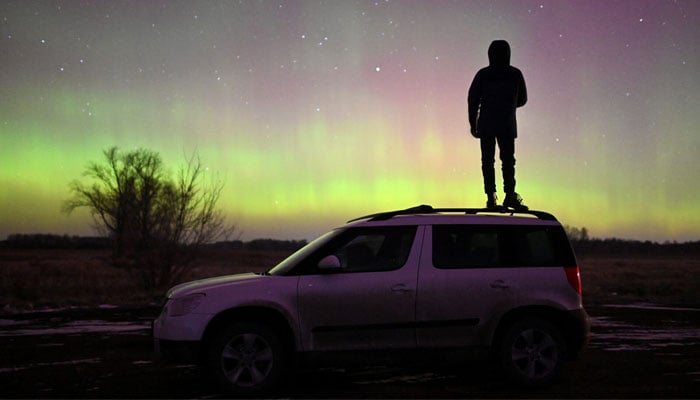
October is off to a hot start as a significant solar storm is currently headed towards the Earth and is likely to bring back striking auroras to the skies which were witnessed by many Earthlings from the front seat, earlier this year.
Recently, the National Oceanic and Atmospheric Administration (NOAA) warned that a solar storm, which is classified as a strong "G3-class geomagnetic storm" — the third most powerful category after the G4 and G5 — is likely to hit Earth on Friday.
According to the NOAA, this will be the second geomagnetic storm to hit Earth in five months this year.
Experts at the United States-based scientific and regulatory agency said that, while this solar storm will not have a direct effect on humans, it will impact sensitive electrical systems, such as power grids and satellites and navigation systems but the threat should be "mostly mitigatable."
These geomagnetic storms are triggered by eruptions on the sun's surface, such as solar flares, which release large amounts of plasma into space, eventually impacting our planet's atmosphere, Gizmodo reported.
Previously, NOAA cautioned that a solar flare could result in a coronal mass ejection (CME), expelling solar particles towards Earth.
The severity will be "dependent upon the orientation of the embedded magnetic field," according to the alert.
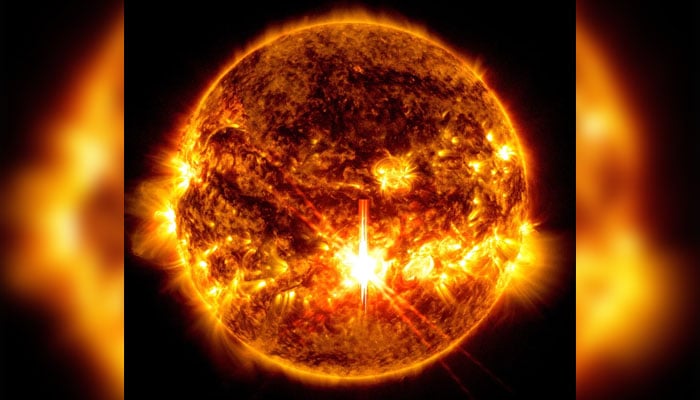
However, CMEs can result in bright auroras, giving people on Earth another chance to witness a stunning display of bright aurora borealis that may be visible over many of the northern US states, the lower Midwest, and even as far as Oregon.
The NOAA's warning comes after a strong solar explosion occurred on Tuesday, when the second most powerful solar flare in the past few years erupted.
The flare originated from an area of the sun known for its numerous sunspots, called Active Region 3842, and, according to NOAA, was rated an X7.1.
Flares are rated by their severity, with b-class flares being the weakest and x-class being the strongest. Each letter marks a 10-fold increase in power over the one lower on the scale, which means an X7.1 is quite powerful.
In fact, it was the second most powerful of the current solar cycle.


-
 NASA Artemis II crew to break Apollo 13 distance record
 -
 New study investigates phenomenon surpassing the speed of light
 -
 Polar Vortex enters final ‘seasonal’ phase: Rare shift signals winter weather risks into April
 -
 Why NASA Artemis II won’t take straight path to Moon: ‘Figure-8’ route explained
 -
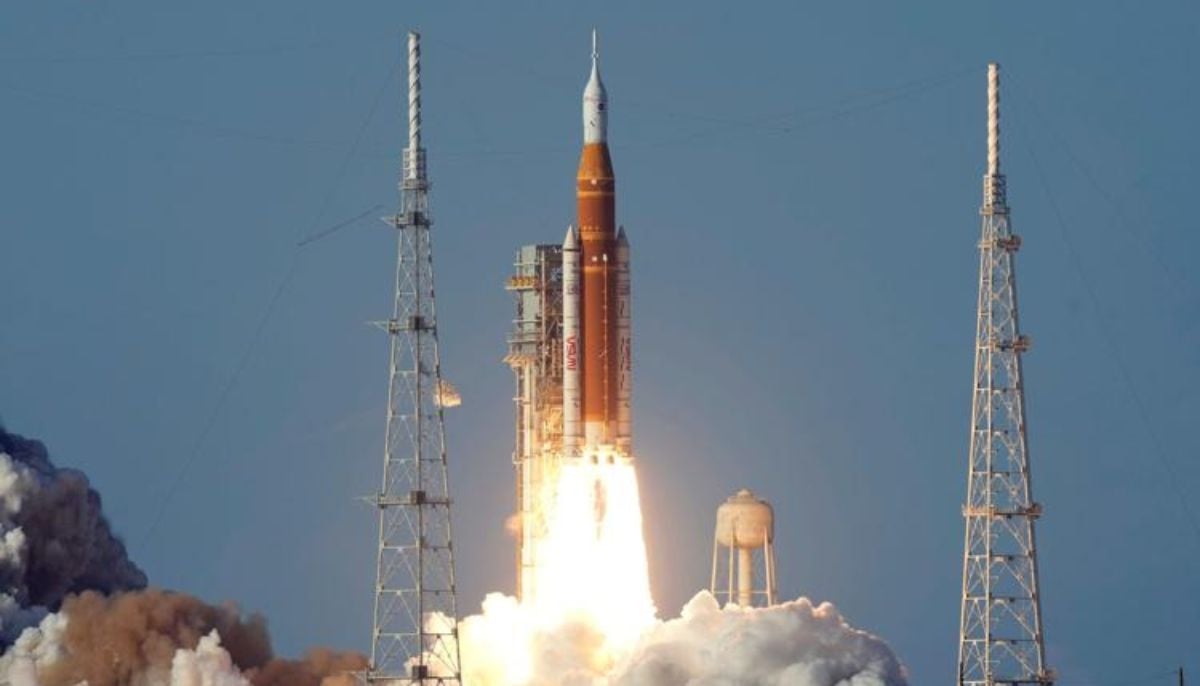 Even in space: NASA Artemis II astronauts hit Outlook glitch mid-mission
 -
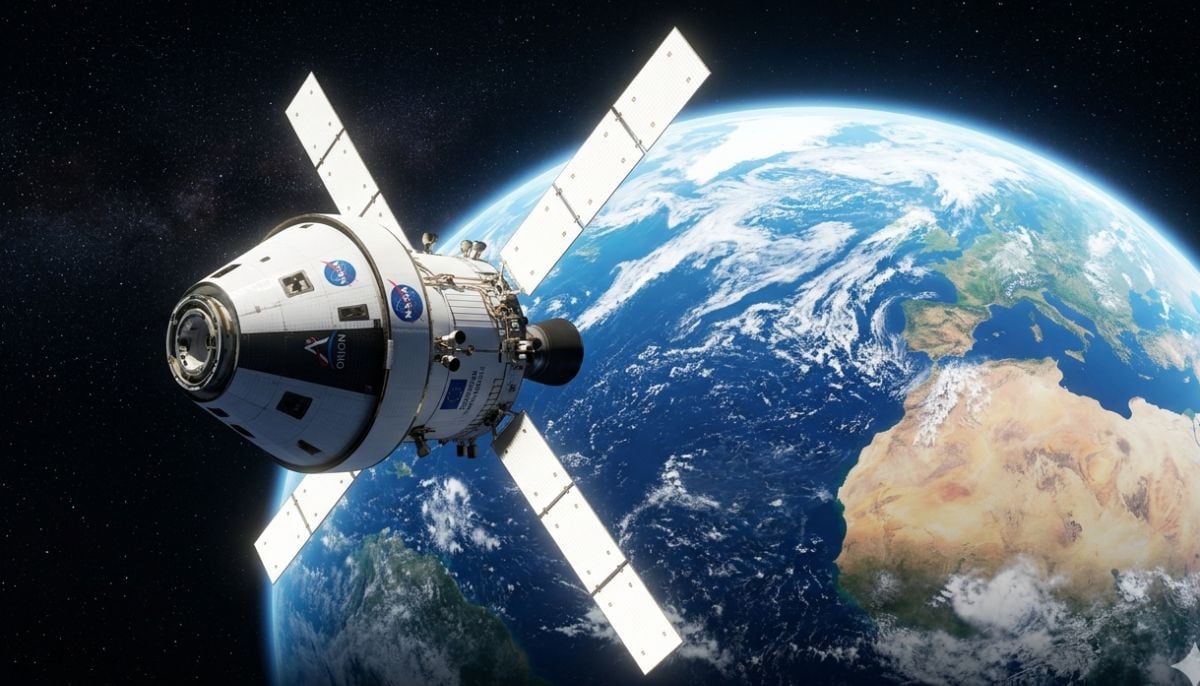 Artemis II hurtles ever closer to the lunar far side
 -
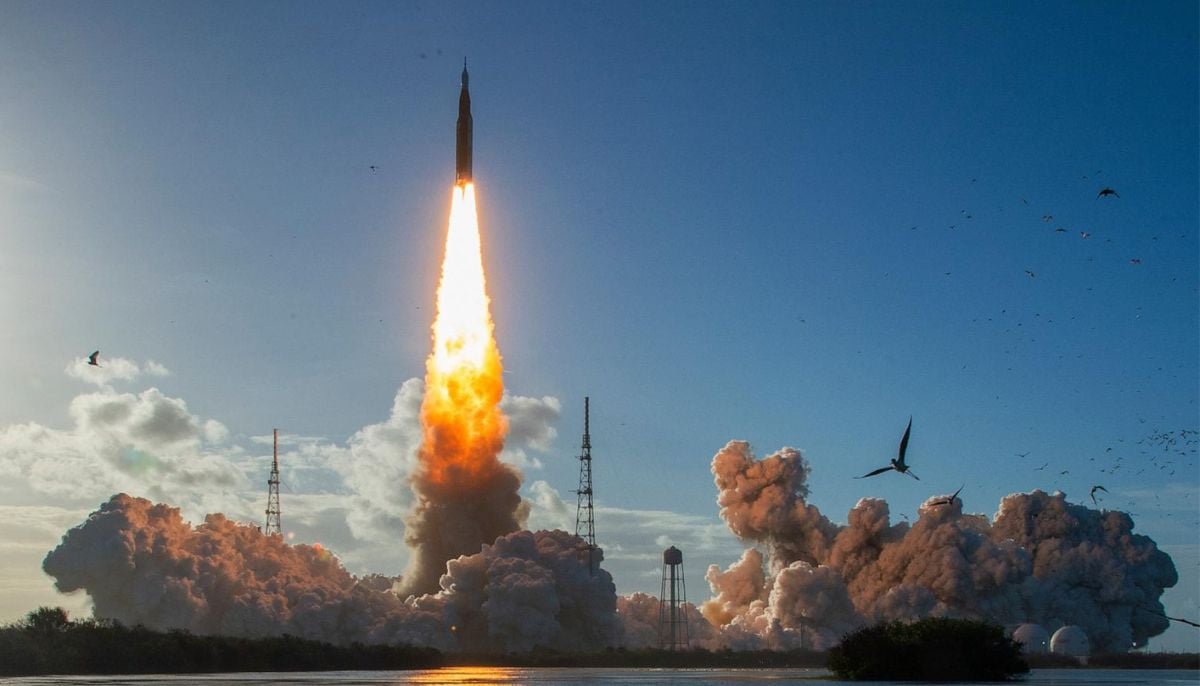 Where is Artemis II today? Here is everything to know about NASA’s journey to the moon
 -
 European Space Agency to negotiate with NASA on future lunar missions