AI-powered computer inventor Alan Turing to answer questions at Bletchley Park
AI character will adjust answers depending on whether it is interacting with group of people, or children
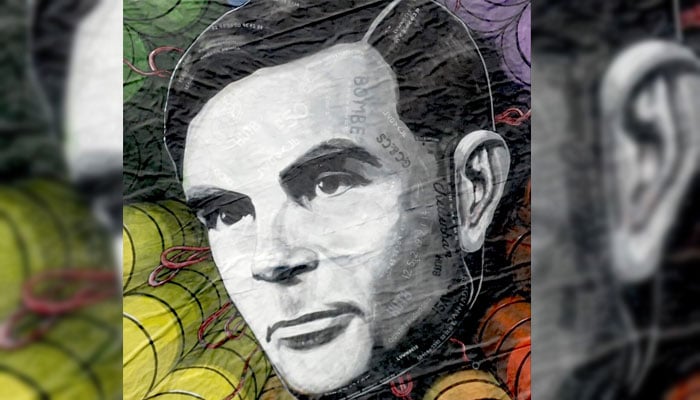
Alan Turing, father of artificial intelligence (AI), will soon rise as an animated figure at Bletchley Park near Milton Keynes home of Britain’s Second World War code breakers, BBC reported.
This life-like hologram of Turing will enable the museum visitors to engage in conversation with Turing about his life and work. The AI character will be able to answer as it will need to address an individual, a group, or children specifically.
Rebecca Foy said: "Opening at the same time as a new exhibition at Bletchley Park on AI, we are looking forward to introducing our visitors to our wartime story in a new and exciting way, highlighting the part that Codebreakers, such as Alan Turing, played in the emergence of machine learning."
Turing was instrumental in the Allies’ victory against Nazi Germany in World War II since he helped to decode messages and understand the phenomenon of the Enigma machine in Bletchley Park. Later on, after the warfare, he came up with a clear depiction of a Digital Computer in which the programs could be stored in a memory.
The current trustee of the Bletchley Park Trust and the nephew of Alan Turing, Sir Dermot Turing said: “The principle behind machine learning can be found in work that Alan Turing did in Bletchley Park during the Second World War referring to the machine solutions to code-breaking issues. Of course, many people come to Bletchley Park to be closer to what Alan Turing did, and this will be rather amusing."
Currently, Bletchley Park is working with a UK-based Artificial Intelligence firm, known as 1956 Individuals to develop this display which is expected to be completed in several months. It will involve some of the best digital character artists in the country; moreover, it will reply in different languages.


-
 Four alien species recovered from crashed UFOs, Ex-CIA researcher claims
 -
 NASA delays Moon landing as Artemis III shifts to orbit mission
 -
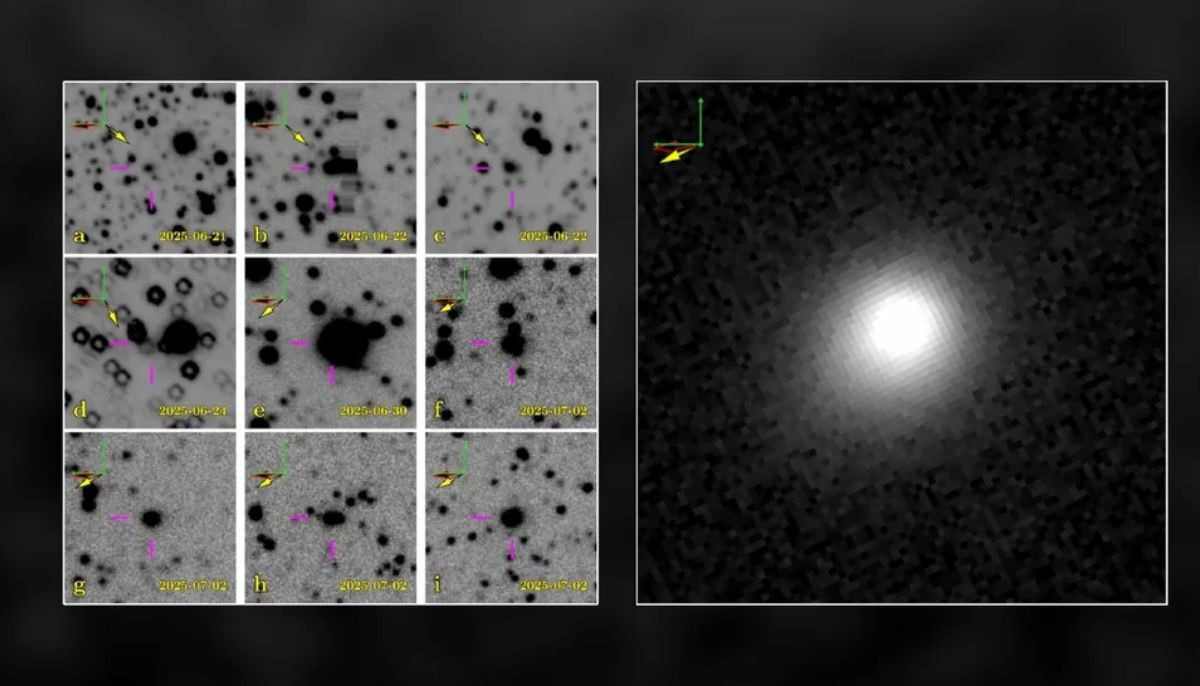 Scientists reveal shocking early sighting of 3I/ATLAS comet
 -
 Asteroid 2026 JH2 to pass extremely close to Earth on May 18: Should we be concerned?
 -
 Meet the ‘last titan’: Giant new dinosaur identified from fossils in Thailand
 -
 Can we finally find aliens? Scientists reveal a surprising new ‘organizational’ approach
 -
 Study reveals how to tell real alien life from chemical fakes
 -
 Scientists find hidden third ancestral group in Japanese genomes
-
 SpaceX ‘Space Junk’ is on a collision course with the Moon, scientists say
 -
Do you know what happened on May 10, 1967? NASA's M2-F2 disaster explained
-
Why the Southern Ocean is melting: Antarctica’s sea ice resilience reaches a breaking point
-
Giant black holes are cosmic ‘Frankensteins’ built by mergers, new study reveals