Mukesh Ambani beats Elon Musk, Jeff Bezos in satellite internet
Victory for Reliance Industries comes at a time when many trying to break into Indian satellite market
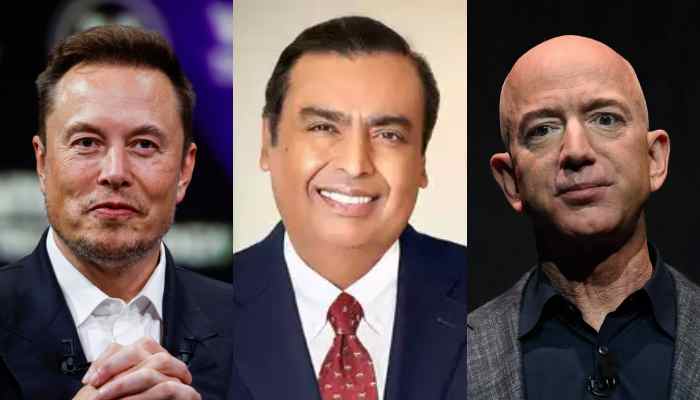
India’s richest man, Mukesh Ambani, has defeated billionaires Elon Musk and Jeff Bezos in the Indian space race.
Ambani’s Reliance Industries Jio platforms cleared a major hurdle in their race for satellite internet by winning approval from the Indian space regulator, The Economic Times reported.
According to local sources, the approvals were issued to Orbit Connect India, which aims to provide satellite-based high-speed internet access across the country.
Orbit Connect is a joint venture between Reliance Jio and Luxembourg-based company Société Européenne des Satellites (SES).
The approval has come at a time when Musk and Bezos both have been trying to break into the Indian satellite communication market.
As per reports, the Indian National Space Promotion and Authorisation Centre (IN-SPACe has granted permission, however, they are still waiting for the higher approvals.
According to IN-SPACe chairman Pawan Goenka, another company named Inmarsat has also gotten approval to operate satellites over India.
He said: "Comparatively low pricing of communication services in India will compel global players to drive innovation to reduce their pricing.
"This is already being done in many industries, like automotive, where multinational OEMs had to innovate to meet the expectations of Indian consumers of high performance and low cost."


-
 Four hidden dead stars found in Earth's backyard
 -
 What happened during SpaceX’s 13th Starship test? First upgraded Starlinks successfully deployed
 -
 Astronomers may have found the first moon beyond our solar system
 -
 Space datacenters could catastrophically pollute Earth, groups warn
 -
 Astronomers just solved a 10-billion-year-old Milky Way mystery
 -
 Why China is crashing a spacecraft into asteroid 2015 XF261
 -
 Australia's Great Barrier Reef at extreme risk of ‘ecosystem collapse’, scientists warn
 -
 James Webb Space Telescope reveals how black holes feed themselves