Fossil of world's largest snake from 47 million years ago found
Scientists discover the fossil of the largest snake in the world
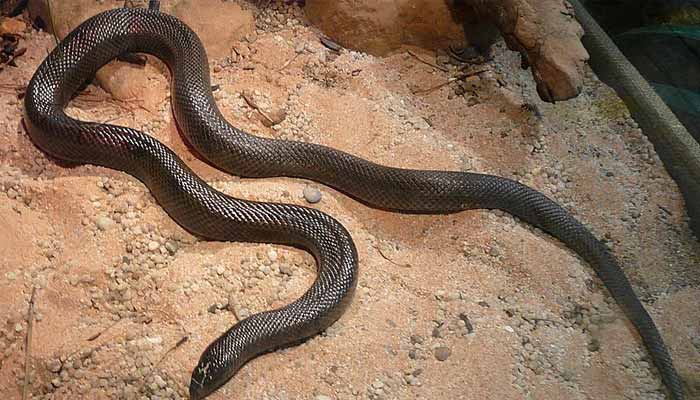
The fossil remains of the world’s largest snake have been found in India’s Gujurat, The Guardian reported.
Known as the Vasuki Indicus, the fossil is estimated to be 47 million years old and is 10 to 15 meters long.
According to palaeontologist Debajit Datta: "Vasuki was a slow-moving ambush predator that would subdue its prey through constriction like anacondas and pythons. This snake lived in a marshy swamp near the coast at a time when global temperatures were higher than today."
The discovery was made by Professor Sunil Bajpai and Datta, who also published the findings in the journal Scientific Reports.
Bajpai, in a statement, said: "This discovery is significant not only for understanding the ancient ecosystems of India but also for unraveling the evolutionary history of snakes on the Indian subcontinent.
"It underscores the importance of preserving our natural history and highlights the role of research in unveiling the mysteries of our past."
They have compared the size of the massive predator with that of the famous Titanoboa.
Explaining the animal, Datta said: "Vasuki was a majestic animal. It may well have been a gentle giant, resting its head on a high porch formed by coiling its massive body for most parts of the day or moving sluggishly through the swamp like an endless train."


-
 Chinese astronomers discover real-life three-body system unlike Liu Cixin’s fiction
 -
 Hunter’s Moon 2026: When and how to watch October’s full moon
 -
 Elon Musk’s Mars colonization dream faces reality check from Nobel laureate
 -
 NASA competition model 2.0 cuts mission selection by 45%
 -
 A ‘neglected’ neutrino may hold the key to why the Universe exists
 -
 Can cancer drugs be made in space? Here’s what the new mission aims to find out
 -
 SpaceX Falcon 9 successfully launches Bandwagon-5 mission with 32 payloads
 -
 Europe launched 8 orbital rockets last year, can it rival Starlink?