Rupee can plunge to 350 by end of 2024: report
Pakistani rupee has lost 20% of its value against the dollar and analysts say that this will continue in 2024
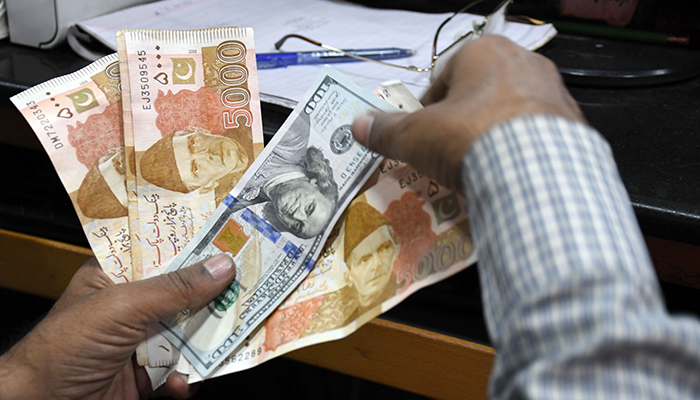
The Pakistani rupee can fall to as low as 350 against the dollar by the end of the next year, according to BMI, a Fitch Solutions Company, as it is set to end 2023 as Asia’s worst-performing country.
Despite the government’s efforts to crackdown on smugglers and speculators, the local unit has lost 20% of its value against the dollar and analysts say that this will continue, Bloomberg reported.
BMI, a Fitch Solutions Company, sees the rupee falling to 350 against the dollar by the end of 2024, while brokerage firm Topline Securities Ltd expects it to fall to 324. The local currency closed at 285.52 against the dollar in the interbank market on Tuesday.
Citing the country’s record inflation, trade deficit, and other factors impacting the rupee, global economist at BMI in London John Ashbourne said: “This looks like a currency that is set to adjust downwards.”
The rupee is being weighed down by high debt payments, an external funding gap, and a drop in remittances — a major source of foreign exchange for the cash-strapped nation. Pakistan was on the brink of default last year, and as foreign investments fell, there seems to be no respite for the currency.
The International Monetary Fund this month agreed to a $700 million bailout under a short-term agreement, allowing Pakistan to avert a default, but the avenues for inflows keep shrinking amid the distressed economic condition — making the country more dependent on loans from multilaterals and bilaterals.
It is expected that amid a dollar shortage, parallel currency markets — hundi and hawala — might strengthen as they did last year after the State Bank of Pakistan put restrictions on the dollar to safeguard dwindling reserves, which fell to multi-year-low levels.
In September, after the rupee had been trading at record-low levels of 300, the caretaker set-up launched an intense illegal purchase and selling of the greenback at a premium exchange rate, but experts say that the recovery will be short-lived.
“It’ll be very hard in the long term to convince people to use the official rate if parallel markets give more value for a dollar,” said Ashbourne. “The authorities can sort of push against the tide for a certain amount of time, but they aren’t able to do that sustainably.”
Goldman Sachs Group Inc warned the market will continue to require a premium for the rupee given soaring interest costs and only short-term arrangements with lenders to support the external balance.
Topline Securities wants the new government — that will be formed after the February elections next year — to enter into a new deal with the IMF to provide relief to the currency, in turn, helping the economy.
“Pakistan’s external account vulnerabilities can only be addressed effectively through a new and bigger IMF program,” its analysts wrote in a note this month.


-
 Bombardier shares rise as Trump drops threat to block aircraft sales in US
 -
 OpenAI seek to raise $30 billion at $1.4 trillion valuation ahead of Anthropic IPO
 -
 Supreme Court rejects Google challenge to patent office review policy: Here's why
 -
 Netflix faces scrutiny over user engagement ahead of Q3 report
 -
 Meta and Tesla are set to report earnings next week: What to know
 -
 SpaceX sets Q3 2026 earnings release date: What to know
 -
 Hyundai to recall nearly 100,000 US vehicles over fire risk from overheating
 -
 Will Tesla and SpaceX merge? Barclays expects announcement ahead of December meeting