How will space research impact field of medicine?
Recently, Varda Space Industries started their attempt to carry out medical research in space, expanding spectrum of medical research

Researchers have visited many locations around the globe in their never-ending search for medical breakthroughs, but this particular attempt to make an inventive discovery has literally taken them to another planet.
Varda Space Industries, a start-up in California, successfully launched a 200-pound (90-kilogram) capsule on June 12 with the goal of carrying drug research into Earth's orbit.
According to CNN journalist Katie Hunt, the experiment, conducted in microgravity by simple onboard devices, aims to ascertain whether it would be possible to carry out remote pharmaceutical manufacturing in space.
She claimed that research has shown that protein crystals grown in a weightless environment can yield more perfect structures than those grown on Earth.
Following that, it might be possible to use these extraterrestrial crystals to create medications with improved efficacy and absorption, the report stated.
According to Hunt, Enceladus, Saturn's moon, contains a crucial chemical component of life, phosphorus, found in the moon's ice-crusted ocean.
This discovery is the first of its kind, as phosphorus is essential for DNA, RNA, cell membranes, and ATP production and is a breakthrough in the field of medicine.
Meanwhile, Dr. Frank Postberg, a professor of planetary sciences at Freie Universität Berlin, claims that phosphorus is necessary for the production of DNA and RNA, cell membranes, and ATP (the universal energy carrier in cells).
He said: "Life as we know it would simply not exist without phosphates."
Hunt further defined the significance of research by citing various previous studies that made revolutionary improvement in the field of science,
She shared that Antarctica's cold, saltiest ocean waters absorb heat and carbon pollution, acting as a climate change buffer.
However, according to the British Antarctic Survey, vital water mass in the Weddell Sea is declining due to long-term changes in winds and sea ice, potentially impacting the climate crisis and deep ocean ecosystems.
Additionally, she talked about Lucy, a famous fossil discovered in 1974 in Ethiopia that helped Dr. Ashleigh L.A. Wiseman at the University of Cambridge reconstruct the ancestor's muscles, enabling researchers to understand her size, shape, and movement.
Similarly, recent discoveries in ancient Australian rocks reveal the early evolution of eukaryotes, the ancestors of plants, algae, fungi, and animals.
The presence of protosteroid molecules indicates their adaptation to a different world than modern Earth expanding our knowledge and understanding of our planet.


-
 OpenAI agents uncover brain disease leads: Here’s how
 -
 AI tool can now predict cancer survival by a single patient selfie: Find out how
 -
 Scientists identify a new type of depression affecting 1 in 4 patients
 -
 Everything to know about US FDA’s new guidance on apps used with prescription drugs
 -
 ‘Immortal’ jellyfish could hold clues to slowing human ageing
 -
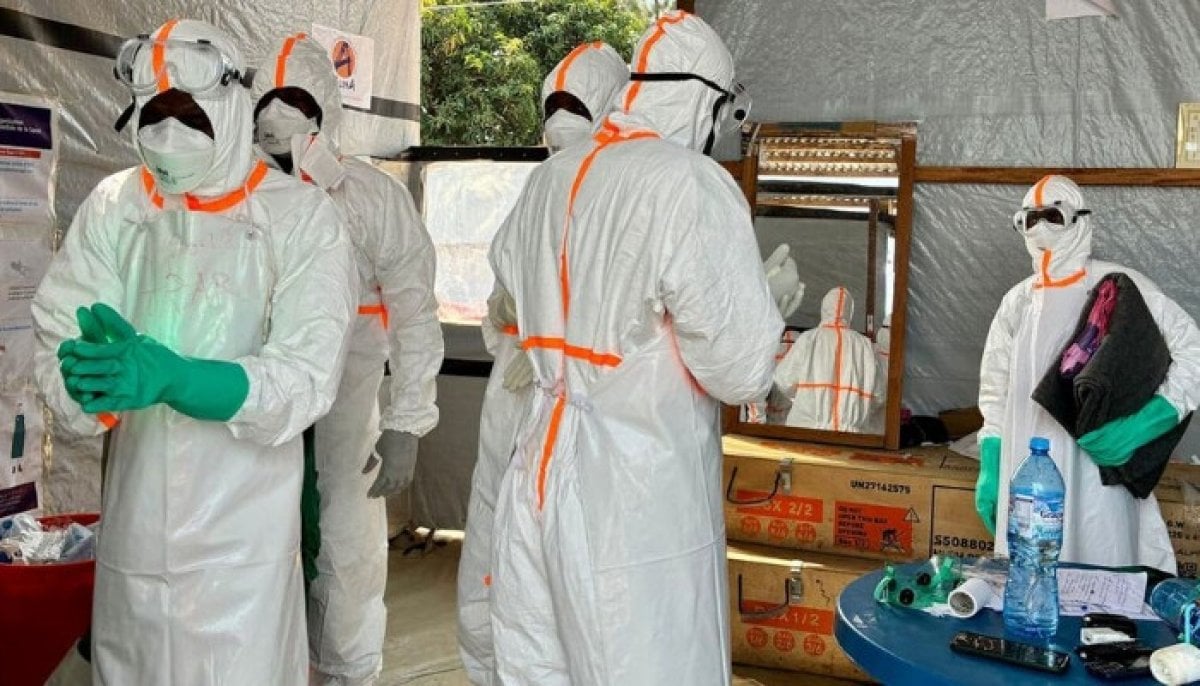 Ebola crisis worsens in DR Congo as virus reaches eighth province with over 4,500 dead
 -
 Study finds eating blueberries every day can surprisingly boost your mood
 -
 Eli Lilly’s Foundayo weight-loss pill gets European approval recommendation
-
 What is BPC-157? Trump administration considers easing rules on popular peptide injections
 -
West Nile virus: Europe reports 141 deaths as human cases rise in 2026
-
Health Canada reviewing new mRNA flu vaccine that could prevent more hospitalisations
-
Scientists discover hidden drainage route at the back of the eye