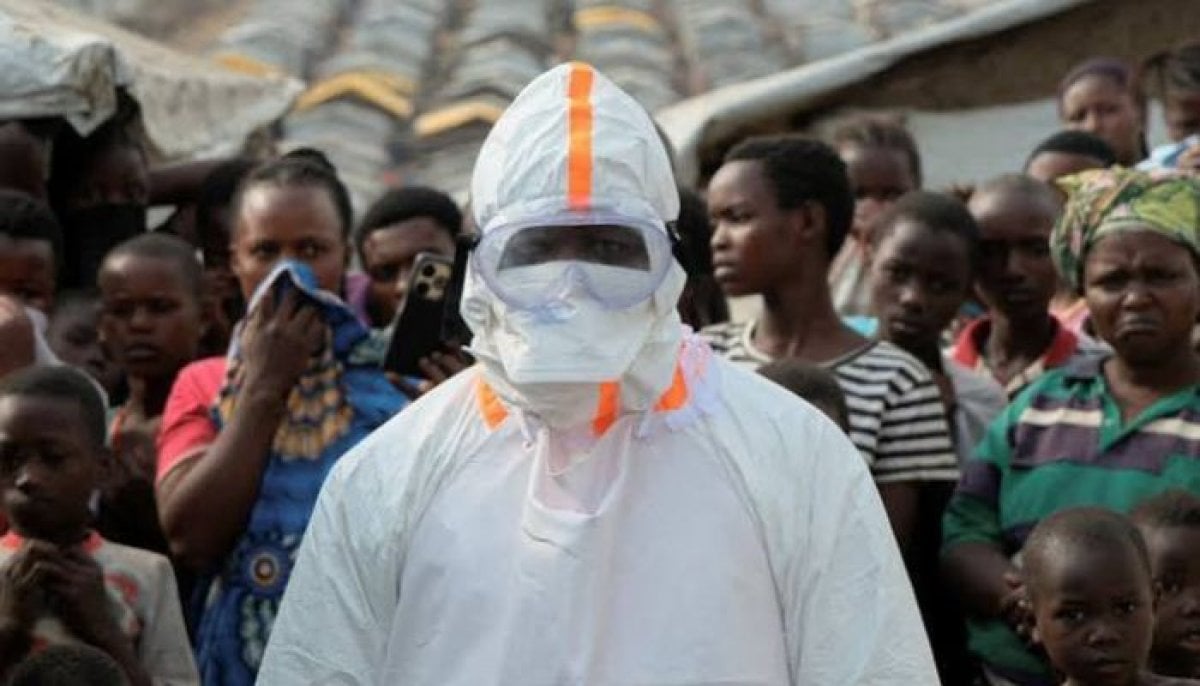
WHO to hold emergency meeting on Equatorial Guinea Marburg outbreak
Marburg virus is highly dangerous pathogen that causes severe fever, often accompanied by bleeding and organ failure
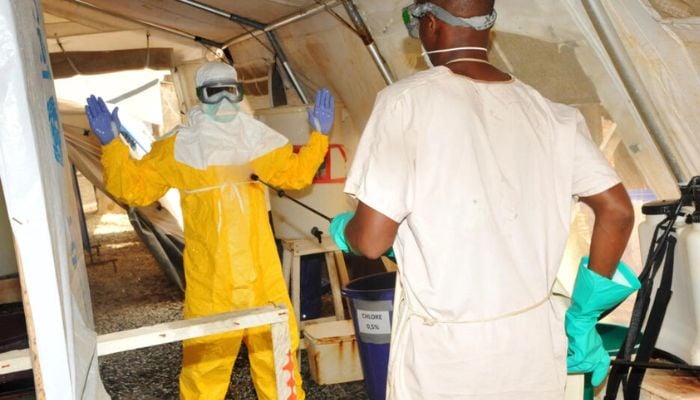
The UN health agency said it would hold an emergency meeting Tuesday after at least nine people in Equatorial Guinea died from Marburg haemorrhagic fever, a cousin of the Ebola virus.
The World Health Organisation "will convene an urgent meeting of the Marburg virus vaccine consortium (MARVAC)" at 3 pm (1400 GMT), the WHO said.
MARVAC includes representatives from the field of vaccine research and development, working to develop vaccines against the Marburg virus.
The Marburg virus is a highly dangerous pathogen that causes severe fever, often accompanied by bleeding and organ failure.
It is part of the so-called filovirus family that also includes the Ebola virus, which has wreaked havoc in several previous outbreaks in Africa.
There are currently no vaccines or antiviral treatments approved to treat Marburg, but potential treatments, including blood products, immune therapies and drug therapies, as well as early candidate vaccines, are being evaluated, WHO said.
Tuesday's announcement came after Equatorial Guinea's health minister, Mitoha Ondo'o Ayekaba, said late Monday that nine people had died in the country's first outbreak of the disease.
He said a health alert had been declared in Kie-Ntem province and in the neighbouring district of Mongomo, with a "lockdown plan implemented" after consulting with the WHO.
The lockdown is affecting 4,325 people in Kie-Ntem, he said.
The government announced last week that it was investigating the cause of suspected cases of hemorrhagic fever in a densely forested eastern region near the borders of Gabon and Cameroon on Africa's central western coast.
But it said only three people had shown "light symptoms".
The minister added that nine deaths occurred between January 7 and February 7, with testing still to be carried out on a "suspicious" death in a hospital on February 10.
The WHO said in a statement Monday that in addition to the nine deaths, 16 other people in Kie-Ntem had shown suspect symptoms including fever and vomiting blood.
The natural host of the Marburg virus is the African fruit bat, which carries the virus but does not fall sick from it.
But the animals can pass the virus to primates in close proximity, including humans, and human-to-human transmission then occurs through contact with blood or other bodily fluids.
Fatality rates in confirmed cases have ranged from 24% to 88% in previous outbreaks, depending on the virus strain and case management, according to the WHO.


-
 WHO confirms death at Russian research lab, says no plague case registered
 -
 Getting a $90 check from Social Security? Here’s why
 -
 Measles cases in US top 4,000 nationwide, CDC reports
 -
 Sexually transmitted diarrhea spread in US, UK: Why antibiotics are failing against Shigella
 -
 Who is Song Li? China puts her forward for WHO leadership role
 -
 CDC monitors travelers from Siberia after plague worker’s death, director says
 -
 Russia pushes back on plague death reports, defends WHO notification
 -
 WHO deems Russia plague risk 'low' following lab technician’s fatal illness