Remittances down 19% in Dec as illegal channels weigh
Remittances decline 11% to $14.052 billion in the first half of FY23, says SBP
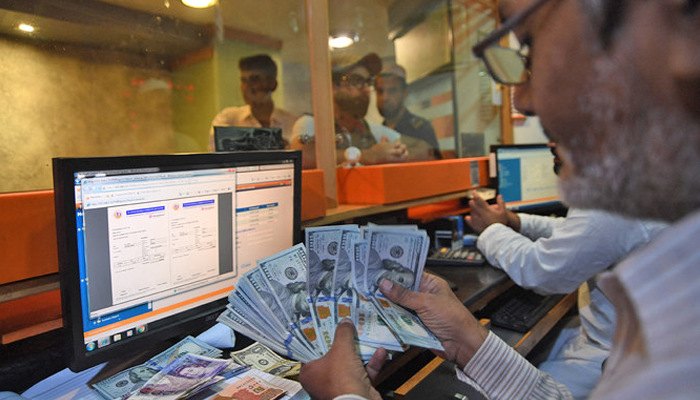
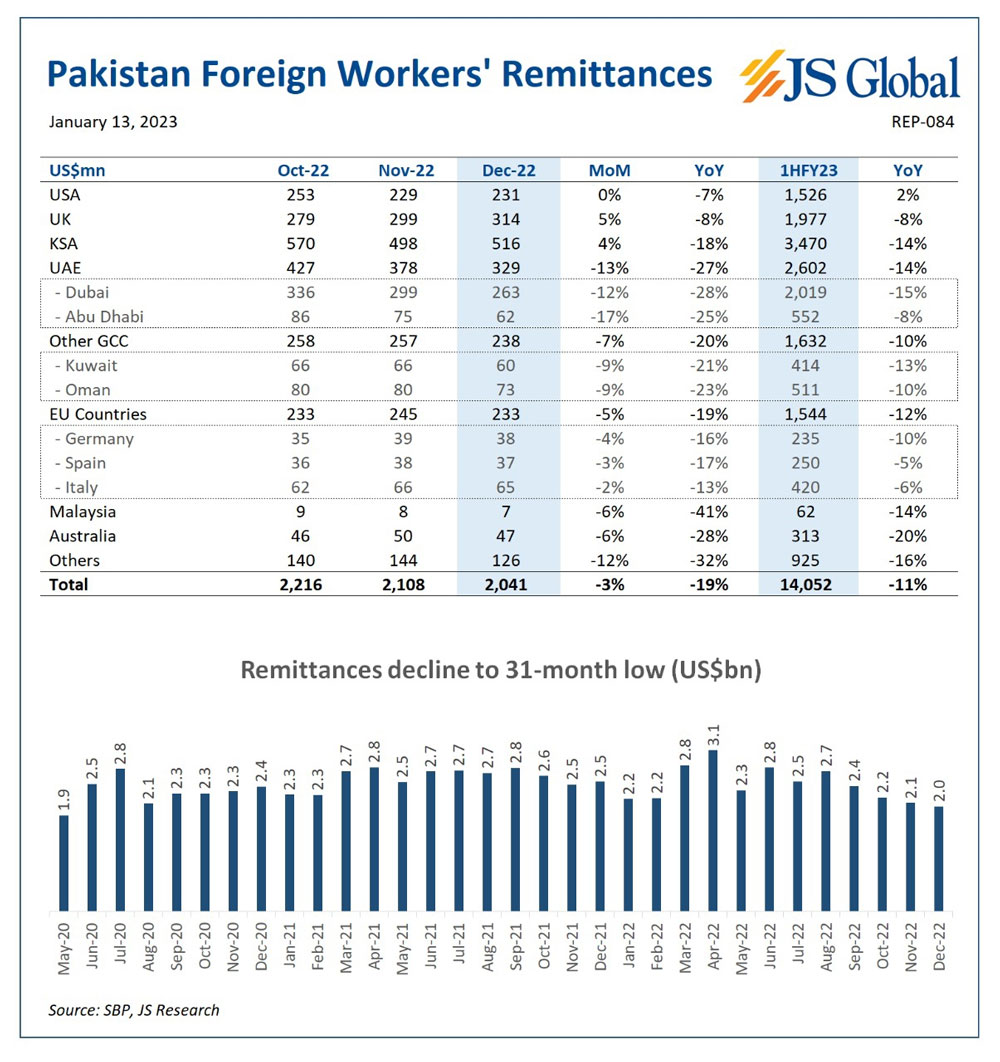
KARACHI: Remittances sent home by overseas Pakistani workers fell 19% to $2 billion in December 2022 compared to $2.52 billion in the same month of 2021, latest numbers showed Friday, which analysts attributed to a rise of unofficial money-transfer channels and world economic slowdown.
The remittances received during the July-December period of FY23 fell 11% to $14.052 billion from $15.807 billion in the first half of FY22, the State Bank of Pakistan (SBP) said.
Month-on-month, the inflows sent home by the Pakistani diaspora working abroad decreased by 3.2% to $ 2.108 billion in November 2022.
Arif Habib Limited (AHL), in a recent note, said a key risk that had emerged in the current account in recent months was the deteriorating trend in remittances.
The brokerage said that a sizeable gap (10-12%) between the official and unofficial exchange rates amid administrative measures undertaken by the SBP was the major reason for the declining official remittances trend, with rising flows via unofficial channels.
"We believe such a large gap between the two rates is unsustainable and counterproductive to the successful negotiations on the 9th review, which is a likely catalyst for things to normalize in the exchange markets."
The AHL report added that this trend was also evident from the sharp decline in official remittances. "We estimate, the country losing around USD 150-200mn monthly flows due to the artificial gap in official and unofficial rates of dollar," the brokerage said.
Remittances from Saudi Arabia, despite being the largest contributor, fell 18% to $516.3 million in December 2022 compared to $626.8 million sent in the same month of the previous year.
Inflows from the United Arab Emirates (UAE) declined 27% to $328.7 million from $453.2 million in December 2021, according to the central bank.
Pakistan’s central bank forex reserves have plunged to the lowest level since February 2014 after a decline of 22.11%, posing a serious challenge for the country in financing imports.
The announcement came at a time when the country is in dire need of foreign aid to reduce its current account deficit as well as ensure enough reserves to meet its debt obligations.
Coupled with another $5.8 billion held by commercial banks, the nation has $10.2 billion in reserves — which barely covers three weeks of imports.


-
 Anthropic to reveal new revenue figures as AI financial race heats up
 -
 HSBC to phase out fixed-pay allowances by 2028 in major compensation overhaul
 -
 TotalEnergies expands US renewable venture with KKR in $1.2B solar portfolio deal
 -
 Australian telecom shares tumble as SpaceX moves closer to direct-to-cell market
 -
 World Bank in crisis aid talks with dozens of nations amid global shocks
 -
 Deutsche Bank chief explains why German election results alarm foreign investors
 -
 China orders development of national blockchain network in economic blueprint: Here’s why
 -
 Tesla renames 'full self-driving' to 'assisted driving' in Europe: What to know