Uganda to close schools after eight children die of Ebola
"Closing schools earlier will reduce areas of concentration where children are in daily close contact with fellow children," says education minister
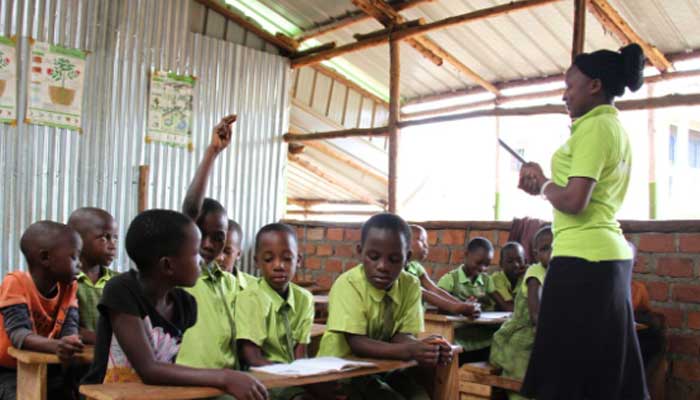
KAMPALA: Uganda will close schools nationwide later this month after 23 Ebola cases were confirmed among pupils, including eight children who died, the country's first lady said on Tuesday.
Janet Museveni, who is also the education minister, said there had been cases in five schools in the capital Kampala, as well as the neighbouring Wakiso district and Mubende, the epicentre of the outbreak.
She said the cabinet had agreed to close pre-primary, primary and secondary schools from November 25, two weeks before the scheduled end of term.
"Closing schools earlier will reduce areas of concentration where children are in daily close contact with fellow children, teachers and other staff who could potentially spread the virus," said the minister and wife of veteran President Yoweri Museveni.
On Saturday, Uganda extended a three-week lockdown on Mubende and neighbouring Kassanda, the two central districts at the heart of the outbreak which has claimed more than 50 lives.
The measures include a dusk-to-dawn curfew, a ban on personal travel and the closure of markets, bars and churches.
Since the outbreak was declared in Mubende on September 20, the disease has spread across the East African nation, including to the capital Kampala.
But the president has said nationwide curbs were not needed.
According to government figures dated November 6, a total of 53 people have died of Ebola out of 135 cases.
The World Health Organization (WHO) last week said Uganda had registered over 150 confirmed and probable cases, including 64 fatalities.
Uganda's last recorded fatality from a previous Ebola outbreak was in 2019.
The strain now circulating is known as the Sudan Ebola virus, for which there is currently no vaccine, although there are several candidate vaccines heading towards clinical trials.
Ebola is spread through bodily fluids, with common symptoms being fever, vomiting, bleeding and diarrhoea.
Outbreaks are difficult to contain, especially in urban environments.


-
 France steps up Ebola support in Congo as fears of resurgence grow
 -
 Vance’s fraud crackdown may raise health insurance costs for Americans
 -
 One common mistake elevates blood pressure readings by 7 points, study warns
 -
 Moderna loses US government license defense in patent case
 -
 Novo says new Ozempic shows lower cardiovascular risk compared with Lilly’s Mounjaro
 -
 University of Nottingham researchers say new gel could regrow tooth enamel in weeks
 -
 New Chinese drug extends stroke treatment window from hours to 2 days: study finds
 -
 Trump’s FDA nominee Heidi Overton defends vaccines, contradicting his claims