Faiza Hameed’s name needs no introduction. Although her writings are far too few and between than our readers would want, every word she penned down has always been worth waiting for. This edition of Us Star is a tribute to this versatile, sensitive and absolutely beautiful writer we all love to read. Muhammad Asif Nawaz clinches the matter when he remarks: ‘the name says it all’.
COVER STORY
Us stars
Faiza Hameed’s name needs no introduction. Although her writings are far too few and between than our readers would want, every word she penned down has always been worth waiting for. This edition of Us Star is a tribute to this versatile, sensitive and absolutely beautiful writer we all love to read. Muhammad Asif Nawaz clinches the matter when he remarks: ‘the name says it all’.
Remember that time she lamented the way we judge people on their beliefs in “Nisar mein teri galiyon k aye watan k jahan…”?
“We’ve been chauvinistic, self-righteous judgementalists in the way we treated Dr. Abdus Salam. People are complicated. They need a lot of things to define them and it’s sad and unfair if all their life’s work is flushed down the drain just because of the beliefs they inherit. So am I an atheist too if I admire and respect Bertrand Russell’s academic achievements and his philosophies regarding free trade and humanitarianism? That’s just ridiculous! It’s like a religious apartheid – except that by the time a ‘Truth and Reconciliation committee’ would convene on this one, we’d already have a fatwa of kufr declared on our Bishop Tutu.”
It’s high time we hear what others have to say about this girl, the pride of Us.
Muhammad Asif Nawaz’s homage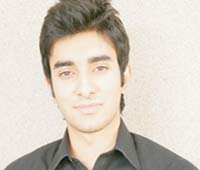
Faiza Hameed. The name says it all. I’m at a loss regarding how to go about this Faizanama, since I know she is uncomfortable with friends’ tareefs. Publically announcing Faiza to be a furious feminist might then be a good alternative, except that she’s in stark denial and would probably go, “Oh Asif, not again!” right now. But of course, there’s no turning away from what an accomplished writer Faiza is. She gives all of herself to everything she writes (and ultimately gets mercilessly drained). Every word she writes just has to meet her stern criteria of being unadulterated - honest and pure as it comes out. You can judge her personality from her writings - pretence not being Faiza’s cup of tea. I’ve told her often about she being my favourite Us writer, but to no avail owing either to her discomfort or plain lack of gratitude. Enlightening, honest and driven, Faiza perhaps is more astounding a person than she is a writer. Conversations with her are as effortless and brilliant as are her writings (with yours truly always on the watch to steal some of her famed eloquence and using them later on, pawning off the expression as my own! From the random gupshup and Faiza’s vicious cycle of activating/deactivating her Facebook to embarking upon serious discussions (which Faiza invariably opts out of with a “khair, chalo…”), from accusing her of being borderline rude (which she definitely is not - she just is a hard-core no-nonsense person) to our collaborative piece which has been on the cards before most of the human population was born - Faiza is unapologetically, quintessentially herself. As a fan, I hope Faiza wins a Booker or something if (hopefully) she ever writes a book. As a friend, I just hope she shares half of the prize-money with me. And among all the precious connections I’ve made through this magazine over all these years, Faiza is somewhere right at the top. So here’s to Faiza, and wishing her all the very best for her future!
 Mushal Noor’s sight beyond
sight about her friend…
I don’t mean to sound like a cynic, but there truly are very few truly good people in the world.
One of them is Faiza Hameed. (I don’t apologize for any presumptuousness).
Writers are weird people. Very often, they aren’t what they appear to be on paper. They can seem brilliant and witty, mature and moralizing, naughty and impish, pedantic and logical. But when you meet them, the flesh and blood version is very different from the paper one. Often enough, it’s the latter which is more interesting.
Not Faiza.
Words are a smokescreen behind which a writer can hide; a mask they can put on to reveal their inner selves. A shrewd writer with a finger on the readers’ pulse can tinker with words to pander to peoples’ appetites.
But not Faiza.
I admire Faiza for writing what she thinks, saying what she feels, and standing up for what she believes in- with grace and good humor. I admire her for being honest and wholesome. A brilliant writer; as witty as they get. With a voice like very few other young women; tempered with humility and sense. I think she is one of the best and most interesting writers Us has ever had.
I think she is one of the best people I have ever met.
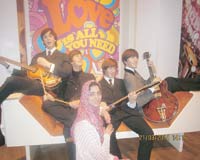 Like I said. There aren’t that very many truly good people in the world. That’s why it’s important to seek them out. To recognize the spark. Reach out. And connect. Me and Faiza... I will always be grateful for that chance connection, which then blossomed into a very good friendship. There are so many opportunities that could be missed if you let them slip by. That’s why I’m so very glad I got to know her.
More than what you accomplish in life, it is who you are, that matters. I know Faiza brought something good to anyone who has ever read her. But to me, she’s a friend whose judgment and empathy I had faith in. With such a sound head on her shoulders that I could turn to her for advice, and such a grounded world-view that I could sound off about life, love and the universe. She enriched my life with her friendship.
And I think the world is an ever so slightly better place by her being in it.COVER STORY
Excerpts from Faiza’s stories
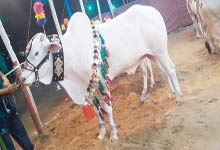 Faiza has myriad of shades to her narrative. She can be melancholy when reminiscing about good old days when Eid had a meaning in most people’s lives. We love her in “The lost art of having fun...and faith” when Faiza misses the Eid of yore…
“For most of us, Eid used to be THE most awaited time of the year – apart from the summer vacation, spring break and winter holidays. It was what the whole year moved towards. The two Eids were rallying grounds for the whole family to come together and meet – and in the case of Baree Eid, go wild on an all-time meat-devouring orgy. It used to be a day to unwind, to relax and forgive, even to put up with bullying cousins and chipkoo aunties and uncles and generally end up having a hell of a good time. Oh, and feel so terribly pious about it, too. And the most intriguing aspect of Baree Eid - the actual act of sacrifice. I still wonder at how as a child, I used to feel so scared of the bakra (those big, pointy horns… those empty, amber eyes) but I’d refuse to be led away when it was slaughtered. I used to find it so mesmerizing. The qasai was the man of the moment. A modern day Indian warlord, wearing the ‘skins’ of vanquished adversaries on his victorious chest. We all used to stand there – the entire platoon of various-sized cousins and siblings, too transfixed to even ‘ooh’ and ‘aah’ at the blood-puking gore fest. Words like ‘ewww’ and ‘gross’ weren’t invented back then, I guess.”
Or how she mocks hypocrisy and ingratitude with which we treat our heroes.
Or this masterpiece, her heartfelt tribute to Faiz sahab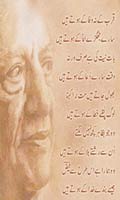
“We are a strange, forgetful lot, aren’t we? A real old bunch of procrastinators, if there ever was one! We hauled you over the coals and through the gallows while you were alive. Your poems were the delusions of a frenzied mind, for all we cared. And now that you’ve been gathered to the Eternal Shades, we chant your name and wear your verses on our puffed-out chests for the world to see! Small wonder, since we’re a people who sincerely believe that real life starts after death. If I know you, you’d probably laugh and say ‘Hunuz Dilli Dur Ast’ and I would completely agree with you…..
I have loved Iqbal and H. Jalandhari and S. Ludhianvi. And I’ve tried to love Manto and Chughtai. But it’s you and you alone whom my heart is done for. I love you for all your wise words and your spring sonatas. I love you for Tina Sani’s golden renditions that have a permanent place in my mobile. I love you for letting me discover the love that I had all along for my faith and my country. Because of you and the bonds of earth and blood that bind me to you, I’d rather be here than anywhere else. You are for eternity. In fact, “multiply eternity by infinity and take it to the depth of forever” and the world would still barely have a glimpse of how great a poet, activist and educationist you truly were. (I hope I can quote some lines from Meet Joe Black and still be taken seriously)
And I hope that despite all your love for this land and its people, you’re happy and content where you are now. And that Alys is up there with you, and Menuhin and Bach as well, beneath those tall, sun-kissed cypresses, making wonderful music and producing beautiful poetry. And that you’ve finally reached out and met the dawn of your dreams on the other side of the skyline.”
 Or this unique combination of wit and common sense with sensitivity thrown in for good measure…
From “A letter to my daughter”
“There is very little that you can learn from my life. I read somewhere that our lives are like the daily diaries people keep. We write in them about the things we live for. We strip ourselves bare, we pour our hearts out on those pages. And every so often we turn back the pages and re-live and re-learn our lives as we lived them. But just as our diaries are only meant for our eyes, and just as my diary cannot not help you learn, my life cannot help you live. At best, it can only give you a story. And remember, my dearest, that a life well-lived is better than a thousand published best-sellers. If we take the royalties out of the equation, that is!
I have seen and I have known the importance of listening to people. And being impulsive about your gut feeling about them. I cannot stress how important it is, in this heartless, emotionally constipated world, to let people know that you like them and that they’re important to you in some deliciously intangible way.
I have seen how beautiful youth can be in some ways and how callous and cruel in others. Beautiful for the able-bodied, the newly-graduated, the just-married, the hopeful explorers and makers of a brave, new world. Cruel for the people who’ve loved you and who watch you from the weathered platform of old age, as it recedes from the window of your speeding, flashy train of youth. Remember to hold their hand every once in a while. We don’t think too highly of the power of a gentle word, a kind smile, any little act of thoughtfulness, when the truth is all of them possess the power to turn someone’s life around.”
Or how she infuses just the right blend of dry humor laced with gentle sarcasm….
From “cheesy samosas … to tomato saas”
“Wajahat and I have our breakfast on the terrace. I think my hands look lovely as I pour out the tea. So fair and slender! I notice Wajahat looking at them out of the corner of his eye. He sees me looking at him look at my hands and he suddenly pretends to be absorbed in the morning paper. I smile. He’s exactly like his mother, my saas. Sparing with words, tight-lipped with compliments. The kind of people who frown upon flowers and scowl at the sun; the kind who have a biting disdain for the small, special things in life. I sprinkle some more salt on my soft-boiled egg and watch my varnished nails catch the glint of the morning sun. It’s a beautiful morning. Crisp as apples!
After Wajahat leaves for his office, I set about tidying up the house. Not that I need to do much, with the kids away at boarding school and Wajahat being the cleanliness-freak that he is. He throws a fit at the slightest sign of dust. Just like his mother. Aunty is the John Cena of domestics. Well into her sixties, she still finds the gusto to get down on her hands and knees in her house in Pindi to sweep the floors till they sparkle. I look down at the floor. They’re clean but hers are cleaner. Just like everything else in our lives. My son is tall for his ten years, but hers was taller. My husband and son can both be a handful at times but of course she’s seen worse. Her son - my husband - chose his wife himself. “Can anything be worse?” she often asks during our telephone conversations, in that tactless way she has with people. (With me) “Your son finally flying off the roost and getting himself into the sticky beehive that a love marriage is? What could be worse that that?” I usually change the topic when she does that. It’s a rhetorical question anyway.”
And we cap off with her experience during one of her rotations
From “A fortnight in Psychiatry”
“It’s the stories, which make Psychiatry Ward so inexplicably sad. It’s the stories which make me think maybe there’s more to it than meets the eye. They’re as much the stories of patients as they are of us all as a society. They tell of private vices and public virtues: an eighteen year old boy, with mood and behaviour changes, taken to a Pir before he was to a hospital, and subsequently beaten to a pulp because his holiness was a specialist in ‘Jin extraction.’ The stories also tell of the stigma that comes with a mangled mind; we watch a father getting all red-faced and defensive when the doctors tell him his son has severe depression and that he might partly be responsible for it. ‘Kia baat kartay ho, doctor,” he says, “Yeh tou zanaana beemari hai!’
There are stories, too, of our woman, for how could a story ever be complete without one! They tell of women who’re packed off to mental hospitals because they had the audacity of not being able to bear a son. Women, who’re not women yet but soon will be, but who have no one to help them make the transition, because their mothers remarried and their stepfathers never filled in the shoes they were supposed to. Heavy as grey rain clouds, these stories seem. They’re as eager to seek a vent but in doing so, threaten to bring the very sky crashing down on our heads.”