
Boris cautious on lockdown easing
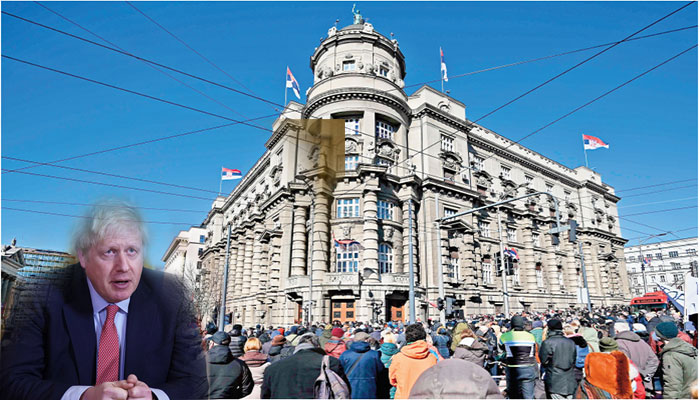
LONDON: Britain intends to seek a "cautious but irreversible" ending of strict coronavirus restrictions, Prime Minister Boris Johnson said on Monday as his government introduced hotel quarantine stays for arrivals from "high risk" nations.
Britain, with more than 117,000 deaths from Covid-19, is one of the worst-hit countries in the world by the pandemic. Johnson has come under criticism for acting too quickly to relax measures and too slowly to re-impose them in recent months.
But lockdown-sceptical MPs are pressing for an accelerated exit after Britain over the weekend surpassed its target to vaccinate 15 million of the most vulnerable people with a first vaccine jab.
Speaking at a health clinic in southeast London, Johnson said the government needed to be "very prudent" as it reviewed a third stay-at-home order in England that has shut down schools, non-essential businesses and hospitality venues since early January.
"What we wanted to see is progress that is cautious but irreversible, and I think that’s what the public and people up and down the country will want to see," Johnson said.
The government is due to set out a roadmap to relax the measures in England on February 22, and has indicated schools could reopen on March 8.
However, Health Secretary Matt Hancock said there is "some way to go" before lockdown can be eased, stressing the government was awaiting key data on how successfully the vaccines reduce transmission.
But over the weekend, more than 60 MPs from the ruling Conservatives signed a letter calling for Johnson to commit to a firm timetable ending with the lifting of all legal controls by the end of April.
Once enough people are inoculated, "it’s time for us to take a bold stride into life and start to recover our society and our humanity", lawmaker Steve Baker told Talkradio on Monday.
While eyeing a possible route out of lockdown, the government is also tightening the borders to guard against emerging variants of the coronavirus that could undermine the vaccination programme.
The new quarantine policy requires all UK citizens and permanent residents entering England from 33 "red list" countries to self-isolate at their own expense in approved hotels for 10 days and take several Covid-19 tests.
Other visitors from the countries, including all South American nations, South Africa and Portugal, are currently barred from visiting the UK.
Meanwhile, a British man pleaded guilty on Monday to violating Singapore’s strict coronavirus rules by having a tryst with his fiancee at a luxury hotel while under quarantine.
The 52-year-old arrived in September from London to visit his then-fiancee, Singaporean Agatha Maghesh Eyamalai, and was ordered to quarantine for two weeks at the hotel.
Meantime, the Dubai International Airport reported on Monday a 70 percent drop in traffic last year amid global closures and travel restrictions due to the coronavirus.
The number of travellers that passed through the major transit hub fell from more than 86 million in 2019 to 25.9 million in 2020, according a statement from the Dubai Media Office.
"In the past year we have witnessed the most difficult circumstances the travel industry has ever faced," Paul Griffiths, CEO of Dubai Airports, said in the statement.
"The impact of the Covid-19 pandemic has been felt not only in our sector, but across the entire world." The emirate of Dubai -- one of the seven that make up the United Arab Emirates -- temporarily closed its airport and suspended flights in early 2020 to curb the spread of the coronavirus. According to the International Air Transport Association (IATA), global air passenger traffic plunged by an unprecedented 66 percent last year owing to travel restrictions imposed during the pandemic.
India accounted for the largest number of passengers at the Dubai airport last year, with 4.3 million Indians travelling through the hub. The United Kingdom came in second, with 1.89 million people entering the airport, narrowly ahead of Pakistan’s 1.86 million.
Dubai International Airport had seen its first dip in traffic in 20 years in 2019, when the number of travellers fell by 3.1 percent, but the hub remained the world’s busiest for international passengers.
The emirate, one of the first destinations to reopen to tourism last year, became a magnet for visitors escaping dreary winter weather and stringent Covid-19 restrictions. But the open door policy has come under scrutiny in recent weeks, as some 500,000 tourists flocked to its luxury resorts and sunny beaches over the end-of-year holiday period, triggering a sharp spike in cases.
The UAE launched a vaccination campaign in December and has administered some five million doses among its population of nearly 10 million.
In a related development, Gaza parents and guardians have new powers to block adult children or dependants from travelling, the territory’s Hamas rulers said in a decision condemned by rights groups on Monday.





-
 Princess Anne's Former Daughter-in-law Photographed With Boyfriend
 -
 ‘Betrayed’ Prince Harry Feels Archie & Lilibet Are At Risk: ‘It’s Not Just About Protection’
 -
 Has X Disabled The Ability To Copy Video Links?
 -
 Kylie Jenner Names Her Favorite Timothee Chalamet Movie: 'Pretty Perfect'
 -
 Trump On Mount Rushmore? April Fools Story Tricks Readers
 -
 Meghan Markle's Unusual Behavior To Criticism In Netflix Meetings Laid Bare
 -
 YTB Fatt's Brother Says The Rapper Is Alive, Sister Injured In Shooting
 -
 Kylie Minogue Pulls An April Fools' Day Prank On Her Fans
 -
 Cardi B Reveals Major Life Shift After Split From Offset: 'Something Woke Me Up'
 -
 Taylor Swift Mentioned As Travis Kelce's 'wife': Here's What He Said
 -
 Royal Rewind Post Ignites Fresh Kate Middleton Fashion Speculation
 -
 Kanye West Gets Huge Snub Ahead Of Explosive Concert In London After Decade
 -
 Blake Lively Shares Hilarious Parenting Fail
 -
 Erin O'Connor Comes Forward With ‘ADHD’ Diagnosis
 -
 Megan Thee Stallion Breaks Silence After Scary Health Crisis
 -
 Kylie Jenner Discusses How She Is ‘really Crazy’ Over Her Cosmetics