
Pakistan’s final polio push
Once country with over 20,000 polio cases annually, Pakistan has made historic progress in curbing disease
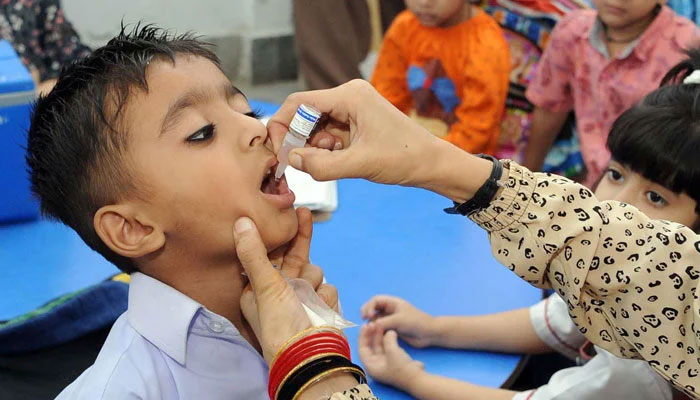
Pakistan’s journey toward polio eradication has been long andearduous, but it is a story of resilience, dedication, and unwavering commitment. Once a country with over 20,000 polio cases annually, Pakistan has made historic progress in curbing the disease.
Between 2021 and 2022, Pakistan went 15 months without a single reported case, demonstrating that eradication is possible. While 2023 presented setbacks, the country responded remarkably with strengthened surveillance and better-quality immunisation campaigns. These numbers are more than statistics; they represent the tireless efforts of vaccinators, policymakers and communities working in unison. Importantly, they represent children whose lives will be forever altered by the tragic impact of polio.
Challenges remain in parts of Khyber Pakhtunkhwa and Karachi, where security challenges, community hesitancy and operational hurdles persist. However, progress continues through local solutions, strong community engagement, and a renewed push to counter misinformation.
One of the most promising developments in Pakistan’s polio battle is the apparent eradication of the YB3C virus cluster, which has not been detected since November 2023.
This achievement highlights the effectiveness of targeted immunisation campaigns and reaching more children. Pakistan now operates one of the world’s largest and most sophisticated polio surveillance networks, spanning 127 sites nationwide. The continued environmental detections of the virus underscore the system's strength in identifying and containing potential outbreaks before they can cause harm.
Another positive development is the decreasing incidence of paralytic polio. Moreover, the overall incidence of paralytic polio cases has remained very low despite the widespread detection of the virus in the environment. This is due to the high levels of immunity developed because of polio vaccination campaigns.
This means that the immunity built through repeated vaccination is protecting the most vulnerable. However, this progress should not lead to complacency, vaccination efforts must continue to fully close the immunity gap and stop the viral circulation of polio.
Some parents may wonder why their children need continued vaccinations if the virus is not causing paralysis. The answer is simple: sustained immunity is key to ensuring the virus cannot spread or mutate, particularly when there is no harm related to repeated vaccination. This is why we must maintain high vaccination rates until eradication is fully achieved. The continued support of parents and caregivers in ensuring their children receive vaccinations in every campaign is more important than ever.
At the heart of this effort are the frontline health workers who tirelessly go door to door, ensuring every child receives the lifesaving polio drops. Despite working in some of the most complex and high-risk environments, these vaccinators – especially over 225,000 female workers – continue their mission with extraordinary dedication. I continue to be inspired by their resilience and dedication despite the challenges they face when going from house to house.
Pakistan’s polio programme benefits from impressive government support, with direct oversight from the prime minister and provincial chief secretaries. What does it take to end polio? A whole-of-government, whole-of-community approach, combined with unwavering support from our partners, is what will keep Pakistan moving forward in its final stretch toward eradication. This is one of the reasons why global partners, including Rotary, continue to support the programme and remain committed to achieving lasting change toward a polio-free Pakistan.
Rotary International has been at the forefront of the global polio eradication effort since the beginning in 1988. To date, Rotary has contributed more than $2.7 billion globally and $500 million at home here in Pakistan. Rotary continues to play a vital role in funding, advocacy, and ground-level support.
We remain committed to ensuring Pakistan reaches zero polio cases – permanently. The goal is clear: to eliminate the virus not just from Pakistan but from the world – and forever. The momentum is strong.
Pakistan can stop poliovirus this year. The focus must be on delivering high-quality immunisation campaigns reaching all children, ensuring strong surveillance to rapidly detect and contain any virus in remaining pockets and enhancing essential immunisation to build long-term immunity. With digital innovations enabling real-time mapping and analysis of data on missed children, the programme is making significant strides in improving results and effectiveness.
As a nation, we stand at a historic turning point. The dream of a polio-free nation is within our reach. Still, it will require sustained action and unwavering commitment from us all – government, partners, and most importantly, the communities themselves. Together, we can turn this dream into reality, ensuring that no child ever suffers from polio again.
The writer is a humanitarian, industrialist and diplomat who serves as the chairman of the National Polio Plus Committee, Pakistan for Rotary International.







-
 Robbie Williams Confirms ‘exciting’ Performance At FIFA World Cup Final
 -
 Taylor Swift, Travis Kelce's ‘top-secret’ Wedding Location Still A Mystery?
 -
 Matt Damon Talks About Filming ‘The Odyssey’ With No ‘special Treatment’
 -
 Meghan Markle Gives Prince Harry Key Assurance Before Meeting King Charles In UK
 -
 It's Scary': US Congressman Reacts To Anthropic's Powerful AI Model
 -
 King Charles ‘worried’ For Prince William As Heir Doesn’t Have Temperament To Be King
 -
 France Records Around 1,000 Excess Deaths During Deadly Heatwave
 -
 Kris Jenner Crowns Khloe Kardashian 'most Amazing Mother' In Birthday Tribute
 -
 David Beckham Melts Hearts With His Unseen Baby Snaps As Celebrated Mom Sandra
 -
 Which Countries Will Ban Grand Theft Auto VI At Launch?
 -
 Prince Harry’s ‘emotional Safe Haven’ In UK Revealed
 -
 North West Debuts Daring New Facial Piercings At Paris Fashion Week
 -
 Why Tech Firms Are Blaming AI For The Massive Surge In Device And Console Prices
 -
 Prince William’s Secret To A Successful Marriage With Kate Middleton Comes To Light
 -
 Google Gemini AI Capacity Shortage Delays Meta's AI Projects: Report
 -
 Holly Madison Reveals Why She Underwent Plastic Surgery After Pregnancies