
India’s Waqf question
On April 2, India tabled bill in Lok Sabha, proposing sweeping changes to management of Waqf properties
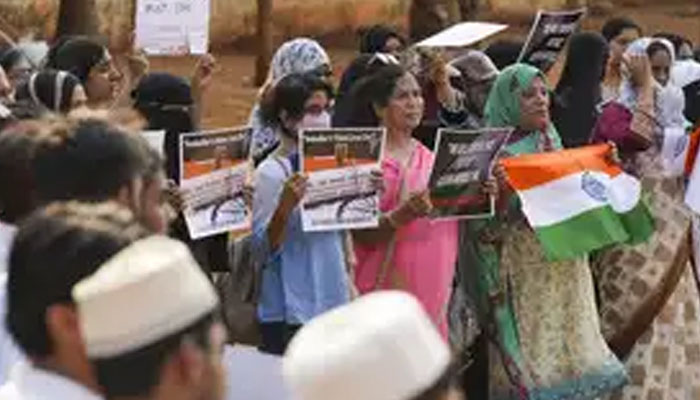
In a country that prides itself on its diversity, secularism and inclusive ethos, the recent approval of the Waqf (Amendment) Bill, 2024 has cast a shadow over India's commitment to its constitutional guarantees for minorities.
On April 2, India’s Parliamentary Affairs Minister Kiren Rijiju tabled the bill in the Lok Sabha, proposing sweeping changes to the management of Waqf properties. While the government claims that these amendments will bring transparency to the Waqf system, the opposition, along with several Muslim groups, sees it as a dangerous step towards marginalising India's Muslim community and exploiting their rights.
As the bill moves towards its next stage in the Rajya Sabha, it’s hard to ignore the deepening sense of insecurity among Muslims, who feel increasingly alienated under the leadership of Prime Minister Narendra Modi and his Bharatiya Janata Party (BJP).
The issue essentially is the Indian government's attempt to seize control of Waqf properties, assets that have been donated by Muslims for religious and charitable purposes. These properties, which include mosques, madrassas, orphanages and vast tracts of land, represent not just valuable resources but symbols of a community’s cultural and religious heritage.
According to the Waqf Management System of India, as of March 2025, there are approximately 872,000 registered Waqf properties covering over 3.8 million acres. This extensive portfolio underscores the critical importance of transparent and equitable management practices. The government, which has long been criticised for its heavy-handedness towards Muslim institutions, is now seeking to place these properties under greater state control.
One of the most contentious provisions in the bill is the inclusion of non-Muslim members on Waqf boards. This move is viewed by critics as a blatant attempt to undermine the autonomy of religious institutions that belong to the Muslim community. It is difficult to imagine a similar provision being implemented in Christian and Sikh religious boards, which raises serious concerns about whether the Modi government is genuinely committed to the principles of secularism enshrined in India’s constitution.
The BJP’s narrative, often cloaked in the language of governance and reform, increasingly undermines the rights of Muslims and other minorities. Prime Minister Modi’s government has been accused of enabling a climate of fear and hostility towards Muslims, a charge that has been difficult to dismiss. From the 2002 Gujarat riots to the controversial Citizenship Amendment Act (CAA), which specifically discriminates against Muslim refugees, the Modi administration has repeatedly displayed its disregard for the constitutional rights of the Muslim community.
The Waqf Bill is merely the latest in a series of legislative and administrative radical steps that seem designed to marginalise Muslims further. While the government asserts that the bill’s provisions are about transparency and good governance, the reality is that the timing, content and context of these measures raise fundamental questions about the intent behind them.
The Waqf Amendment Bill has sparked significant concern among BJP critics and Muslim leaders alike, who fear it is a precursor to the erosion of Muslim rights and property. Critics, including Congress leader Mallikarjun Kharge, argue that the bill grants the government unprecedented control over Waqf properties, potentially allowing for their seizure and weakening the autonomy of Muslim institutions. Muslim leaders have condemned the bill as a deliberate attempt to ‘loot’ these properties and undermine the community's religious and cultural heritage. They view the bill, along with provisions like the inclusion of non-Muslim members on Waqf boards, as part of a broader agenda by the BJP to marginalise Muslims and diminish their visible presence in India’s social and political landscape.
In this context, the debate is not just about property laws but about the future of India’s secular values and whether the country will continue to protect the rights of its Muslim minority, who have already faced growing discrimination and violence under the current political climate.
As the Waqf Amendment Bill makes its way to the Rajya Sabha, the question that looms large is whether India’s democratic institutions will be able to protect the rights of minorities, or whether they will be complicit in the erosion of those rights. The BJP’s track record suggests a disturbing trend – one that sees religious minorities as second-class citizens, subject to laws and policies that disproportionately affect them.
The Indian government’s defenders argue that the bill is necessary to improve the administration of Waqf properties, but given the broader context of discriminatory policies and actions, it is hard to ignore the perception that the Waqf Bill is part of a larger agenda to disempower Muslims and other minorities. As the nation stands at a crossroads, it is crucial for India’s lawmakers to remember that the strength of any democracy lies in its ability to protect the rights of its most vulnerable citizens.
India’s future as a secular, inclusive society depends on whether it can overcome these divisive, exclusionary policies and remain a beacon of hope for all its citizens, irrespective of their religion or background.
The writer is a freelance contributor and writes on issues concerning national and regional security. She can be reached at: omayaimen333@gmail.com


