
Dengue outbreak comes to its seasonal end
Rawalpindi: Not a single case of dengue fever has been reported at any of the public and private sector healthcare facilities in Rawalpindi district in the last two days hinting that the outbreak of the infection that hit population hard in scattered areas of the twin cities of Islamabad and Rawalpindi has come to its seasonal close.
Data collected by ‘The News’ on Saturday has revealed that that in the last 48 hours, no case of dengue fever has been confirmed positive from Rawalpindi while in the last two weeks, only 26 individuals from the district have tested positive for dengue fever. It is important that the dengue fever outbreak has already faded away in Islamabad Capital Territory.
According to health experts, there are chances of sporadic cases of the infection for another week or so but the outbreak has come to its seasonal close after the fall in mercury in the region. Data also reveals that the three allied hospitals in Rawalpindi including Holy Family Hospital, Benazir Bhutto Hospital and Rawalpindi Teaching Hospital have received less
than 20 patients in the last two weeks.
According to data provided by the district health authority Rawalpindi, a total of 6607 patients from the district have tested positive for dengue fever so far this year of which as many as 11 died of the infection. On Saturday, there were only seven patients undergoing treatment at various hospitals in Rawalpindi including three at HFH and one at BBH.
It is worth mentioning here that to date, a total of well over 10000 patients have been confirmed positive for dengue fever from this region of the country of which over 3,500 reached various healthcare facilities from the federal capital while over 6,600 were residents of Rawalpindi.
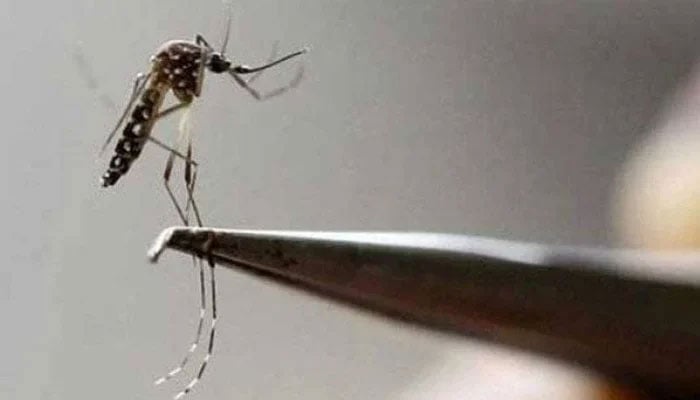
Like the past 16 years, the dengue fever outbreak lost its intensity in the region mainly because of the fall in mercury level as the temperature has dropped down to below 20 degree Celsius. Health experts say that most of the confirmed patients of dengue fever reported recently were those who had been bitten by the dengue fever vector, the female mosquito ‘aedes aegypti’, seven to 10 days back.
Studies reveal that below 20 degrees Celsius, ‘aedes aegypti’ and ‘aedes albopictus’, the mosquitoes that cause dengue fever become unable to mount and feed on humans as their limbs and joints become weaker. Below 13.8 degrees centigrade, the mosquitoes’ activity, both egg laying and biting ability, comes to an end.
Despite the fall in temperature, health experts believe that individuals in this region of the country should continue following preventive measures to avoid mosquito bite and growth of mosquitoes within houses and offices.







-
 DeepSeek V4 Model Bets On Huawei Chips As Demand Surges
 -
 Ty Herndon Talks 'building A Future' With Partner Amid Memoir Release
 -
 'General Hospital' Star Sofia Mattsson Spills The Truth About 'Days Of Our Lives' Role
 -
 Ben Stiller Reveals Hidden Struggles Of Bro Bowlers
 -
 Brian Cox Launches Savage Attack On Johnny Depp
 -
 Pooh Shiesty, His Father Arrested Over Gucci Mane Kidnapping
 -
 Blake Lively 'devastated' After Legal Loss Against Justin Baldoni
 -
 Queen Elizabeth Ignored Warning Signs In Andrew Case To Protect Him?
 -
 'Hollyoaks' Star Keiron Richardson Confirms Speculation About Major Character Exit
 -
 King Charles, Harry Reconciliation: Royal Expert Reflects On 'work Going On Behind The Scenes'
 -
 Palace Shares Rare Update On King Charles’ State Visit To See Donald Trump
 -
 Garth Brooks's Comeback Fear Exposes Deeper Dependence After Rape Accusations
 -
 SpaceX Kicks Off IPO Process, Eyes Record $75 Billion Offering
 -
 Where Dak Prescott And Sarah Jane Ramos Stand About Their Relationship As Canceled Wedding Nears
 -
 Sarah Ferguson To Come On ‘Traitors’ Or ‘Big Brother’? Plans Come To Light
 -
 Misua, 'Drag Race: Philippines,' Breathes Her Last At 27