
Iran-Pakistan Gas Pipeline project crucial for South Asian energy security
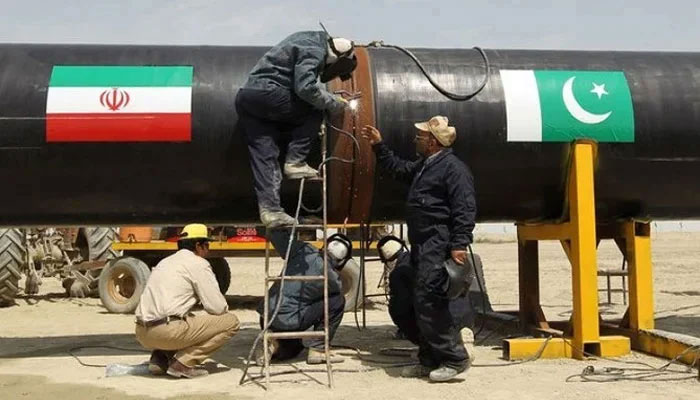
Islamabad : Muhammad Soroush, a prominent Tehran-based analyst who also heads “Saramad” think tank based in Tehran, has said that Iran-Pakistan Gas Pipeline project is crucial for South Asian energy security and the regional attempts of diversification.
Mr Soroush said this at a seminar on “The Iran Pakistan gas pipeline” organised here by Institute of Regional Studies (IRS).
Mr Soroush hailed IP gas pipeline as a game changer for the region. Noting that Iran had completed the construction of pipeline on its side but due to financial constraints, Pakistan was unable to start working on its part, he felt that this energy project could make Iran a crucial player in South Asian energy landscape.
Naade Ali, a Washington-based researcher at Middle East Institute, opined that the US viewed energy cooperation between Pakistan and Iran as a prelude to a strategic partnership. To address this perception Pakistan needed to separate geoeconomics from geopolitics. Explaining US sanctions relief to India, he pointed out India’s assurances to the US that its presence in the Chahbahar port would keep Iranian activities in check.
Dr Khalid Waleed, an energy expert at Sustanable Development Policy Institute, addressed the issue of a non-productive energy sector. He felt that the energy policy of Pakistan must prioritise the industrial growth while noting that energy shipping lanes were prone to shocks arising from the geopolitical conflicts and therefore, pipelines were a viable alternative. He also suggested that China’s coal-fired power plant projects under CPEC could be transformed into Iran-Pakistan-China gas energy project.
Dr Somaye Morovati, Director, Center for Middle East Strategic Studies in Tehran, stressed the need for cooperation between the think tanks of both the countries. She argued that the researchers of both Pakistan and Iran had a very basic knowledge of each other’s governance system. She also emphasised cooperation between Pakistan and Iran in energy and economic corridors as a counterweight to US Indo Pacific Strategy which while aimed at containing China also impacted Pakistan and Iran.
Earlier, Jauhar Saleem, President, IRS, noted in his opening remarks that both Pakistan and Iran had much potential for furthering economic cooperation given their economic size and shared borders. While energy pipelines were much cheaper than shipping, and utilising gas as a source of energy was significantly less polluting than oil, the US sanctions on Iran posed a serious challenge.


