
Modernising education in Pakistan
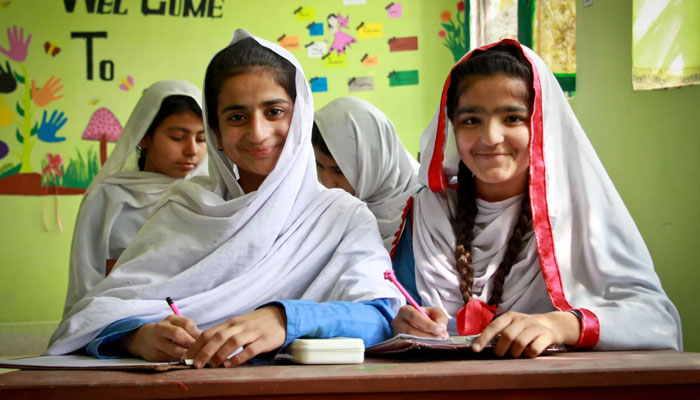
Education ostensibly is an essential tool in shaping the nation's future. It is the greatest source of panacea fostering economic growth, empowering the population, addressing deep-seated inequalities, inculcating hope in deprived communities. China by realising the significance of education took four major steps vis-a-vis providing universal education to its youth, increasing female workforce participation in the economic activity, providing organised employment opportunities and changing the traditional mindset. This later resulted in the phenomenal rise in the country's economy. Likewise, there is need to take a critical look at the education system of Pakistan to embark on the path of progress.
With nearly 22.8 million children aged 5 to 16 not enrolled in schools, Pakistan has the world's second-highest number of children lacking access to primary education. In particular, Balochistan province has the highest number of unenrolled children.
The division of schools into English-medium private schools, Urdu-medium government schools, and religious madrassahs has led to a widening social divide, polarization, and social frustration. The proliferation of substandard institutions, programmes, degrees and academic publications has hindered the development of an academic culture and intellectual curiosity among students and makes the quality of degrees questionable.
According to UNESCO's directives, every nation should allocate 4 percent of its GDP for education. However, Pakistan allocates only 1.5 to 2.5 percent of its GDP. Considering the country's population growth rate of 2.5 percent, the highest in the region, it should have allocated more resources than the UNESCO-recommended percentage. Unfortunately, the previous federal government reduced the educational budget and redirected resources toward political activities.
Contrary to the developed countries, where political influence on education is diminished by the substantial autonomy given to educational institutions and which promote quality leadership and professionalism, in Pakistan educational institutions are believed to have been perceived as extensions of government departments contributing massively for financial gains and privileges for bureaucrats and ministers.
In order to prepare Generation Z and Generation Alpha for the era of science and technology, several measures must be taken. Generation Z, born between 1995 and 2009, and Generation Alpha, born between 2010 and 2024, are deeply entrenched in the digital realm and interconnected globally. Particularly in developing countries like Pakistan, individuals from Generation Z live on the internet from a young age, making it nearly impossible to envision a world without cell phones and computers. They exhibit a natural inclination towards technological proficiency. The education system must therefore be tailored to equip them with the skills necessary to seize opportunities not only within Pakistan but also on a global scale. Similarly, as members of Generation Alpha come of age, they are born into an even more technologically advanced world, where digital literacy and adaptability are paramount for success in the increasingly interconnected global landscape. Thus, educational initiatives must anticipate and cater to the evolving needs of these digital natives, ensuring they are well-equipped to navigate and thrive in the digital age.
With changes in educational preferences, recent years have witnessed a paradigm shift in the job market, moving away from stable government positions towards private employment and entrepreneurial endeavours. Approximately 8 million individuals enter Pakistan's job market annually, yet the state struggles to furnish even one million jobs for these educated youths. The future prospects of these 8 million individuals, a number likely to rise in the future, could be safeguarded by adopting the Indian model of fostering entrepreneurship, particularly in the IT sector.
Singapore a tinny state with a population of nearly six million focused on knowledge economy and invested in skill and knowledge of its youth. In the same way it is imperative for Pakistan to introduce knowledge economy to remain relevant in the global arena.
A comprehensive re-evaluation of the country's education system is imperative. Significant increases in funding, meticulous planning, academic freedom, embracing technology, nurturing Research & Development (R&D), and enforcing accountability are critical areas that policymakers must address. Failure to do so will result in further regression for the country.
-The author teaches International Relations IR at the University of Balochistan UOB, Quetta. He can be reached at: bareach87@gmail.com







-
 Dolly Parton's Rare Approach To Battle Grief Following Tragic Loss Of Late Husband Laid Bare
 -
 How Queen Elizabeth's Silence Impacted Diana And Meghan
 -
 Olivia Munn Raves About Her 'Your Friends & Neighbors' Costar James Marsden
 -
 Khloe Kardashian Gets Candid About Weight Loss Struggles
 -
 Jon Hamm Weighs In On ‘dark’ Modern Dating Culture: 'I Was Never Really Good At Dating Anyway'
 -
 Miley Cyrus Receives Heartfelt Praise From 'Love On The Spectrum's Logan Pereira
 -
 DeepSeek V4 Model Bets On Huawei Chips As Demand Surges
 -
 Ty Herndon Talks 'building A Future' With Partner Amid Memoir Release
 -
 'General Hospital' Star Sofia Mattsson Spills The Truth About 'Days Of Our Lives' Role
 -
 Ben Stiller Reveals Hidden Struggles Of Bro Bowlers
 -
 Brian Cox Launches Savage Attack On Johnny Depp
 -
 Pooh Shiesty, His Father Arrested Over Gucci Mane Kidnapping
 -
 Blake Lively 'devastated' After Legal Loss Against Justin Baldoni
 -
 Queen Elizabeth Ignored Warning Signs In Andrew Case To Protect Him?
 -
 'Hollyoaks' Star Keiron Richardson Confirms Speculation About Major Character Exit
 -
 King Charles, Harry Reconciliation: Royal Expert Reflects On 'work Going On Behind The Scenes'