Nighttime meals may be detrimental to mental health: study
Experts also say that having a meal at night can interfere with the body's metabolism
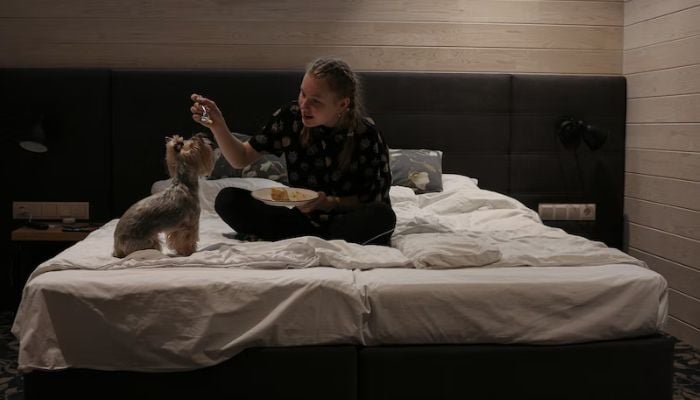
Findings of new research suggest that eating during the daytime instead of the night can reduce the chances of developing depression and anxiety.
Interfering with the body's natural clock, for instance sleeping when the body is supposed to be awake or vice versa, can be detrimental to a person's emotional and mental well-being.
Studies show that even if an individual was to spend years working in the night shift, the body will not fully adapt to the schedule and would require the person to shift back to the natural clock.
Even worse, the more we mess with the biological clock, the longer the damage is expected to stay.
The question is: How can we protect those with professions that require people to stay up all night like security guards, doctors and nurses or firefighters?
Reportedly, these professions make up 30% of the workforce worldwide.
Scientists are studying light therapies as solutions as well as melatonin. Another idea that experts are testing is a change in meal time.
Author and neuroscientist Sarah Chellappa said that these findings could help those suffering from a variety of mental health issues, according to Science Alert.
She said that their study simply adds up to preexisting evidence that sleep optimisation and circadian rhythms promote better mental health.
Experts say that having a meal at night can interfere with the body's metabolism. This could be one of the reasons why nighttime workers have higher BMIs and a greater waist-to-hip ratio.
Disturbed blood glucose levels can easily lead to mood disruption further causing conditions like depression. Therefore, researchers are now attempting to figure out whether avoiding nighttime meals can fix mood issues and improve overall well-being.
While the idea is still new, recent findings suggest that eating during the day can help prevent mood vulnerabilities.
"We found proof that meal timing had moderate to large effects on depression-like and anxiety-like mood levels during simulated night work," the authors wrote.
The study published in the journal PNAS explains the methodology and sampling in the research.


-
 Eli Lilly’s Foundayo weight-loss pill gets European approval recommendation
 -
 What is BPC-157? Trump administration considers easing rules on popular peptide injections
 -
 West Nile virus: Europe reports 141 deaths as human cases rise in 2026
 -
 Health Canada reviewing new mRNA flu vaccine that could prevent more hospitalisations
 -
 Scientists discover hidden drainage route at the back of the eye
 -
 WHO confirms death at Russian research lab, says no plague case registered
 -
 Getting a $90 check from Social Security? Here’s why
 -
 Measles cases in US top 4,000 nationwide, CDC reports
-
 Sexually transmitted diarrhea spread in US, UK: Why antibiotics are failing against Shigella
 -
Who is Song Li? China puts her forward for WHO leadership role
-
CDC monitors travelers from Siberia after plague worker’s death, director says
-
Russia pushes back on plague death reports, defends WHO notification