WHO says nasal vaccines could help control Covid
CanSino and Bharat Biotech both have WHO-approved injectable COVID-19 vaccines
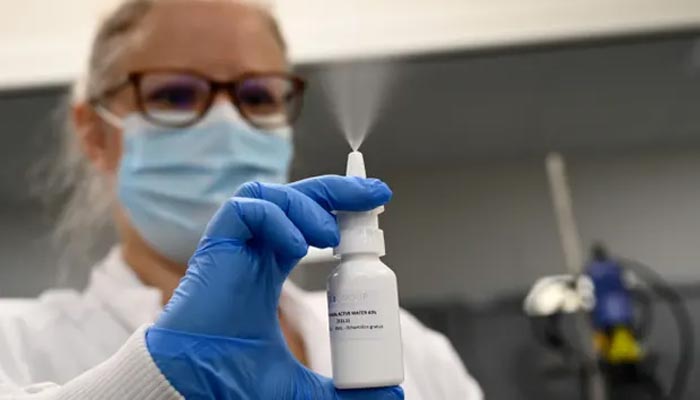
GENEVA: Nasal Covid-19 vaccines could help to bring the Covid-19 pandemic under control, the World Health Organization said Wednesday after homegrown products were approved in India and China.
The WHO welcomed the new front in the fight against the virus — but also said it wanted to see the data behind the vaccines, to assess whether to approve them.
China on Sunday launched the world's first inhalable COVID vaccine, Convidecia Air, which is made by CanSino Biologics and administered through a nebuliser.
And India approved a nasally-administered COVID-19 vaccine for emergency use on Tuesday, developed by Bharat Biotech.
Read more: India approves its first nasal vaccine for COVID-19
WHO emergencies director Mike Ryan said nasal vaccines generated immune response in the respiratory mucosa in the lungs.
"You're generating the first line of defence at where the virus enters and causes a lot of damage," he explained.
In doing so, nasal vaccines could potentially prevent a person from being infected and passing the virus on.
Ryan cited how nasal and injectable vaccines are used in combination to combat diseases such as polio, giving full protection to the internal systems.
That opportunity to reduce both the severity of infection and onward transmission "may offer us a much stronger prospect of control of COVID in the long run", he told a press conference.
He encouraged innovation that would develop a second and third generation of vaccines "that we may need ultimately to deal with the end of COVID and to deal with future respiratory virus threats".
Read more: China approves world's first inhalable COVID-19 vaccine
Maria Van Kerkhove, the WHO's technical lead on COVID-19, welcomed the news.
"We look forward to seeing the data to see how this could be incorporated into the response for COVID-19," she said.
CanSino and Bharat Biotech both have WHO-approved injectable COVID-19 vaccines.
Mariangela Simao, the WHO's access to vaccines chief, confirmed neither manufacturer had yet sought the WHO's stamp of approval for the new products.
Other manufacturers are also working on nasal vaccines, she added.
Death every 44 seconds
WHO chief Tedros Adhanom Ghebreyesus said the continuing global decline in reported COVID cases and deaths was encouraging, but said it was "dangerous" to assume those trends would persist.
"Last week, one person died with COVID-19 every 44 seconds. Most of those deaths are avoidable," he said.
"You might be tired of hearing me say the pandemic is not over. But I will keep saying it until it is."
Read more: UK approves Pfizer bivalent Covid vaccine ahead of booster drive
Van Kerkhove said it could not yet be predicted that the SARS-CoV-2 virus behind COVID-19 disease would settle down into a seasonal pattern.
The Omicron variant's BA.5 subvariant has become globally dominant, but dozens of subvariants are circulating.


-
 Everything to know about US FDA’s new guidance on apps used with prescription drugs
 -
 ‘Immortal’ jellyfish could hold clues to slowing human ageing
 -
 Ebola crisis worsens in DR Congo as virus reaches eighth province with over 4,500 dead
 -
 Study finds eating blueberries every day can surprisingly boost your mood
 -
 Eli Lilly’s Foundayo weight-loss pill gets European approval recommendation
 -
 What is BPC-157? Trump administration considers easing rules on popular peptide injections
 -
 West Nile virus: Europe reports 141 deaths as human cases rise in 2026
 -
 Health Canada reviewing new mRNA flu vaccine that could prevent more hospitalisations