Health Canada issues safety warning over baby self-feeding products sold on Amazon
Health Canada said the products could cause choking or breathing problems if food enters a baby’s lungs
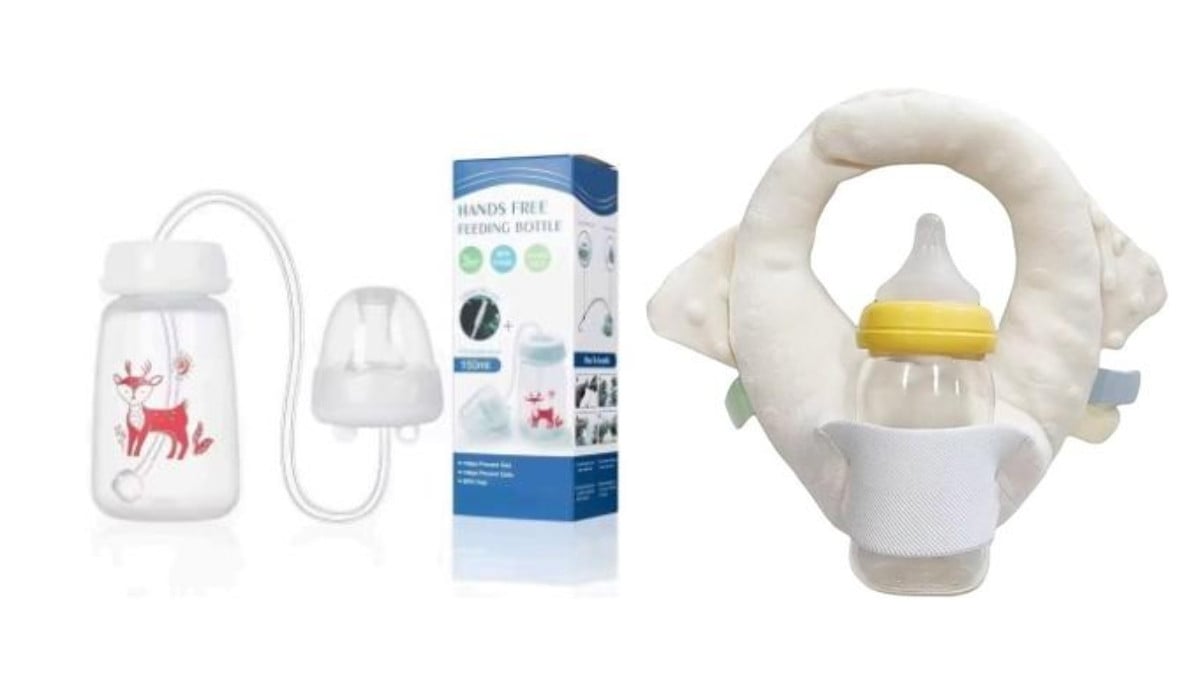
Health Canada is warning consumers to “immediately stop using” several infant self-feeding devices sold on Amazon.ca because of serious safety risks.
In an advisory issued on Monday, Health Canada said the products could cause choking or breathing problems if food enters a baby’s lungs.
The department advised consumers to throw away the made-in-China products, which include adjustable feeding pillows and bottle holder devices marketed for infants.
“Unattended infant feeding practices are discouraged by Health Canada and Canadian professional medical associations as independent feeding should not be done until the child is ready,” the advisory stated.
According to Health Canada, Amazon.ca sold 545 units of the affected products in Canada.
Officials said caregivers should always supervise infants during feeding and monitor them for possible complications, including regurgitation and choking.
The affected products include several bottle holder pillows and feeding support devices sold under multiple Amazon Standard Identification Numbers (ASINs).
Health Canada also noted that infant self-feeding devices are already banned in Canada under the Canada Consumer Product Safety Act.
No injuries or incidents linked to the devices had been reported to Health Canada as of Monday.





-
 KNBC helicopter crashes and bursts into flames in Los Angeles, killing three
 -
 US EPA unveils sweeping power plant carbon limit rollbacks at G20 meeting to prioritize grid reliability
 -
 Study reveals why some babies are born with heart defects
 -
 Savannah Guthrie makes another emotional plea to Nancy's kidnappers
 -
 'Hang Lindsay Clancy': GOP rep calls for mom-of-three's public execution
 -
 Royal family shares Princess Astrid's funeral plan
 -
 Italian Senate clears PM Giorgia Meloni electoral reform bill to overhaul voting system and establish majority bonus thresholds
 -
 US Senate advances landmark crypto bill to set new digital asset boundaries