Europe launches first part of space-based ‘data highway’
FRANKFURT: Europe launched the first part of a new space "data highway" on Friday night that will pave the way for faster than ever monitoring of natural disasters such as earthquakes and floods.
The EDRS-A node is the first building block of the European Data Relay Satellite (EDRS), a "big data highway" costing nearly 500 million euros ($545 million) that will harness new laser-based communications technology.
The EDRS will considerably improve transmission of large amounts of data, such as pictures and radar images, from satellites in orbit to Earth as they will no longer have to wait for a ground station on Earth to come into view.
The EDRS-A node, riding piggyback on a Eutelsat communications satellite, blasted off from the Baikonur Cosmodrome in Kazakhstan on board a Proton rocket at 1720 ET (4.20 am local time).
EDRS-A, which is to orbit Earth at an altitude of around 36,000 kilometers (22,400 miles), houses a laser terminal that works essentially like an autonomous telescope capable of locking on to moving targets on Earth.
It will send data to and from Earth or between satellites at a rate of 1.8 Gigabits per second, which is about equivalent to sending all the data that could be printed in a one-meter long shelf of books in one second, according to generally accepted industry measures.
The EDRS will relay data on sea ice, oil spills or floods from Europe's multi-billion euro Copernicus Earth observation project to users in Europe, Africa and the Atlantic area, but its services will also be available to other paying customers.
The EDRS is a public-private partnership between the European Space Agency (ESA) and Airbus Defence and Space.
Pairing EDRS-A with the Eutelsat 9B satellite, which will beam TV images to Europe, cuts down on costs for both satellite operator Eutelsat and the ESA as they share the expenses of the launch and joint systems.
A second satellite, EDRS-C, is to be launched in mid-2017. Eventually further ones could follow, which could also be coupled with commercial crafts.
"We are open to pairing a third EDRS payload with a future Eutelsat satellite," Yohann Leroy, Eutelsat's Chief Technical Officer, told Reuters.


-
 Where is Artemis II today? Here is everything to know about NASA’s journey to the moon
 -
 European Space Agency to negotiate with NASA on future lunar missions
 -
 SpaceX AI satellites plan raises doubts after Microsoft setback
 -
 NASA Artemis II lifts off, sending cubesats into deep space study
 -
 Could there be life on Mars? NASA Jared Isaacman claims chances are 90%
 -
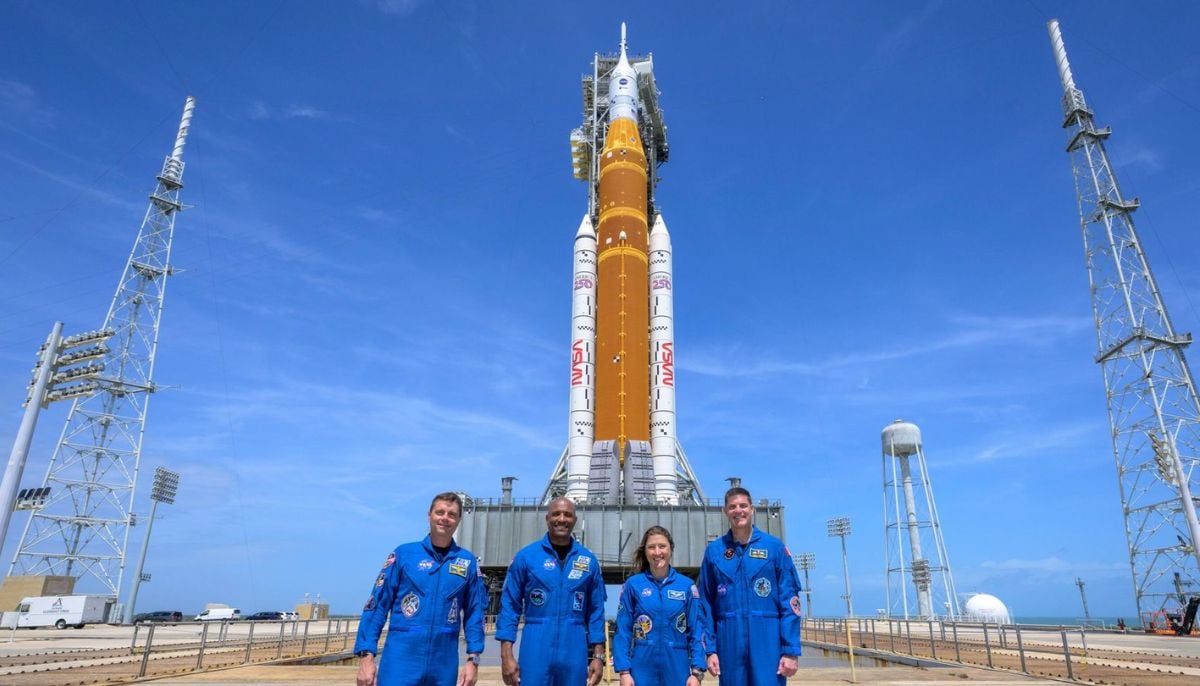 NASA Artemis II Moon mission set for liftoff today: Here’s what to know
 -
 Did the Big Bang happen differently? New theory challenges origin of Universe
 -
 April’s Pink Moon 2026: How to see the full moon in all its glory