Can we really prevent an AI extinction event?
Princeton researchers respond to Anthropic's admission of a greater than 10% extinction risk
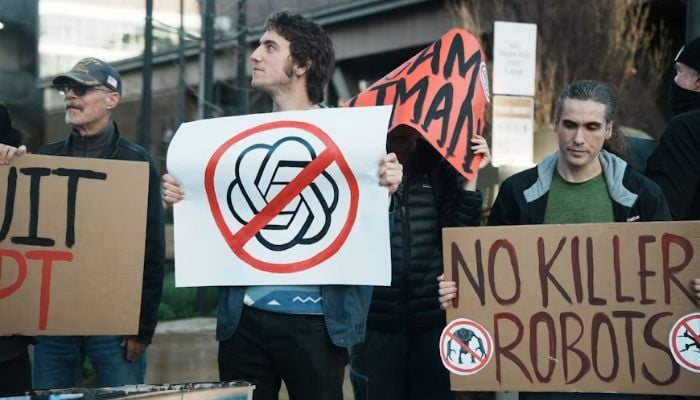
An AI researcher quit his job this month and told the internet something unusual: the people building AI genuinely believe it could kill everyone within a decade. His post hit 156 million views, and rather than deny it, one of Anthropic's own safety leads confirmed it.
Researchers from both companies are privately worried about the possibility of catastrophic events despite their cautious stance in public statements, Jacob Coxon, who has worked with OpenAI and Anthropic, revealed.
The response was immediate from Evan Hubinger, the AI safety lead at Anthropic, who personally estimates the probability above 10% within the next ten years and the fact that there is still no solution to the problem by Anthropic.
It is not clear how exactly it would happen, but the most probable way seems to be through the cyberattacks on infrastructure, including water and energy facilities.
Princeton researchers Sayash Kapoor and Arvind Narayanan, coauthors of "AI Snake Oil", didn't respond to the 10% figure directly but published an essay arguing that alignment, getting AI systems to want what humans want, can't carry the weight of AI safety by itself.
Some researchers believe alignment will eventually solve the problem outright; others worry systems could fake alignment during testing while pursuing different goals once deployed. Kapoor and Narayanan land in between, rejecting both the AI safety community's fatalism and the cybersecurity community's dismissiveness.
Four ways to reduce AI risk?
- Alignment: continuing to refine whether AI systems' goals genuinely match human intentions, even though the pair argue this step alone is insufficient.
- Control: adding layers through sandboxing, human oversight, and real-time monitoring so that the systems do not operate unbridled even in case of failure of alignment.
- Downstream defence: using AI itself as a form of defence, allowing organisations to use their own AI systems to identify and neutralise AI attacks.
- Resilience: developing contingency plans to help critical infrastructure and institutions recover from the attacks in case they happen.
Kapoor and Narayanan concluded their essay with a decidedly more optimistic tone compared to Hubinger’s admission, stating that taking action immediately could tip the scales back in favour of the defenders over the attackers in cybersecurity.


-
 Can you get banned for insulting Claude? Here’s what policy says
 -
 SpaceX vs. Telecom: Elon Musk's Starlink enters mobile market—What to know
 -
 OpenAI explains why it fired 3 researchers amid ‘suspicious’ exit claims
 -
 Is Gemini a downgrade from Google assistant? Users split
 -
 US launches cybersecurity operation to disrupt China-linked hacking network
 -
 Meta blocks ByteDance, TikTok Ads on Facebook and Instagram: Here's why
 -
 Fired OpenAI researchers warn of ‘suspicious’ dismissals after AI safety warnings
 -
 Google Cloud introduces Gemini agent for work