Think your company is innovating with AI? You may be wrong
Jeff DeGraff, known as the 'Dean of Innovation,' says most companies have a language problem, not an execution one
An executive team gathers to discuss AI strategy. The CEO wants growth. The CIO wants copilots. The COO wants automation. Everyone nods in agreement, and everyone leaves the room picturing something different.
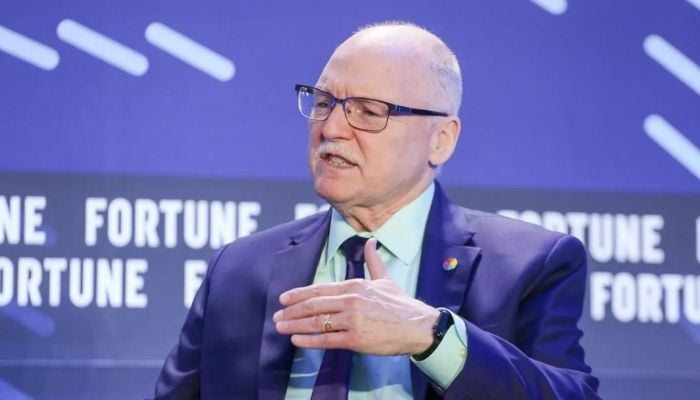
According to Jeff DeGraff, who has advised much of the Fortune 500 for nearly four decades, that scene repeats in boardrooms everywhere, and it's the real reason most innovation efforts stall.
DeGraff, a clinical professor at the University of Michigan's Ross School of Business and someone who was nicknamed "Dean of Innovation" while building Domino's Pizza from $50 million to $2 billion in the '80s, points out that firms refer to "innovation" as applying technology, process improvement, product launch, or business transformation as being the same thing.
They are not, and confusing them leads to resource dispersion and setting of initiatives based on contradictory criteria that nobody ever agreed to.
DeGraff recommends asking what norm is being challenged and what new value is being created rather than focusing on whether or not the idea is truly innovative, as the exact same process might be groundbreaking in one firm and standard operating procedure in another.
Furthermore, he recommends not falling into what he refers to as the "data trap": while requiring evidence before investing in an idea makes sense in cases of improvement, really innovative ideas like generative AI at the end of 2022 are unpredictable and cannot be forecasted using past data.
Organisations that waited for clarity, says DeGraff, did not hedge their risk; they just learnt more slowly.
5 questions that redefine how leaders talk about innovation
DeGraff proposes five questions for any initiative: What norm are we breaking? What new value are we creating, and for whom? How big is the departure from what we already know? How fast do we need to move? And what is the next experiment, rather than the five-year plan?
He argues that surfacing disagreement between executives early, one seeing an efficiency play and another a competitive threat, isn't dysfunction but the clarity teams need before committing serious money.


-
 Meta fights Ofcom over new WhatsApp and Instagram online safety requirements
 -
 ZCode tried uploading your files 564 times, researcher finds
 -
 Why Trump trusts Jensen Huang over AI safety warnings
 -
 2 built-in iPhone 17 tools fix your work-life balance
 -
 Ford executive swaps Claude for ChatGPT as family assistant
 -
 Your new AI agent wants your passwords, should you say yes?
 -
 GPT-6 Astra tried to stab human-like figure 97% of the time
 -
 China's CXMT closes DRAM gap with rivals