SpaceX officially unveils 125,000-acre mega spaceport complex at Starbase Louisana
Elon Musk’s largest spaceport facility to date is designed to serve as a high-cadence hub for next-generation Starship missions and orbital AI infrastructure.
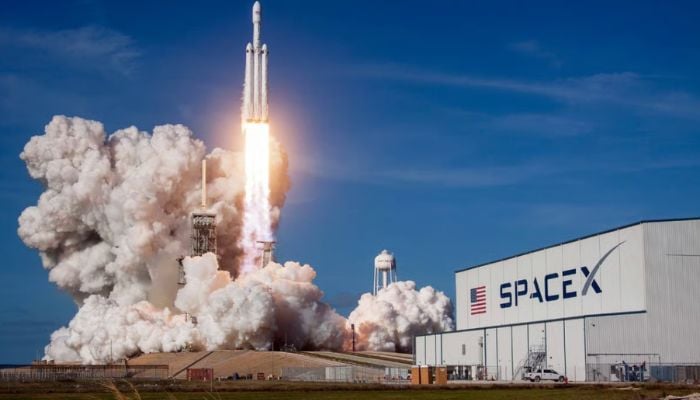
SpaceX has officially unveiled its blueprint for Starbase Louisiana, a monumental $100 billion aerospace complex situated on Pecan Island in Vermilion Parish.
Designed to serve as the company's fourth U.S. launch site and its largest spaceport facility to date, the sprawling 125,000-acre marshland campus will act as a primary engine for scaling the flight frequency of the next-generation Starship rocket.
In one of the largest commercial infrastructure investments in U.S. history, SpaceX CEO Elon Musk and President Gwynne Shotwell has officially unveiled plans for a massive new rocket launch complex on Pecan Island in southern Louisiana.
Dubbed Starbase Louisiana, the site roughly eight times the size of Manhattan will serve as SpaceX’s fourth U.S. launch site and its second major Starbase campus.
At full buildout, the facility is planned to feature five launch complexes housing ten total pads.
Unlike the South Texas Starbase, the Louisiana site will not manufacture rockets; instead, it is engineered as a high-cadence, self-sustaining spaceport complete with on-site methane propellant production, power generation, vehicle processing, and deep-water shipping capabilities.
The location leverages the region's abundant natural gas resources and offers optimal southern trajectories over the Gulf of Mexico for sun-synchronous orbits—ideal for deploying SpaceX's next-generation Starlink and solar-powered artificial intelligence satellite constellations.
As reported, officials said the project will directly generate over 3,000 jobs.
While state leadership has hailed the deal as a transformational economic win, environmental advocates have raised questions regarding the industrial footprint on fragile coastal marshlands and protected habitats, prompting SpaceX to pledge extensive coastal restoration and conservation efforts.
The construction is slated to begin in 2027, with the first Starship launch targeted for 2029.


-
 US EPA unveils sweeping power plant carbon limit rollbacks at G20 meeting to prioritize grid reliability
 -
 Study reveals why some babies are born with heart defects
 -
 Italian Senate clears PM Giorgia Meloni electoral reform bill to overhaul voting system and establish majority bonus thresholds
 -
 US Senate advances landmark crypto bill to set new digital asset boundaries
-
 US finally confirms weapons in orbit: What it means for space warfare
 -
 How China's FAST telescope is mapping the cosmic gas behind star birth
 -
 Did Sun eat super-Earth? New study says maybe
 -
 Did Sun swallow a super-Earth? Scientists search for its ‘fingerprints’
 -
 Blue Origin sets sights on Mars with new NASA network
 -
 NASA, IBM launch open-source lunar foundation AI model to help map ice, craters on moon
 -
 Bacteria can remember without brain, new study finds
 -
 Fast radio bursts may unlock secrets of dark matter, energy and neutrinos