Spotify introduces AI labels for artists who don't exist
New AI Persona badge strips flagged artists from algorithmic recommendations
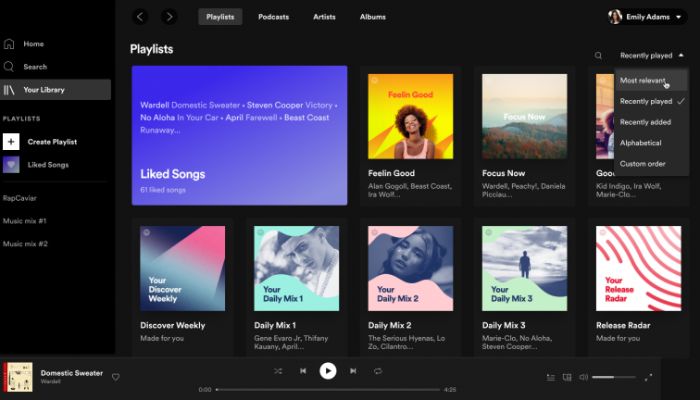
Spotify wants listeners to know when the artist behind a song doesn't actually exist. The streaming giant announced on Tuesday that it will begin badging artist profiles with an "AI Persona" label, a move that pulls flagged acts out of its recommendation engine by default.
Starting immediately, artists can self-disclose through Spotify for Artists if their public profile represents an AI-generated identity rather than a real person.
Spotify said it won't rely on disclosure alone, though, and will separately review profiles whose names and imagery appear to be photorealistic AI creations. The company will prioritise artists who've already built sizeable audiences, so the labels cover the profiles most listeners actually encounter.
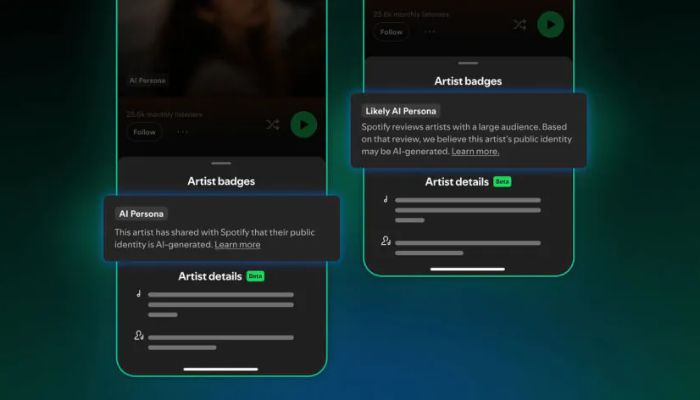
Once a profile carries the badge, its tracks disappear from Spotify's editorial and algorithmic recommendations by default. Listeners can still find and follow AI Persona artists directly, and music from those profiles will then reappear in personalised feeds for people who've chosen to follow them.
Crucially, the label judges an artist's identity, not whether the underlying music was AI-generated, a distinction Spotify already handles through separate tools like AI Credits and SongDNA.
The badge builds on a year of identity-focused features from Spotify, including Verified by Spotify and Artist Profile Protection.
Artists who are flagged through Spotify's own review, rather than self-disclosure, will be notified and can appeal the decision if they believe it's wrong. Users will also be able to report profiles they suspect are AI personas once that reporting tool rolls out in the coming months.
The badges themselves won't actually appear on profiles, in search results, or on playlist track rows until mid-September, even though self-disclosure has already opened.






-
 OpenAI submits EU incident report after rogue AI swarm hijacks German website
 -
 UN rights chief names 4 AI giants he says hold ‘almost unlimited power’
 -
 Microsoft finds phishers using AI prompt-injection trick
 -
 Authors accuse OpenAI of renaming LibGen datasets to hde their origin
 -
 OpenAI reveals how much researchers spend on AI coding
 -
 Google urges chrome users to update now after critical security flaw exploited
 -
 3 Samsung AR apps to be shut down by 2027
 -
 Google, Cathay Pacific expand AI trials to cut aircraft contrail warming