SpaceX rocket debris to hit the moon in rare impact event
Scientists also hope the impact will improve understanding of future risks to astronauts and equipment as lunar exploration expands
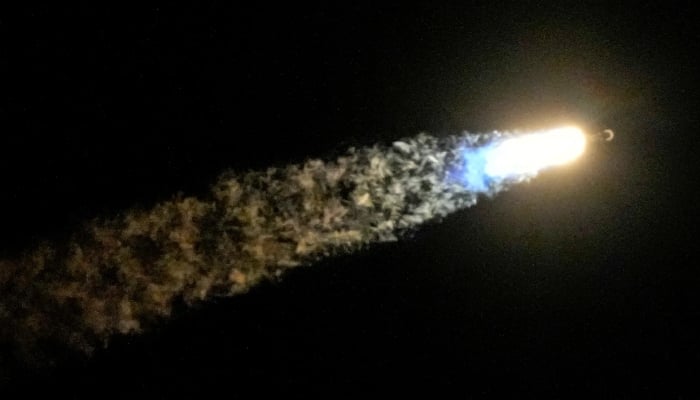
A discarded SpaceX Falcon 9 rocket stage is expected to crash into the moon on 5 August, creating a rare opportunity for scientists to study lunar impacts.
According to ABC News, the five-tonne upper stage is forecast to strike the moon at about 5,400mph near Einstein crater.
Astronomer Bill Gray, who tracks space objects, first calculated the impact.
Lead researcher Benjamin Fernando told ABC News: "We expect that to vaporize the booster, create a flash of light, probably a plume of ejecta -- dust, regolith, other stuff mixed into it -- and of course excavate a fresh crater on the lunar surface."
Fernando said the event would help researchers improve their understanding of how impacts affect the moon and allow them to test techniques used to study natural collisions.
"If we can measure the composition of that, that tells us something about the composition of that part of the moon”, he added.
The rocket stage was launched in January 2025 carrying Firefly Aerospace's Blue Ghost 1 and ispace's Resilience lunar landers before being left in a moon-crossing orbit.
Scientists also hope the impact will improve understanding of future risks to astronauts and equipment as lunar exploration expands.
Fernando encouraged amateur astronomers to observe the event, saying: "But because these events are so rare, we don't have a good expectation of exactly what we're going to see, which is exactly one of the reasons why we're asking people to take a look."






-
 US finally confirms weapons in orbit: What it means for space warfare
 -
 How China's FAST telescope is mapping the cosmic gas behind star birth
 -
 Did Sun eat super-Earth? New study says maybe
 -
 Did Sun swallow a super-Earth? Scientists search for its ‘fingerprints’
 -
 Blue Origin sets sights on Mars with new NASA network
 -
 NASA, IBM launch open-source lunar foundation AI model to help map ice, craters on moon
 -
 Bacteria can remember without brain, new study finds
 -
 Fast radio bursts may unlock secrets of dark matter, energy and neutrinos