Amazon's Zoox wins US approval for steering-wheel-free robotaxis
Zoox transports passengers in certain areas of Las Vegas and San Francisco under testing
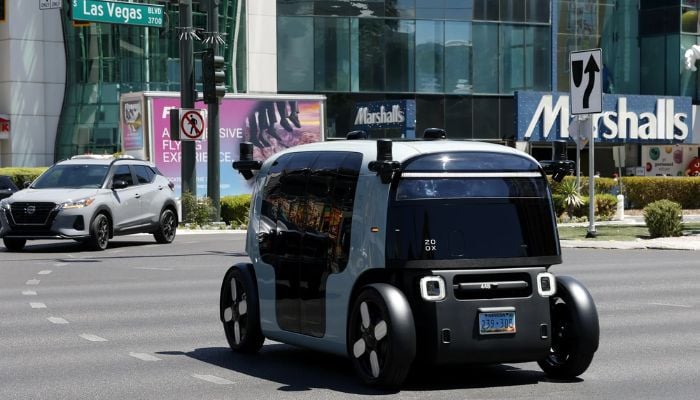
Amazon's Zoox has secured US approval for limited commercial deployment of its steering-wheel-free robotaxi, a first for the autonomous ride industry, according to the head of the country's top auto safety regulator.
This waiver from the National Highway Traffic Safety Administration regulations, which mandate human controls, is a major milestone for the firms creating robotaxis from scratch as opposed to modifying regular cars, which were designed for regulations that predate self-driving technology.
This electric, carriage-like car will seat its occupants in two inward-facing rows without steering wheels and pedals.
Jonathan Morrison, administrator of NHTSA, told Reuters that Zoox can now start commercial deployment of up to 2,500 cars annually in each of the next two years.
"We can say pretty clearly that the systems in place on the Zoox exceed the equivalent performance requirements of a compliant vehicle," Morrison said, adding that the agency still wants assurance the automated driving system performs appropriately in practice.
The approval comes with additional reporting obligations related to incidents like accidents and vehicles stopping on the roads without any need and will make adjustments based on the performance of vehicles in action.
"We have the ability to pull the exemption if we see major safety issues," said Morrison. Currently, Zoox transports passengers in certain areas of Las Vegas and San Francisco under testing; however, with the new exemption, it will be able to charge for its services, depending on permission from state and local authorities.
As told by Morrison, the NHTSA expects to finalise the first federal safety regulations for automated driving systems by the end of the Trump administration along with updating its regulations for cars operated by human drivers, like brake pedals and rear-view mirrors.
Tesla has already started production of its Cybercab, which also lacks the human controls.
The approval follows a pointed warning from Morrison earlier this month, when he told autonomous vehicle developers to immediately address what NHTSA called "a clear pattern of driverless AVs interfering with law enforcement and other first responders".
Other incidents, including robotaxis passing stopped school buses, entering construction zones, and freezing at flooded intersections, have fuelled public safety concerns and prompted recalls.


-
 Could the midterm ‘counting window’ disrupt results? experts warn
 -
 Why did Katie Price's makeover spark so much online cruelty?
 -
 'Deadliest Catch' star's haunting last words to his kids moment before fatal fall
 -
 Kardashian-Jenner family welcomes new addition
 -
 Anne Hathaway recalls the one interview she was advised against
 -
 Carrot Top's whereabouts after release from hospital after suicide attempt
 -
 Ella Langley gives major love life update as she turns down influencer's date request
 -
 'Jerry Maguire' star makes rare appearance after 30 years
-
 Skyler Gisondo makes ‘exciting’ confession about Robert Pattinson
 -
Jill Dando murder case: Piers Morgan reacts as police reexamine 1999 CCTV footage
-
Kanye West and Kim Kardashian reunite to support daughter North in resurfaced video
-
Trump says US and Cuba could reach a deal amid rising tensions: Here’s what to know