Meta is testing AI smart glasses that remember your day, raising privacy concerns
Researchers says that tech giants aren't really in eyewear business; they're collecting data needed to dominate robotics
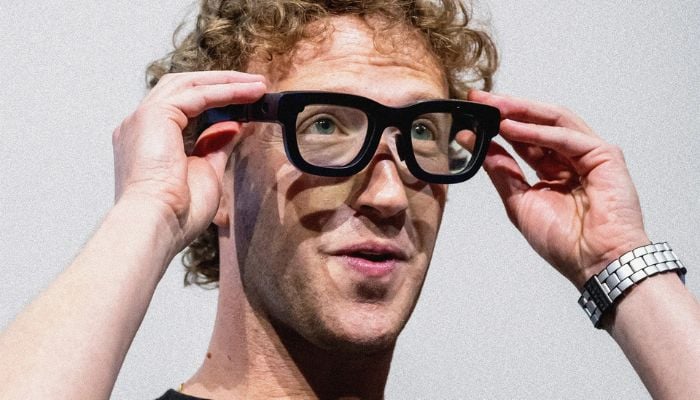
Meta is testing a prototype smart glasses model, internally described as "super-sensing", that could capture photos every few seconds and continuously sample audio throughout a wearer's day, according to the Financial Times.
While Meta says raw footage won't be stored, the metadata extracted from it could still feed into AI training, and industry analysts argue that's the entire point.
Google and Meta both stumbled in earlier attempts at smart glasses, but both are back. At its I/O 2026 developer conference, Google announced Android XR-based glasses built with Samsung and Gentle Monster.
While the category was initially sold as an accessory to the smartphone for navigation and translation, the current thinking among analysts is that the aim of the business is gathering information needed to train robots.
According to industry insiders, egocentric video, which involves recording activities performed by humans from the first-person perspective, holds immense value when it comes to training robots about manual dexterity.
Tesla, which possesses some 16 billion kilometres' worth of driving information, does not have this information, as it is vehicle-centric in nature.
According to research conducted by the Shanghai Artificial Intelligence Lab, robots trained only on simulated data were able to perform the sorting tasks successfully 33.3% of the time.
Inclusion of first-person human video increased this percentage to 40%, while inclusion of both increased success to 53.3%, even though the first-person videos made up only 8% of the total training data.
Another study conducted by Peking University, National University of Singapore, and MIT found that the training done using the first-person video was 24% more efficient in reducing inference errors in robot actions than the data collected using remotely controlled robots by humans.
DS Investment & Securities researcher Choi Tae-yong argues this explains why Big Tech keeps building cameras into glasses despite thin near-term profits and mounting privacy concerns. The companies, he said, aren't really in the eyewear business; they're collecting the data needed to dominate robotics down the line.




-
 Did you know Microsoft spent $1bn on phones it killed in 48 days?
 -
 OpenAI admits it needs new rules for rogue AI incidents
 -
 Sam Altman’s Apple fandom gets complicated as company sues OpenAI
 -
 Hackers leak nearly 6TB of sensitive Berlin government data
 -
 Elon Musk picked a fight with Chess.com, it didn't go well
 -
 OpenAI plans new AI misalignment reporting framework after German wiki incident
 -
 WhatsApp Beta to let you pin 4 messages: Report
 -
 Meta glasses lawsuit now covers people who never wore them